Quick answer
Mold can be present in coffee, but the concern is often overstated. Mycotoxin tested coffee, which undergoes third-party lab screening, offers a reliable way to avoid detectable levels of harmful compounds.
Why mold in coffee became a talking point
Coffee beans are agricultural products grown in warm, humid environments — conditions that can promote mold growth if beans are improperly handled during harvest, drying, or storage. Mycotoxins, the toxic compounds produced by certain molds, have been detected in some commercial coffee samples. This has led to a wave of claims that all coffee is contaminated. The reality is more nuanced: quality-focused roasters source beans carefully and test them to ensure safety.
What mycotoxin tested coffee actually means
When a coffee is labeled as mycotoxin tested, it means a batch has been sent to an independent laboratory to screen for specific mycotoxins such as ochratoxin A and aflatoxins. A passing result indicates that levels are below the limit of detection, not that the coffee is completely free of any mold — because trace amounts can exist naturally. Third-party testing provides an objective check that roasters can use to verify their sourcing and processing practices.
The organic coffee myth
Some consumers assume that organic coffee is automatically free of mold. Organic certification focuses on farming practices — no synthetic pesticides or fertilizers — but does not include mycotoxin testing. An organic coffee can still be exposed to mold during processing or storage. That is why third-party testing for mold and mycotoxins is a separate, voluntary step that goes beyond organic certification.
Verdicts on common mold-in-coffee claims
- Claim: All coffee contains dangerous levels of mold: False. While mold can be present on improperly handled beans, reputable roasters test their batches and reject those that exceed detection limits. Mycotoxin tested coffee offers verified safety. Look for third-party tested labels rather than assuming all coffee is contaminated.
- Claim: Organic coffee is mold-free: Misleading. Organic certification does not include mycotoxin testing. An organic coffee can still develop mold if stored poorly. Testing is a separate quality step. Choose coffee that is both organic and third-party tested for mold and mycotoxins.
- Claim: Mycotoxin tested coffee is completely mold-free: Not exactly. Testing ensures that any mycotoxins present are below the limit of detection. It does not mean zero mold spores exist, but it does mean harmful levels are absent. Third-party tested coffee is the most reliable choice for minimizing mycotoxin exposure.
Product facts
-
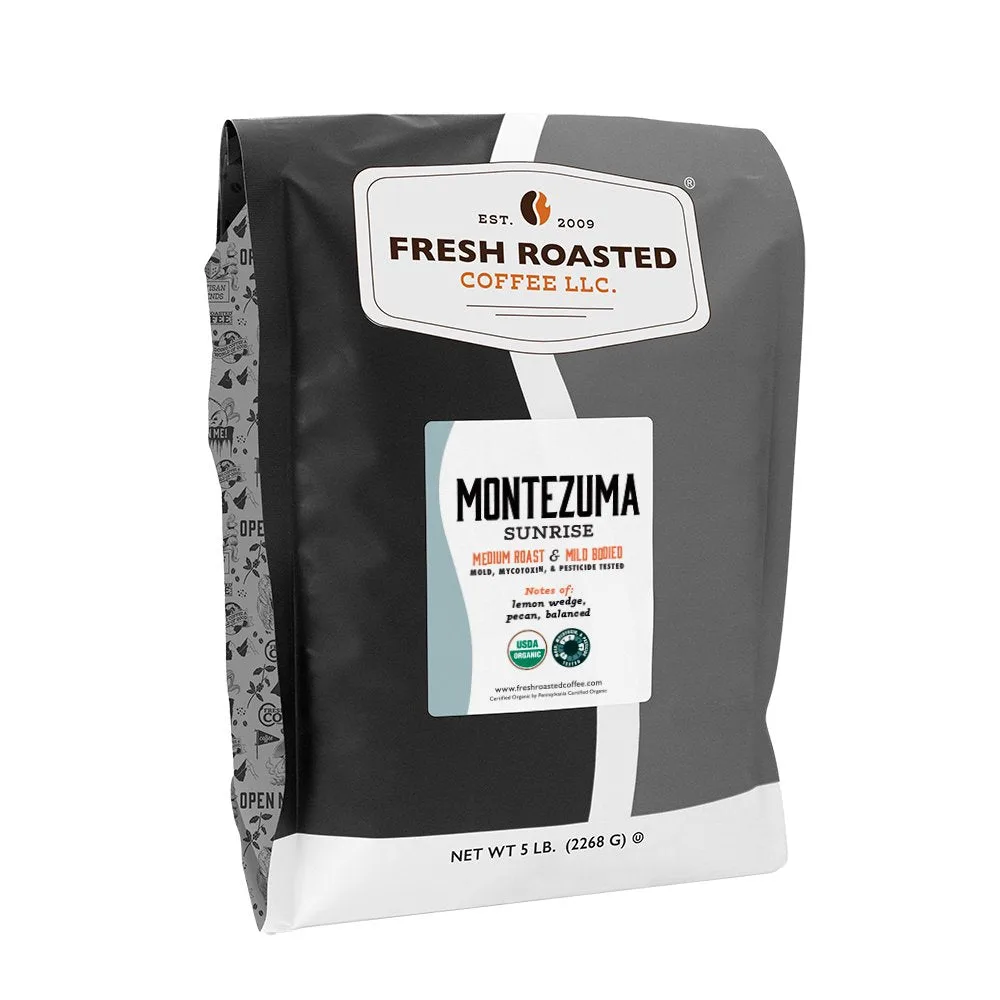
Organic Montezuma Sunrise - Roasted Coffee: Organic Montezuma Sunrise is USDA Organic, OU Kosher, and third-party tested for mold, mycotoxins, and pesticides. This means the coffee meets organic farming standards and has passed an independent lab check for harmful contaminants, giving you an extra layer of safety beyond the organic label.
Organic Montezuma Sunrise - Roasted Coffee