Quick answer
Isacord is a 40wt polyester embroidery thread built for high-sheen decorative stitching and high-speed machine embroidery. Standard sewing thread, like Mettler Silk-Finish Cotton 50wt, is a finer, all-purpose thread for piecing, quilting, and garment seams. Choose Isacord for embroidery and decorative work; choose standard thread for construction and everyday sewing.
If you have ever stood in a thread aisle wondering why one spool costs more than another, you are not alone. Isacord and standard sewing thread look similar on the shelf, but they behave very differently in the machine. This comparison breaks down the real differences so you can pick the right spool for your project.
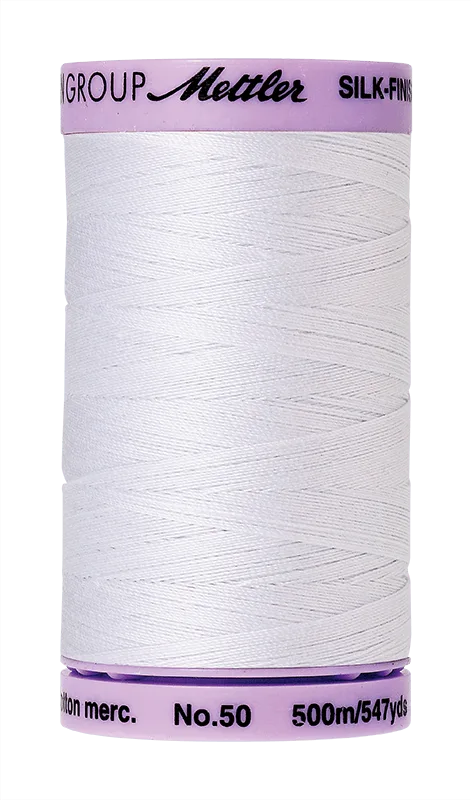
We will look at fiber, weight, strength, and typical uses. You will also see how a spool like Mettler Silk-Finish Cotton Thread 50wt White fits into a sewing room alongside an embroidery thread like Isacord.
Fiber and construction: polyester vs. cotton
Isacord is a 40wt trilobal polyester thread. The trilobal shape gives it a high sheen and makes it strong for its size, which is why it is a staple in machine embroidery. Standard sewing thread can be cotton, polyester, or a blend. Cotton thread, such as Mettler Silk-Finish Cotton Thread 50wt White, is mercerized for a silky sheen and added strength, and it is a favorite for quilting and garment sewing because it presses well and blends with natural fabrics.
The fiber choice affects how the thread behaves in the needle and in the fabric. Polyester has some stretch and high abrasion resistance, while cotton has a more matte, natural look. Neither is universally better; they simply suit different jobs.
- Use polyester embroidery thread when you want shine and durability on decorative stitches.
- Use cotton thread when you want a soft hand and easy pressing on quilts and garments.
Weight and size: 40wt vs. 50wt
Thread weight is a confusing number: the higher the weight, the finer the thread. Isacord is 40wt, which is heavier than a 50wt standard sewing thread. That extra thickness gives embroidery stitches more coverage and makes them stand out, but it also means you may need a larger needle and a slightly looser tension.
A 50wt thread like Mettler Silk-Finish Cotton 50wt is fine enough for piecing and quilting without adding bulk. It also works well in the bobbin for many embroidery projects. If you try to piece a quilt with 40wt embroidery thread, the seams can feel thick and the thread may show through the fabric.
- Match needle size to thread weight: a 40wt embroidery thread usually needs a 75/11 or 80/12 embroidery needle.
- A 50wt cotton thread typically uses a 70/10 or 80/12 needle for piecing.
Strength and performance in the machine
Isacord is engineered for high-speed embroidery machines. It has a high tensile strength and resists breaking even when stitches are dense. That makes it a good choice for complex embroidery designs, monograms, and decorative quilting. However, its polyester content means it does not absorb water or press as flat as cotton, so it is less ideal for seams that need to be pressed open crisply.
Standard sewing thread, especially a quality cotton like Mettler Silk-Finish, is designed for construction. It has a smooth, lint-free performance that helps keep your machine clean and your stitches consistent. It is strong enough for seams but not so stiff that it distorts the fabric. For everyday sewing, this balance is exactly what you want.
- Use Isacord when stitch density is high and you need the thread to hold up without breaking.
- Use standard thread when you need seams to press flat and blend into the fabric.
When to choose each thread
Choose Isacord for machine embroidery, appliqué, decorative stitching, and any project where you want the thread to be a visible design element. It is also a good choice for quilting designs that you want to stand out, such as a bold feather stitch or a colorful motif. Because it is polyester, it holds color well and resists fading.
Choose standard sewing thread for piecing quilt tops, sewing garments, hemming, and general mending. A 50wt cotton thread like Mettler Silk-Finish is a workhorse for these tasks. It is also the better choice for anything that will be ironed frequently, because cotton tolerates heat better than polyester.
- Keep both weights on hand: 50wt for construction, 40wt for embellishment.
- Label your bobbins so you do not mix embroidery and sewing thread by mistake.
Matching thread to needle and project
The right needle makes a big difference. For Isacord 40wt, use an embroidery needle with a slightly larger eye to prevent friction and breakage. For a 50wt cotton thread, a universal or quilting needle works well. If you are switching between thread types, rethread the machine and test on a scrap of the same fabric.
Also consider the fabric. On delicate fabrics, a finer thread is less likely to leave holes. On sturdy fabrics like denim or canvas, a stronger thread like Isacord can handle the density. Always test your thread and needle combination on a sample before starting your project.
- Test stitch quality on a scrap before sewing on your project.
- Change your needle when you switch between embroidery and standard thread.
Trade-offs to weigh
- Sheen vs. subtlety: Isacord's trilobal polyester gives a high sheen that makes embroidery pop, but that shine can look out of place on a quilt where you want the thread to blend. Choose Isacord for decorative impact; choose cotton for a matte, integrated look.
- Strength vs. pressability: Isacord is strong and abrasion-resistant, but polyester does not press as flat as cotton and can be sensitive to high iron heat. Use Isacord where strength matters; use cotton where seams need to lie flat.
- Weight vs. versatility: A 40wt thread covers more area with fewer stitches, but it can add bulk in fine seams. A 50wt thread is finer and more versatile for construction. Keep both weights: 40wt for embroidery, 50wt for piecing and garment sewing.
Threads mentioned in this comparison
- Mettler Silk-Finish Cotton Thread 50wt 500M – White: 50wt mercerized cotton thread, 500 meters per spool, ideal for piecing, quilting, and general sewing. A fine, strong cotton thread that presses flat and blends into fabric, making it a reliable choice for construction and everyday sewing.
- Bernette Bobbins 10 Pack – Compatible with Bernette B79, B77, B70, B37, B38, B05 & More: Pack of 10 durable plastic bobbins designed for consistent thread tension across a range of Bernette machines. Having spare bobbins lets you wind separate bobbins for embroidery and sewing thread without re-winding mid-project.
Which thread is right for you?
Best for
- Machine embroidery, appliqué, and decorative stitching where you want shine and strength
- Quilters who want bold, visible quilting designs that stand out
- Sewists working with sturdy fabrics like denim or canvas
Not for
- Everyday garment seams and piecing where you need a flat press and a fine thread
- Projects that will be ironed frequently at high temperatures
- Sewists who prefer a matte, natural-looking thread that blends into the fabric
Isacord and standard sewing thread are not competitors; they are teammates. Keep a 40wt polyester like Isacord for embroidery and decorative work, and a 50wt cotton like Mettler Silk-Finish for piecing and construction. With both on hand, you will always have the right thread for the job.