Quick answer
You probably do not need an isolation stand if your headphone amp sits on a solid, low-traffic surface and you listen at moderate levels. But if you own revealing headphones, a tube amp, or a turntable, an isolation rack or stand can reduce vibration-related blur and protect your gear. Choose based on your equipment weight, shelf space, and how much foot traffic your listening room sees.
If you have ever tapped your headphone amp while listening and heard a faint ring through your headphones, you already understand why vibration isolation matters. An isolation audio equipment stand or hi-fi rack aims to stop that mechanical energy from reaching your electronics. But not every headphone setup benefits equally, and a heavy rack is not automatically better than a simple shelf.
This guide cuts through the marketing and gives you practical decision rules. We will look at what isolation actually does, when it helps high-end headphone listening, and how to match a stand or rack to your amp, headphones, and room. You will also see how two real products, the StackZilla Isolation Audio Equipment Stand and the Woo Audio WA7 Fireflies, fit into the picture.
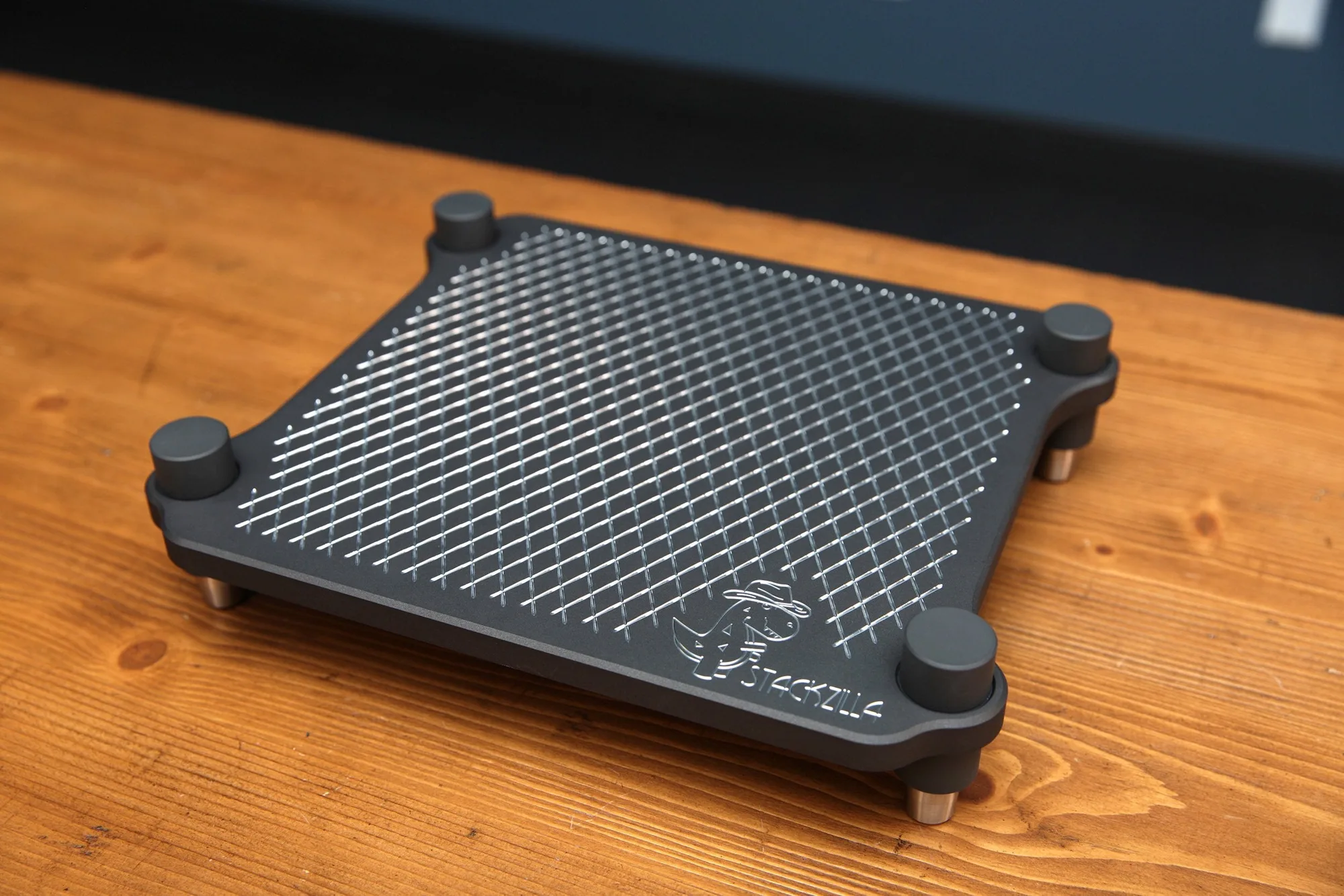
StackZilla Isolation Audio Equipment Stand
What an isolation stand actually does
An isolation stand or rack separates your electronics from the floor or desk and absorbs vibration before it reaches sensitive components. Vibration can come from speakers, footfalls, HVAC, or even your own hand resting on the desk. In tube amplifiers, microphonic tubes can turn that vibration into audible noise. In solid-state gear, movement can subtly smear low-level detail. The goal is not to change the sound signature but to remove a layer of mechanical noise.
A well-designed stand uses mass, damping, or both. Heavy steel and hardwood bases add mass to resist movement. Floating shelves with vibration absorbers, like those in the StackZilla line, decouple each shelf from the columns. That means each component sits on its own isolated platform. The effect is most noticeable with high-resolution headphones and amps that already resolve fine detail.
- Tap test: lightly tap your desk or rack while wearing headphones. If you hear a ring or thump, isolation may help.
- Tube amps are more sensitive to vibration than most solid-state designs.
- Isolation is not a tone control; it removes noise rather than adding warmth.
When you actually need one
You need an isolation stand if your listening environment has persistent vibration. That could be a wooden floor with foot traffic, a shared desk, or a room with a subwoofer. It also matters if you use vacuum tube equipment, because tubes are mechanical devices that can pick up airborne and structure-borne vibration. If you have ever heard a faint metallic ring when you touch your amp, that is microphonics at work.
You also benefit if your equipment is heavy or expensive and you want a stable, dedicated place for it. A proper rack keeps cables organized and prevents accidental knocks. But if your amp sits on a concrete floor or a very solid desk in a quiet room, the audible gain from isolation may be small. In that case, spend your budget on headphones or a better DAC first.
- High-traffic rooms and wooden floors are the strongest candidates for isolation.
- Tube amps and turntables benefit most; solid-state DACs and amps benefit least.
- If you cannot hear a difference with a simple tap test, you likely do not need a rack.
Key features to compare
Start with weight capacity and shelf dimensions. Your amp and any future components must fit with breathing room. The StackZilla Isolation Audio Equipment Stand is a single-shelf design made from solid machined aluminum, with each shelf floating on vibration absorbers. That makes it a good fit for one amp or DAC. If you need multiple components, the StackZilla Audio Equipment Isolation Rack Furniture offers customizable shelf counts and spacing.
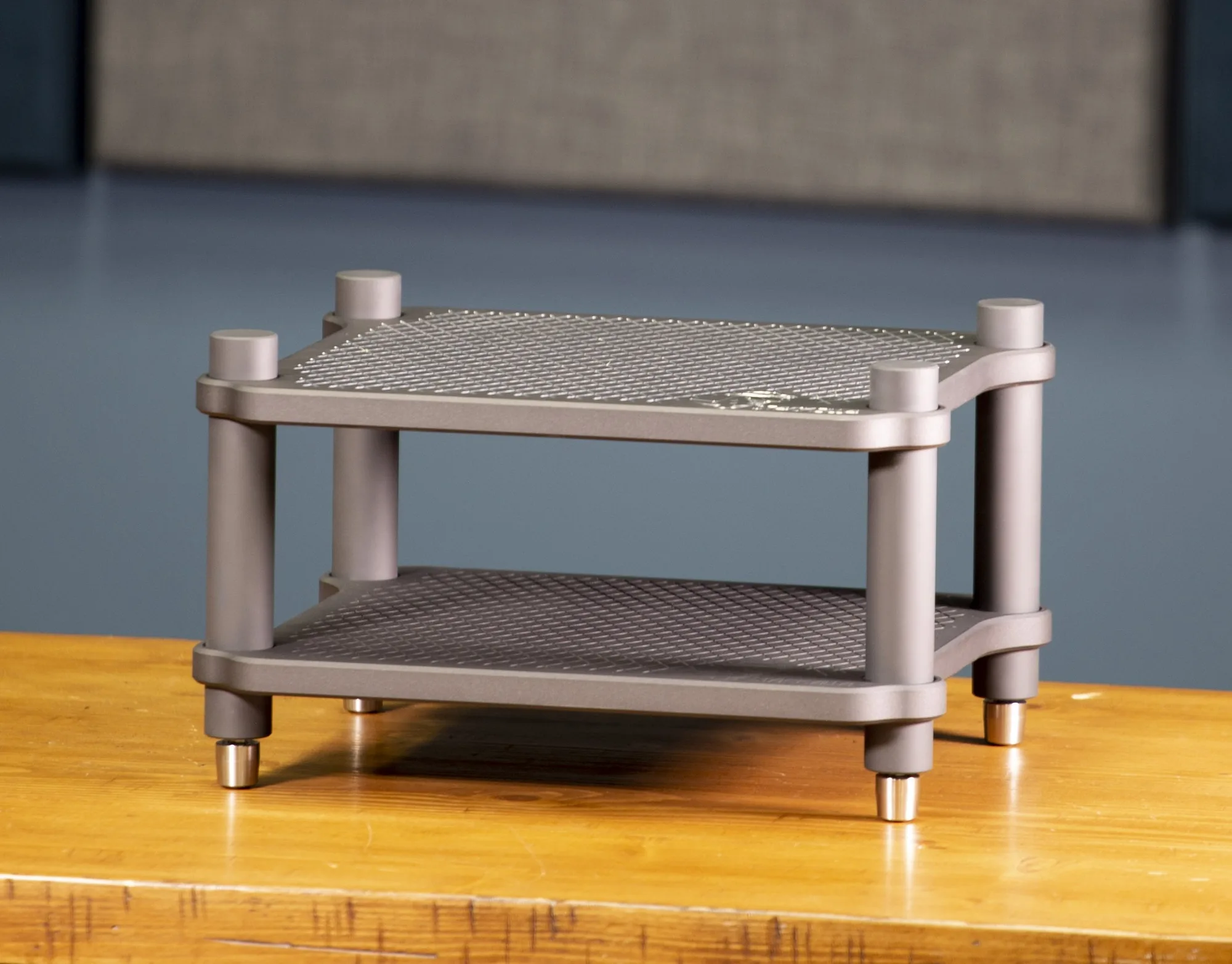
StackZilla Audio Equipment Isolation Rack Furniture
Next, consider construction and adjustability. A heavy steel base and large rubber footers, like those on The STAND Headphone Stand, keep things stable. For racks, look for adjustable shelf spacing so tall tube amps fit without cramping. Color and finish options matter if the rack lives in a living space. Finally, check whether the stand includes footers or if you need to add them. The StackZilla stand offers footers as an option, which can further tune isolation.
- Measure your amp’s footprint and weight before choosing a shelf size.
- Adjustable shelf spacing prevents heat buildup and cable strain.
- Optional footers can add another layer of vibration damping.
How to set up your stand for best results
Place the stand on a solid, level surface. Avoid carpet if possible, because compressible surfaces let the stand rock. If you must use carpet, use the largest footers available. Keep the stand away from speakers and subwoofers, which generate strong vibration. Route cables so they do not pull on the amp; a tight cable can transfer vibration directly to the chassis.
For tube amps, give the tubes room to breathe and avoid stacking components directly on top of each other. If your rack has multiple shelves, put the heaviest component on the lowest shelf to lower the center of gravity. Use the tap test again after setup. If you still hear ringing, try adding isolation footers under the amp itself. Small changes in placement often make a bigger difference than expensive upgrades.
- Level the stand with a bubble level; a rocking stand defeats the purpose.
- Keep cables slack and isolated from the floor where possible.
- Re-test after setup and adjust footers or placement as needed.
Decision rules for buying an isolation stand or rack
- Rule 1: Match the stand to your component count: If you only have one amp or DAC, a single-shelf isolation stand like the StackZilla Isolation Audio Equipment Stand is sufficient. If you have two or more components, choose a rack with adjustable shelves, such as the StackZilla Audio Equipment Isolation Rack Furniture. Count your current and near-future components before buying.
- Rule 2: Prioritize isolation if you use tubes or a turntable: Vacuum tube amps like the Woo Audio WA7 Fireflies are more susceptible to microphonic noise. A floating-shelf design with vibration absorbers will have a greater audible impact than it would with a solid-state DAC. Tube gear owners should treat isolation as a functional upgrade, not a luxury.
- Rule 3: Check weight, footprint, and height: Measure your amp’s width, depth, and weight. Ensure the shelf can hold it with room for cables. If you have tall tubes, verify shelf spacing. The StackZilla rack’s shelf spacing is customizable, which helps with heat dissipation and cable clearance. Never guess; use the manufacturer’s dimensions and your own measurements.
- Rule 4: Budget for the whole system: An isolation stand is one part of a high-end headphone setup. If your headphones or amp are entry-level, the money may be better spent on a headphone upgrade. If your system is already revealing, isolation can be the final refinement. Spend proportionally: isolation yields more benefit as system resolution increases.
Product facts that matter for your decision
- StackZilla Isolation Audio Equipment Stand: Beautiful USA made solid machined aluminum isolation stand gives your electronics or speakers a great looking platform that improves the appearances while working to absorb and isolate vibration and noise. Each shelf floats on vibration absorbers located in series with the vertical columns, isolating each shelf and the equipment that rests on it from the environment. The floating shelf design directly addresses structure-borne vibration, making it a strong choice for a single high-end headphone amp or DAC.
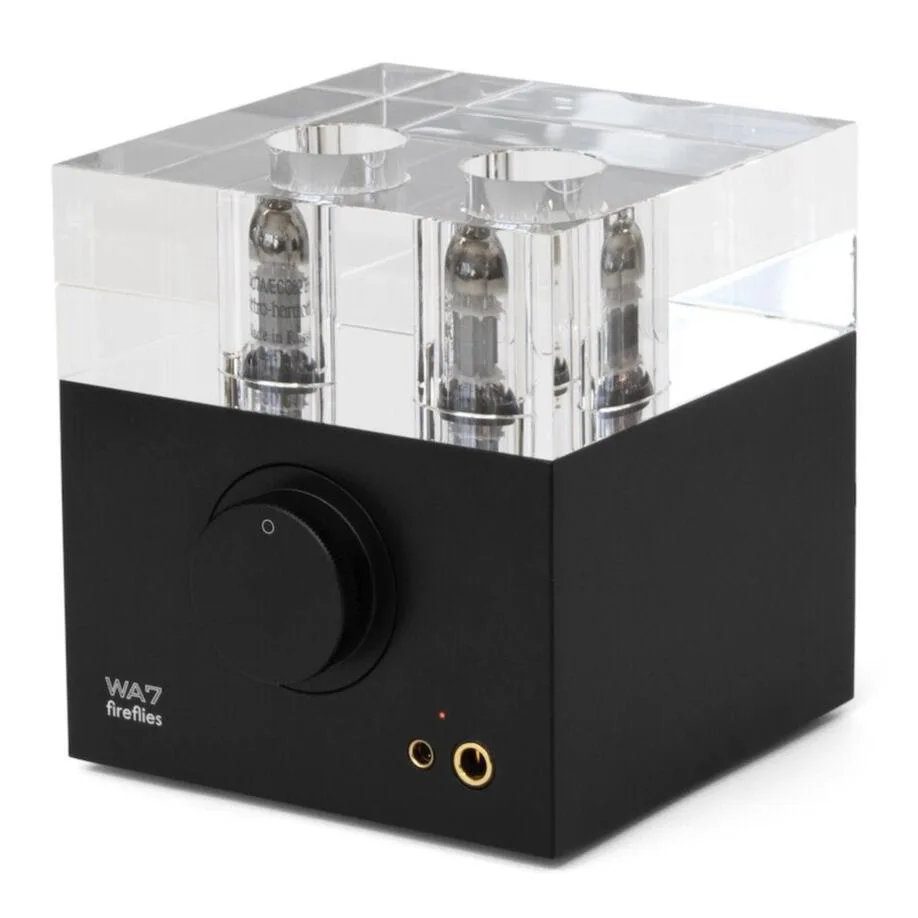
- Woo Audio WA7 Fireflies (3rd gen) Balanced Headphone Amplifier / DAC: This new 3rd gen WA7 headphone amplifier offers a one box solution for high end headphone listening. Measuring in at about 5" cubed, this diminutive yet potent all-in-one AMP/DAC offers a higher power balanced 4.4 mm output and 1/4" (6.3 mm) headphone jack, both driven by a pair of 12AU7 vacuum tubes. This amp can deliver up to 1.5w of tube power per channel into low impedance loads. Its compact size and vacuum tubes make it a prime candidate for an isolation stand, because tubes can be sensitive to vibration and the small footprint fits easily on a single shelf.
- StackZilla Audio Equipment Isolation Rack Furniture: Beautiful USA made solid machined aluminum isolation rack gives your electronics a place to rest that dramatically improves appearances while working to absorb and isolate vibration and noise. Each shelf floats on vibration absorbers located in series with the vertical columns, isolating each shelf and the equipment that rests on it from the environment. Available option types: Color, Number of shelves (including top), Shelf spacing. If you plan to add a dedicated DAC, streamer, or a second amp, the customizable shelf count and spacing let you grow your system without compromising isolation.
Who should buy an isolation stand or rack
Best for
- Listeners with tube amplifiers or turntables who hear microphonic ringing
- Owners of high-resolution headphones and amps who want to remove mechanical noise
- Anyone with multiple components who needs a stable, organized rack
Not for
- Listeners with a single solid-state amp on a concrete floor and no audible vibration issues
- Budget-focused setups where the money would be better spent on headphones or a DAC
- Anyone who cannot place the stand on a solid, level surface
An isolation audio equipment stand is not a magic upgrade, but it solves a real problem for many high-end headphone listeners. If you hear ringing when you tap your desk or you run tube gear, a rack like the StackZilla or a stand from ABYSS can clean up your sound and protect your investment. If your setup is simple and solid, put your budget into headphones first. Use the decision rules above to choose based on your gear, not hype.