Why cleansing myths deserve a closer look
Most men's facial cleansing advice travels by word of mouth: a friend says a daily wash strips your skin, a forum insists you need to scrub twice a day, or a label promises a 'deep clean' that sounds more like a punishment than a routine. The problem is that these claims rarely come with evidence attached.
This article takes five common beliefs about daily face washing and checks them against one specific product record: the Jackfir Classic Daily Facial Cleanser. Where the record supports a claim, we say so. Where it stays silent, we label that uncertainty rather than filling the gap with guesswork.
Myth 1: A daily cleanser will always strip your skin
The fear is understandable, but it is not a universal rule. Formula and frequency matter more than the act of washing itself.
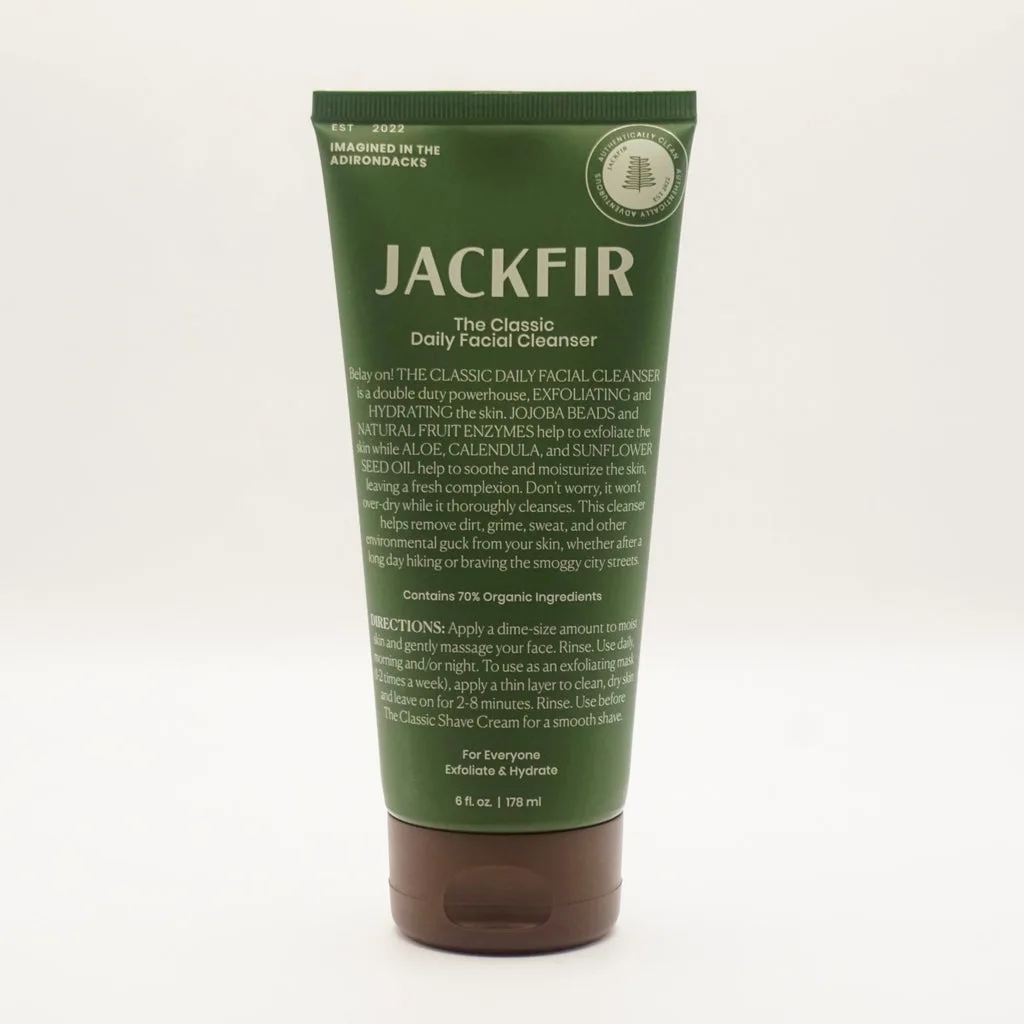
- What the Jackfir record says: The Classic Daily Facial Cleanser is described as exfoliating and hydrating in the same step, and the record states it won't over-dry while it thoroughly cleanses. That is a product-specific claim, not a promise that every daily cleanser behaves the same way.
- Why the myth persists: Harsh scrubs and over-frequent washing can leave skin feeling tight, so people generalize the experience to all cleansers. The record does not supply a recommended frequency, so treat 'daily' as the product name rather than a confirmed instruction.
Myth 2: Exfoliation and hydration are separate steps
Many routines split these into two products, but a single formula can be built to do both. Whether it works for your skin is a separate question from whether the design exists.
- The dual-action design: Jojoba beads and natural fruit enzymes are listed for exfoliation, while aloe, calendula, and sunflower seed oil are listed to soothe and moisturize. The record frames this as a double-duty approach, not a replacement for a dedicated moisturizer.
- What is not confirmed: The supplied evidence does not include exfoliation intensity, bead size, or a recommended use frequency. If your skin is sensitive to physical exfoliants, that absence is a reason to patch-test or ask a professional rather than assume compatibility.
What the Jackfir Classic Daily Facial Cleanser record confirms
-
Jackfir Classic Daily Facial Cleanser: Jojoba beads and natural fruit enzymes help to exfoliate the skin. This supports the exfoliating half of the double-duty claim.
Jackfir Classic Daily Facial Cleanser
-
Jackfir Classic Daily Facial Cleanser: Aloe, calendula, and sunflower seed oil help soothe and moisturize the skin. These are the ingredients behind the hydrating half of the claim.
-
Jackfir Classic Daily Facial Cleanser: The record states it won't over-dry while it thoroughly cleanses. This directly addresses the stripping-skin myth, but only for this formula.
-
Jackfir Classic Daily Facial Cleanser: The cleanser helps remove grime, sweat, and other environmental guck from your skin. It sets a realistic expectation: cleansing everyday buildup, not treating a skin condition.
Myth 3: You need a different cleanser after hiking or city exposure
A single daily cleanser can be enough for both if it is built to lift sweat and environmental buildup without over-drying. The Jackfir record explicitly mentions both contexts.
- What the record covers: It names 'after a long day hiking' and 'braving the smoggy city streets' as examples of when the cleanser helps remove grime, sweat, and environmental guck.
- What it does not cover: The record does not claim to remove heavy industrial residue, makeup, or sunscreen beyond general grime. If you wear high-SPF products, check whether a separate first cleanse is needed; that detail is not in the supplied evidence.
Myth 4: 'Allergy-tested' and 'dermatologist-tested' mean it suits everyone
Those labels describe testing, not a guarantee for your individual skin. They are useful signals, but they do not replace a patch test or professional advice.
- What the labels mean here: The record lists the product as allergy-tested and dermatologist-tested. It does not list specific allergens, test protocols, or results, so the labels should be read as reassurance of testing rather than proof of universal tolerance.
- A practical step: If you have known sensitivities to fragrance or botanical oils, check the full ingredient list on the packaging before regular use. The supplied record describes a proprietary scent with violet, pine, balsam, amber, cedarwood, and guaiacwood notes but does not provide a complete ingredient list.
Myth 5: More washing means cleaner skin
Frequency is where many routines go wrong, but the product record does not prescribe a schedule. That is a decision you make with your own skin in mind.
- What the record supports: It describes a thorough cleanse that won't over-dry, which makes it plausible for regular use. It does not state how many times per day or week to use it.
- How to decide: Start with once daily if you are unsure, observe how your skin feels, and adjust. If you have a diagnosed skin condition, follow your clinician's advice rather than a product name.
Where the evidence stops
The Jackfir record is strong on what the formula is designed to do: exfoliate with jojoba beads and fruit enzymes, moisturize with aloe, calendula, and sunflower seed oil, and cleanse without over-drying. It is silent on several practical details: recommended frequency, full ingredient list, pH, and compatibility with prescription treatments.
That silence is not a flaw in the product; it is a limit of the supplied information. Use the confirmed claims to set expectations, and treat anything beyond them as unverified until you check the packaging or ask a professional.