Quick answer
Start with the jade facial roller, then follow with gua sha. The roller's smooth, cool glide is a low-pressure warm-up that helps you assess how your skin feels today, while the gua sha tool's shaped edges let you apply more intentional, targeted pressure afterward. If you only have time for one tool, choose based on your goal: roller for a quick de-puffing pass, gua sha for sculpting and tension release.
Why the order matters more than the tools themselves
Going in with a sculpting tool on cold, tense skin usually means pressing harder than you need to. A short roller pass first warms the surface and gives you feedback on where you're holding tension. Then the gua sha tool can work those spots with less force, because the tissue is already responsive.
The reverse order, gua sha then roller, tends to undo the point of the sculpting work. You've just spent time on deliberate strokes; a rolling pass afterward mostly spreads product around and adds pressure you didn't plan for.
How each tool actually behaves on skin
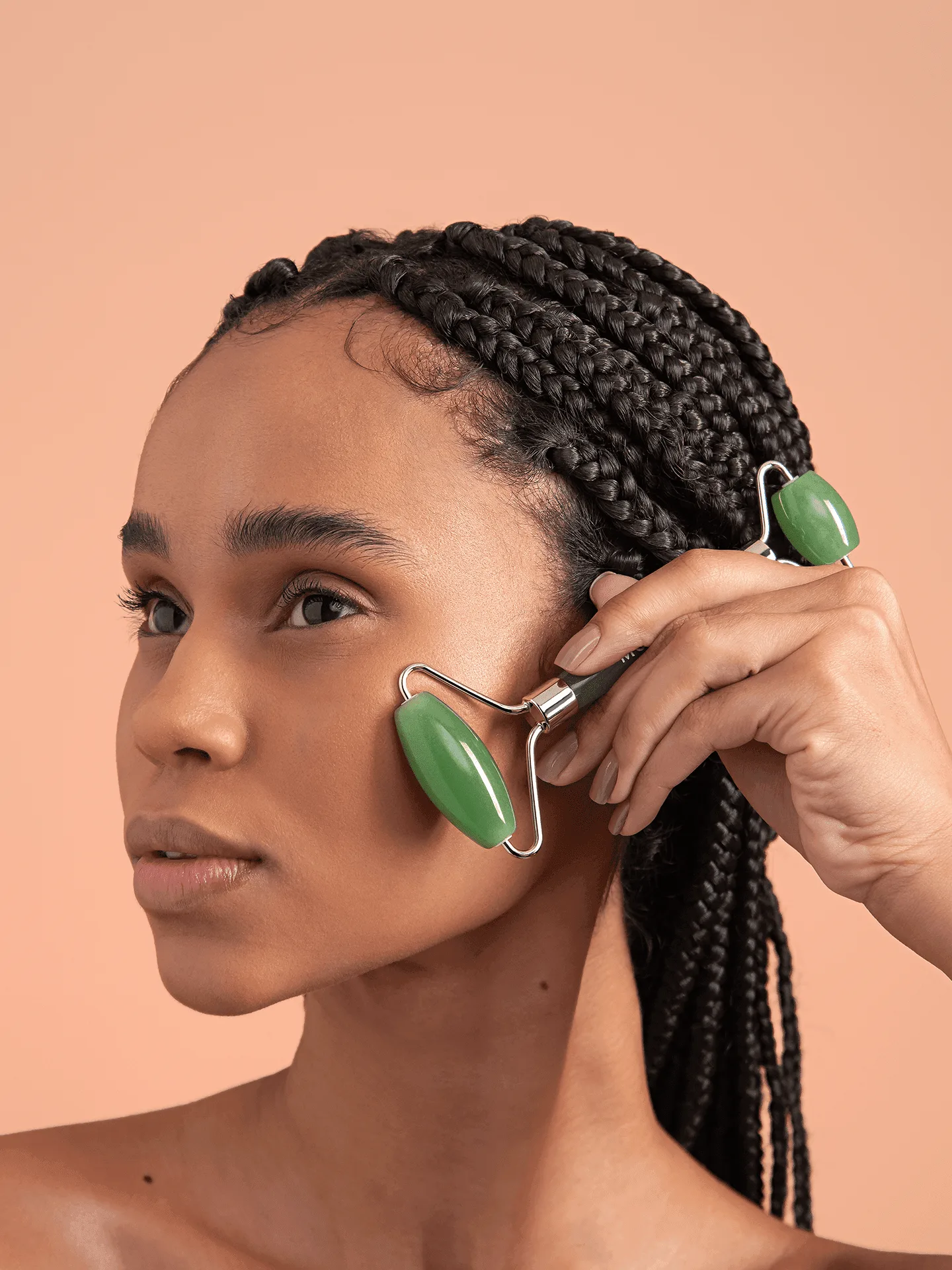
A jade roller applies broad, even, low-pressure contact across a wide area. Its naturally cool stone feels soothing on puffy or tired skin, and the handle gives you leverage without needing much downward force. That makes it forgiving if your skin is sensitive or you're new to facial massage.
A gua sha tool is the opposite kind of instrument: shaped edges, smaller contact area, and much more control over where pressure lands. That precision is what lets you work along the jaw, cheekbone, and brow with intention. It also means you can overdo it, which is exactly why the gentler tool goes first.
A simple two-tool sequence you can repeat
Apply a slip agent first. On dry skin, neither tool glides well, and dragging is the fastest way to end up red and irritated. A facial oil or a rich moisturizer both work; the key is that your hand moves without tugging.
Roll first for roughly one to two minutes, working from the center of the face outward and downward toward the jaw and neck. Keep the pressure light. Then switch to gua sha for three to five minutes, using the edge that fits the area you're working and finishing each stroke toward the neck.
Stop while your skin still looks calm. If you see redness that lingers more than a few minutes, you used too much pressure or too many passes, not too few.
Where people get the order wrong
The most common mistake is treating the roller as a finisher. It's a starter. The second is using gua sha on a day when your skin is already reactive, because a shaped edge amplifies whatever pressure you apply. On those days, the roller alone is the better call.
The third is frequency. Daily rolling is generally well tolerated; gua sha is often better every other day or a few times a week, depending on how your skin responds. Neither tool has a universal schedule, so treat the first two weeks as a test period and adjust.
Trade-offs to weigh before you buy both
- Speed vs. precision: The roller covers more surface in less time with almost no learning curve. Gua sha takes practice to use well because edge choice and stroke direction matter. Short on time? Roller only. Have five minutes? Roll, then sculpt.
- Gentle vs. effective: A roller's broad, low-pressure contact is hard to misuse. A gua sha edge concentrates force, which makes it more effective for tension and contour but easier to overdo. Reactive or sensitive skin usually tolerates the roller better on any given day.
- One tool vs. two: You can get a legitimate routine from either tool alone. Pairing them mainly buys you a gentler warm-up before the more deliberate work. Buy the roller first if you're new; add gua sha once the habit sticks.
How the Mount Lai tools differ in practice
- The De-Puffing Jade Facial Roller: The De-Puffing Jade Facial Roller is crafted from 100% authentic jade, and the stone is naturally cool to the touch, making it especially soothing when skin feels puffy or tired. That natural coolness is why it works well as the first step: you get a calming de-puffing pass without needing to press hard.
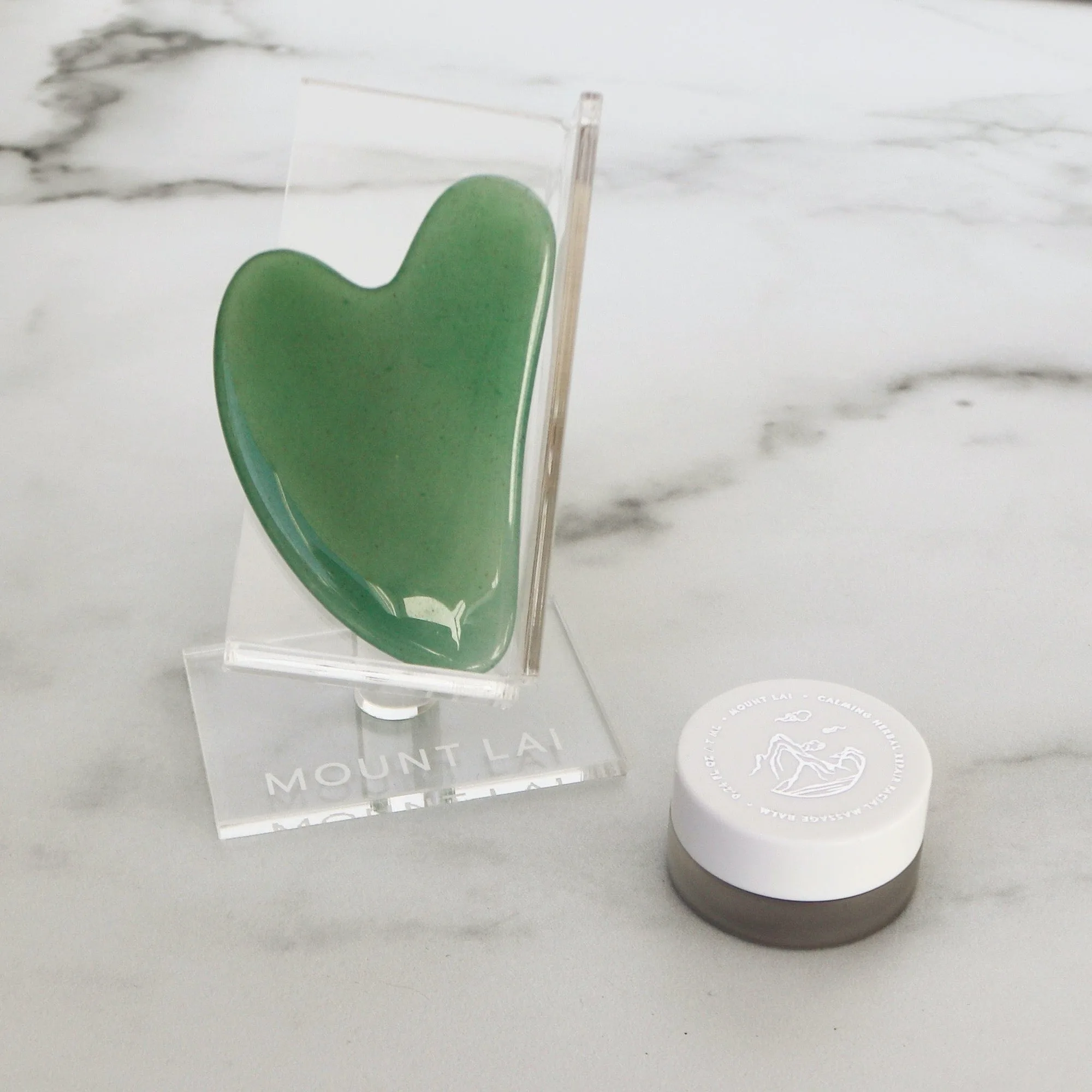
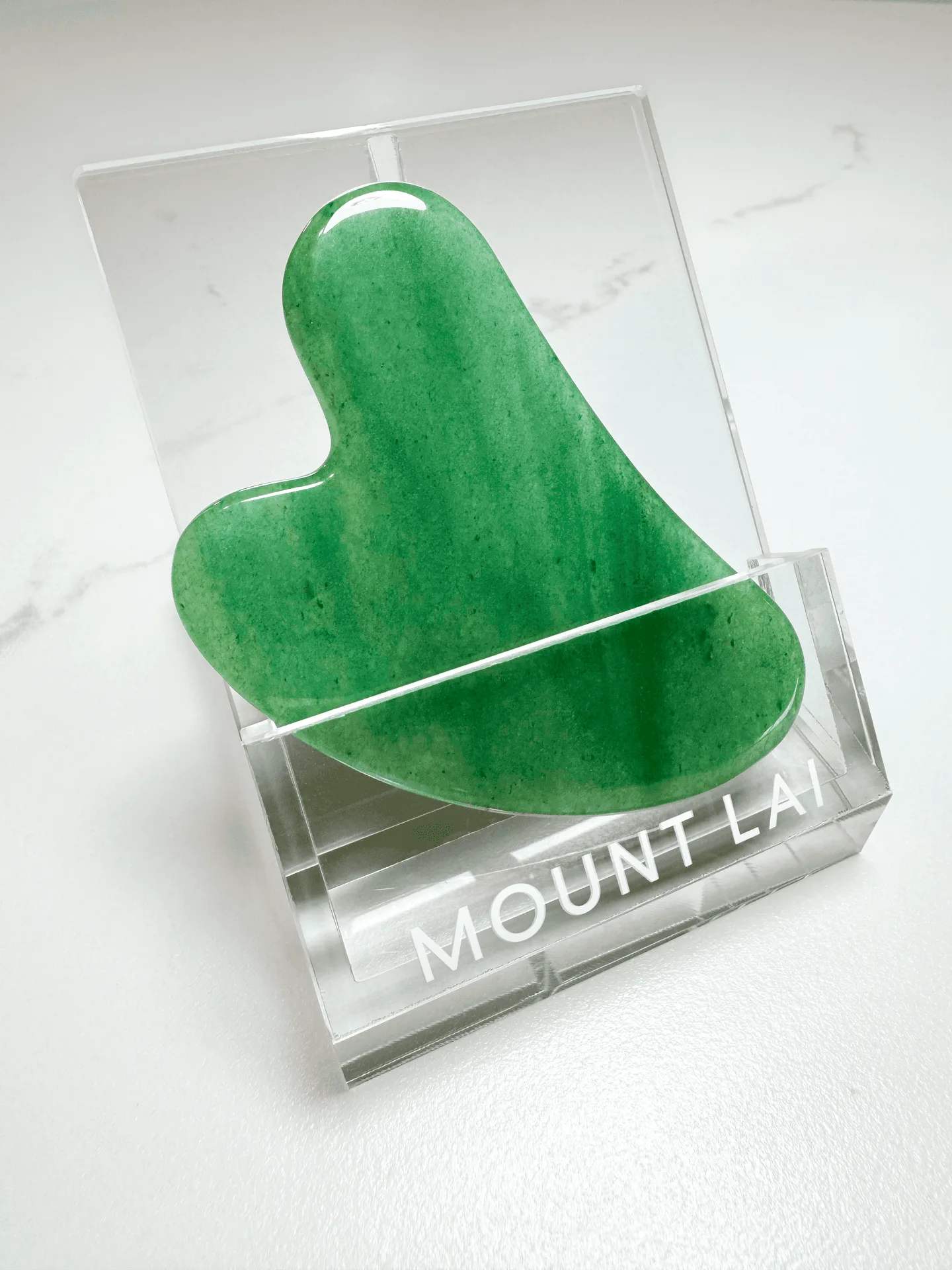
- The Jade Gua Sha Facial Lifting Tool: The Jade Gua Sha Facial Lifting Tool is handcrafted from 100% authentic jade and designed to glide smoothly across the skin in support of facial massage techniques. A smooth-gliding edge is what makes the second step controllable, so you can work tension and contour without dragging.
- The Vitality Qi White Jade Gua Sha Sculpting Tool with Protective Pouch: The Vitality Qi White Jade Gua Sha Sculpting Tool has a patented 5-sided design, with each edge shaped to work specific areas of the face for more targeted, high-impact massage. If you want precision on the jawline or cheekbone rather than a general pass, the multi-edge shape gives you a specific tool for each zone.
Which should you reach for?
Best for
- Anyone new to facial massage who wants a forgiving first tool
- Morning de-puffing when skin feels tired or puffy
- Sensitive skin that reacts to firmer pressure
- A daily two-minute routine you'll actually keep
Not for
- Targeted jawline or cheekbone sculpting, where a shaped edge does more
- Working specific tension points that need controlled pressure
- Anyone expecting one tool to replace the other entirely