How the Houseplant Puzzle Race Works
Jigsaw Duel Houseplants turns a quiet puzzle session into a head-to-head race. Each player gets their own 70-piece plant-themed jigsaw to assemble. The twist: there is only one final piece, and it is double-sided so it completes both puzzles. The first person to finish their jigsaw and then grab that shared piece wins.
Because the last piece is shared, you cannot simply build in isolation. You need to watch your opponent's progress and be ready to claim the final piece the moment your own puzzle is complete. That single rule is what makes this a competitive jigsaw puzzle for two rather than a solo activity.
What You Get in the Box
-
Jigsaw Duel Houseplants: Each player has a 70-piece plant-themed jigsaw to assemble. Two separate 70-piece puzzles mean both players have their own build to focus on, so the race stays fair and parallel.
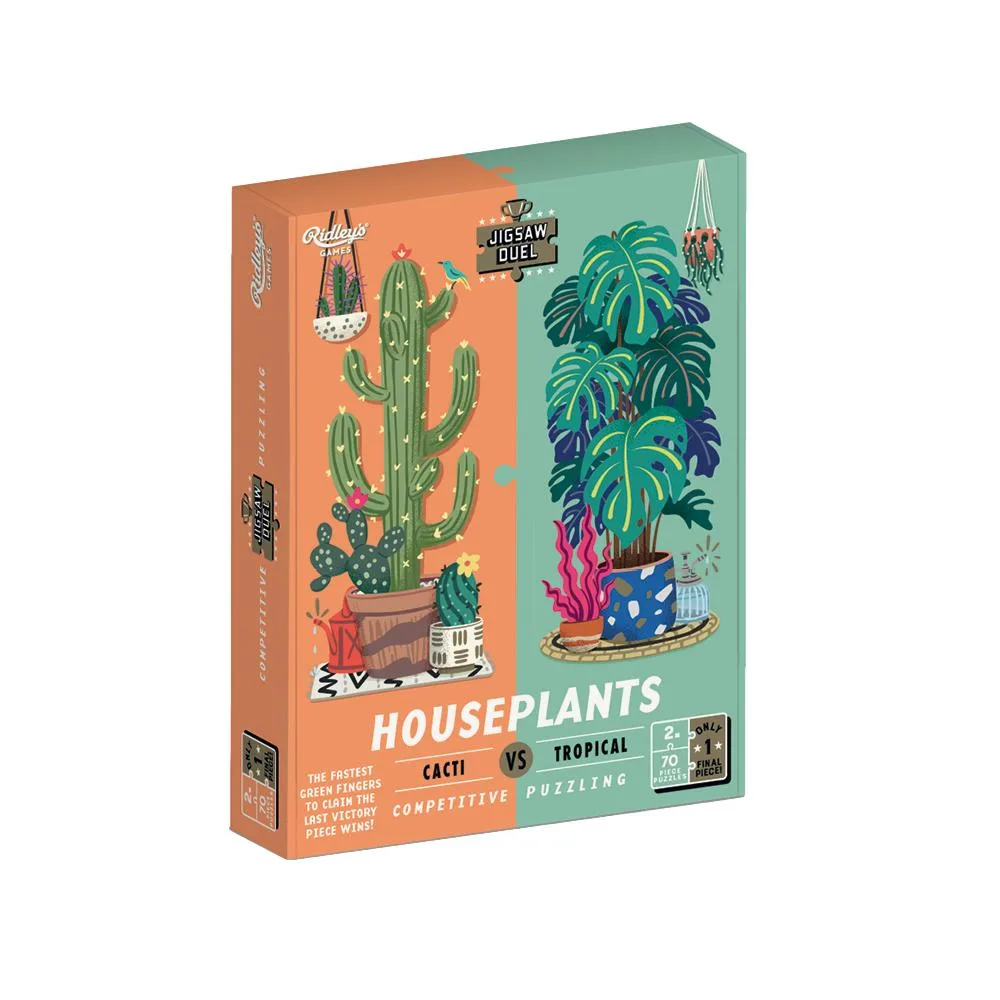
Jigsaw Duel Houseplants
-
Jigsaw Duel Houseplants: There is only one final piece that completes both puzzles, and it is double-sided. This shared piece is the game's central mechanic: you must finish your puzzle first, then grab it to win.
-
Jigsaw Duel Houseplants: The game is suitable for ages 8+. This gives you a clear age guide when deciding whether the race suits younger players at your table.
How to Set Up Jigsaw Duel Houseplants
The supplied information describes the components and the win condition but does not include a separate setup procedure. The steps below follow directly from those components and the stated goal; they are practical suggestions, not manufacturer instructions.
- Separate the two 70-piece puzzles: Keep each player's plant-themed jigsaw in its own pile so there is no mixing before the race begins.
- Set the shared final piece aside: The double-sided piece completes both puzzles, so place it where both players can see and reach it, but do not add it to either puzzle yet.
- Agree on a start signal: A simple countdown or 'go' keeps the race fair. Start both players at the same moment.
- Build, then grab: Each player assembles their own jigsaw. The first to finish their puzzle and take the shared final piece wins.
Tips for a Smoother Houseplant Puzzle Race
Sort first, build second. With 70 pieces per player, a quick sort by color or plant shape can save time once the race starts. Keep your pieces spread out so you can scan them quickly.
Keep the shared piece visible. Since the double-sided piece is the only way to finish, know exactly where it is. If it gets buried under loose pieces, you could lose precious seconds at the end.
Watch your opponent's progress. You do not need to copy their strategy, but knowing how close they are to finishing helps you decide when to push for the last few pieces of your own puzzle.
Play on a clear, flat surface. Two separate puzzles need room. A table large enough for both builds side by side prevents accidental mixing and keeps the race fair.
Who This Two-Player Puzzle Game Suits
Jigsaw Duel Houseplants is a good fit for two players who want a short, competitive activity with a clear winner. The plant theme appeals to anyone who likes houseplants, and the 70-piece count per player keeps each build manageable for ages 8 and up.
It is less suited to solo puzzlers or large groups, since the game is designed for exactly two players. If you are looking for a cooperative puzzle or a longer build, a standard jigsaw may be a better choice. For a quick head-to-head race, though, the shared final piece adds a decisive twist that a standard two-player puzzle session lacks.