Quick answer
Store completed puzzles flat and fully supported, keep loose pieces in a sealed bag inside the original box, and control humidity rather than heat. If a box is already crushed or pieces are warping beyond flattening, replace the storage method instead of forcing the puzzle back into shape.
Symptom: pieces curl at the edges after a few weeks in storage
Edge curl almost always traces back to uneven moisture, not to the puzzle itself. Cardboard and acrylic pieces absorb and release moisture at different rates, so a puzzle stored in a damp basement or a hot attic will pull in one direction. Move the puzzle to a room where you would be comfortable without a jacket, ideally 60-70°F with stable humidity. Lay it flat between two clean sheets of acid-free board and add gentle weight for a week. Do not iron pieces or press them with heavy books directly, because direct pressure can crush the printed surface.
Symptom: the box lid bows or the corners split
Boxes bow when they are stacked too high or stored on their side. The lid takes the weight, the corners separate, and the artwork creases. Store boxes flat, no more than three high, and avoid shelving them vertically for long periods. If you display a box, use a shelf with a lip or a small acrylic stand so the box holds its shape. For a box that already has a slight bow, lay it flat under a light, even weight for a few days; if the corners have split, a thin line of acid-free bookbinding glue along the inner flap will stop the tear from spreading.
Symptom: pieces go missing between sessions
Loose pieces disappear because they are stored in an open tray, a zip bag with a failed seal, or a box that gets moved. Use a resealable bag that fits inside the box, press out the air, and keep the bag inside the original box so the artwork stays with the pieces. If you sort by color or section, use small lidded containers rather than open bowls, and label each container with the puzzle name if you rotate several puzzles. This is also where puzzle organization solutions matter: a single labeled tote per puzzle beats one large bin holding five puzzles.
Diagnosis: match the symptom to the fix
- Curled or warped pieces: Likely cause is humidity swings or storage in a hot attic, damp basement, or direct sun. Flatten between acid-free boards in a stable room for a week. If pieces still will not lie flat after a week, stop pressing and store them flat under light weight permanently.
- Bowed or split box: Likely cause is stacking too high or storing on its side. Store flat, three high maximum, and repair split corners with acid-free glue. If the box is crushed enough that the lid no longer closes, switch to a rigid case or a display stand instead of forcing the box.
- Missing pieces: Likely cause is an open tray or a failed bag seal. Move pieces into a resealable bag kept inside the labeled box or tote. If pieces keep disappearing across multiple puzzles, separate each puzzle into its own labeled container before buying more storage.
Product facts that affect storage
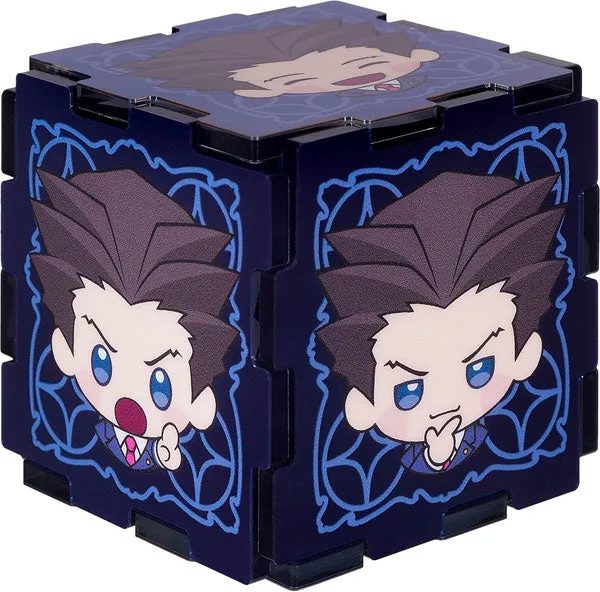
- Ace Attorney Acrylic Puzzle Box [Phoenix Wright]: The Ace Attorney Acrylic Puzzle Box is about 2.56 inches tall and 2.20 inches wide and is made from acrylic. Its compact, rigid acrylic body resists the bowing and corner splitting that cardboard boxes suffer, so it works as a display piece and a small storage case rather than a shelf box that needs reinforcing.


