Quick answer
To stop jigsaw puzzle warping and dust, store completed puzzles flat between two rigid boards or use a dedicated puzzle roll. Keep unfinished puzzles in resealable bags inside the box, and always work on a clean, dry surface. For puzzles you plan to keep, apply a thin layer of puzzle glue before storing.
Why puzzles warp and how to prevent it
Puzzle warping usually happens when the cardboard absorbs moisture from the air or from damp hands. Storing a puzzle in a humid room or leaving it on a table near a window can cause the pieces to curl at the edges. The best way to prevent warping is to keep your puzzles in a climate-controlled space with low humidity. If you live in a humid area, consider placing a silica gel packet inside the puzzle box or storage container.
Another common cause is stacking heavy items on top of a puzzle that isn't fully flat. Even a slightly uneven stack can create permanent bends. Always store puzzles flat and avoid stacking more than two or three boxes on top of each other. If you need to store a completed puzzle, slide it onto a piece of foam board or cardboard, then cover it with another board and secure with rubber bands.
Dealing with puzzle dust
Puzzle dust is the fine cardboard debris that comes off the edges of pieces during assembly. It's normal, but too much dust can make the pieces fit loosely and create a mess. To reduce dust, always sort pieces on a clean, smooth surface like a table or puzzle mat. Avoid shaking the box or dumping all pieces at once, as that grinds edges together and creates more dust.
If you already have dusty pieces, gently wipe each piece with a soft, dry cloth or use a can of compressed air to blow dust out of crevices. For ongoing puzzles, keep a small brush or lint roller nearby to clean the surface as you work. When storing, place pieces in a zip-top bag and press out as much air as possible before sealing.
Storing puzzles without damage
The safest way to store a completed puzzle is to glue it first. Use a puzzle-specific glue and apply it evenly across the surface, then let it dry completely for at least 24 hours. Once dry, you can roll it gently or store it flat. For puzzles you want to redo, skip the glue and instead slide the assembled puzzle onto a piece of wax paper, then roll it up loosely and secure with a rubber band.
For unfinished puzzles, keep the pieces in a resealable bag inside the original box. Write the piece count and a note about the puzzle's condition on the bag. This helps you know if any pieces are missing later. Avoid storing puzzles in basements or attics where temperature and humidity fluctuate.
Diagnosis: Is your puzzle warped or dusty?
- Symptom: Pieces curl at the edges or won't lay flat: This usually means the puzzle absorbed moisture. Check the storage area for humidity or if the puzzle was left on a damp surface. If the warping is mild, place the puzzle under a heavy book for 24 hours. If severe, the puzzle may be permanently damaged.
- Symptom: Fine dust on pieces and table: Dust comes from friction during assembly or from low-quality cardboard. It can make pieces fit loosely and create a mess. Wipe pieces with a dry cloth. For future puzzles, sort gently and avoid shaking the box.
- Symptom: Pieces don't fit together tightly: Loose fits can be caused by dust buildup in the gaps or by warped pieces. Check if the pieces are clean and flat. If cleaning doesn't help, the puzzle may have been stored improperly. Consider gluing it to preserve the image.
Puzzles that store well
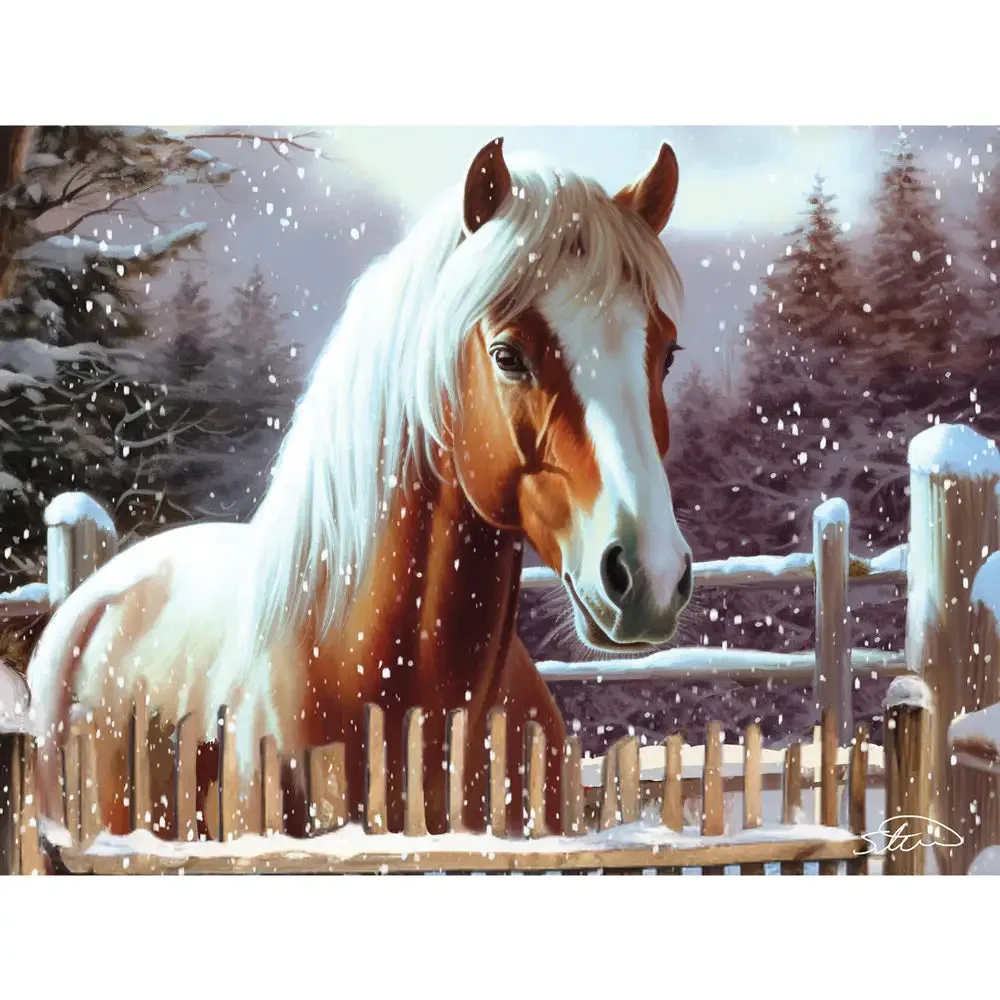
- Home On The Farm Jigsaw Puzzle: Feel the warmth of country life with Home on the Farm by Shawna Stewart. This heartwarming puzzle features a beautiful chestnut horse with a flowing, cream-colored mane, standing serenely behind a rustic wooden fence. Its gentle expression and glistening coat bring a sense of calm as snow softly falls, blanketing the farm in quiet beauty. Framed by snowy evergreens, this scene captures the grace and charm of a horse… The large areas of solid color and sky in this scene make it easier to sort and store in sections, reducing the risk of dust and warping during assembly.
- Lighthouse Park Jigsaw Puzzle: This jigsaw puzzle is designed by David Maclean and available in multiple piece count. Puzzles are renowned for their engaging complexity, offering a satisfying challenge with their smaller, intricate pieces. Waves crash against the rugged coast beneath the towering lighthouse on the point. As the sun sets, casting a warm orange glow across the sky, a rainbow emerges near the water. Available in multiple piece… The intricate details and smaller pieces in this puzzle mean you'll want to store it carefully to avoid losing pieces. The multiple piece count options let you choose a size that fits your storage space.