Start With the Right Spot Before You Assemble
The Jr. Classic Kitchen Helper Step-Up is designed to bring toddlers ages 18 months and up to counter height, and its footprint is 21"W x 18"D x 36"H. Before you build it, measure the floor space beside the counter you plan to use. You want the stool to sit fully on a level, solid surface with no gap between the back of the unit and the counter edge.
Avoid placing it in front of a stove, over a floor vent, or on a loose rug. The anti-tip feet are part of the safety design, but they work best when the stool is on a stable floor and pushed close to the counter so your child cannot rock it away from the edge.
Assembly and Platform Height Checkpoints
The supplied product information does not include a step-by-step assembly manual, so use the instructions that come with the box for hardware order and tightening. The checkpoints below focus on the setup decisions the catalog does support.
- Unpack and identify the fixed first step: The first step is fixed at 8" high. Confirm it is in place before you attach the adjustable platform, since it sets the lower climbing point.
- Choose a platform height: The platform adjusts to 13", 15" and 17" heights. Start lower for a younger or less steady toddler and raise it as your child grows. The catalog does not specify a height-by-age chart, so judge by whether your child can stand comfortably with the counter at chest or waist level.
- Check the three wooden railings: The unit includes three wooden railings. After assembly, confirm each railing is secure and that your child cannot squeeze past the openings.
- Test stability at the counter: With the stool in its final spot, press down on the platform and push gently from the side. The anti-tip feet should keep the base planted. If the unit shifts, move it to a flatter surface rather than adding pads or risers.
What the Step-Up Provides
-
Jr. Classic Kitchen Helper Step-Up: Non-slip treads on each step, anti-tip feet and three wooden railings. These are the built-in safety features you are relying on, so check each one after assembly and before every use.
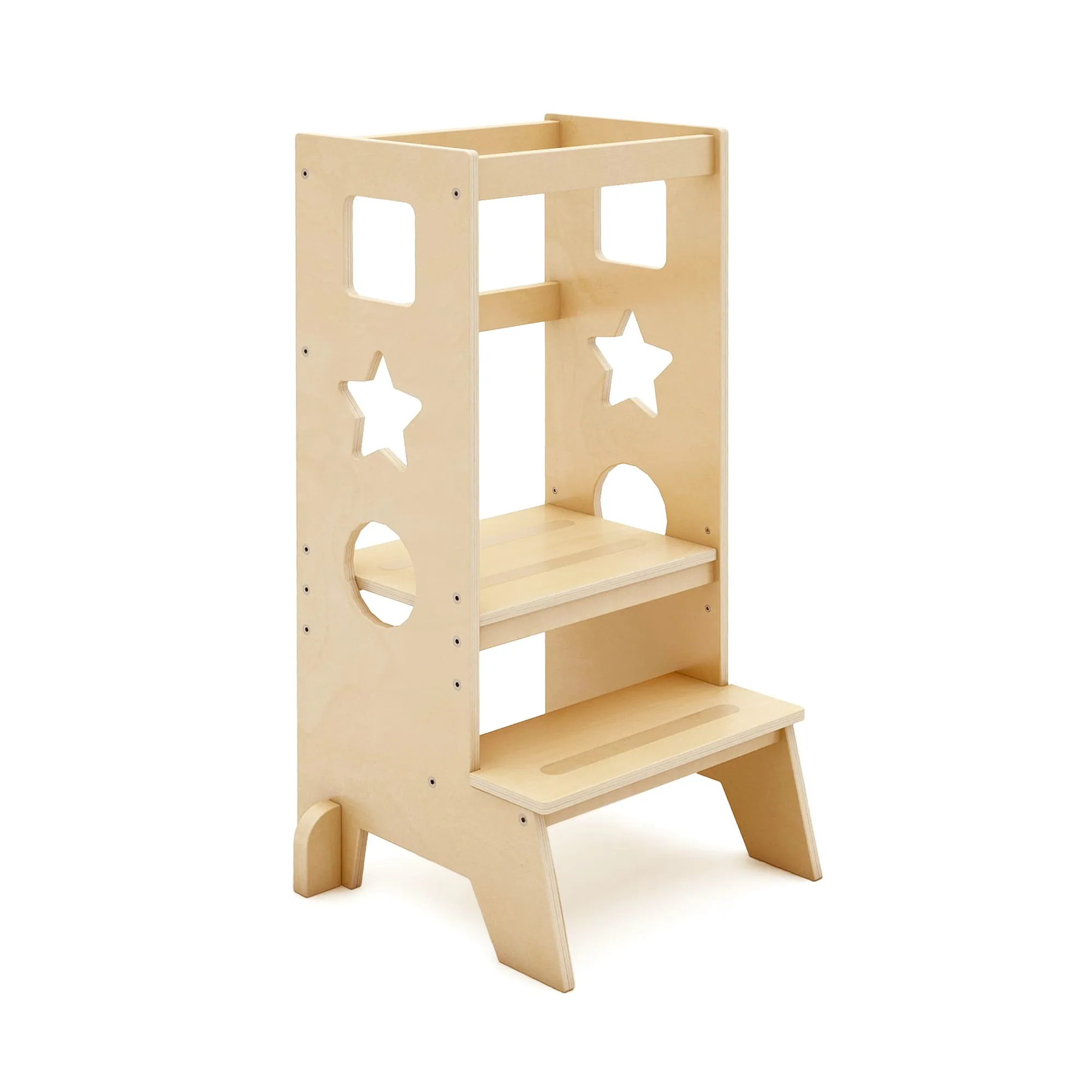
Jr. Classic Kitchen Helper Step-Up
-
Jr. Classic Kitchen Helper Step-Up: Supports up to 125 pounds and is designed for children ages 18 months and up. This gives you the weight and age limits for the setup; do not use it with children below the stated age or beyond the weight limit.
-
Jr. Classic Kitchen Helper Step-Up: The platform adjusts to 13", 15" and 17" heights, with the first step fixed at 8". These are the only platform positions confirmed by the supplied information, so plan your counter setup around them.
Matching the Stool to Your Kitchen Layout
The Jr. Classic Kitchen Helper Step-Up is described as compact yet sturdy, and its 21"W x 18"D footprint is the number to compare against your counter run. A standard counter depth is not supplied in the product record, so measure your own counter and leave enough room for your child to stand on the platform without their hips pressing the edge.
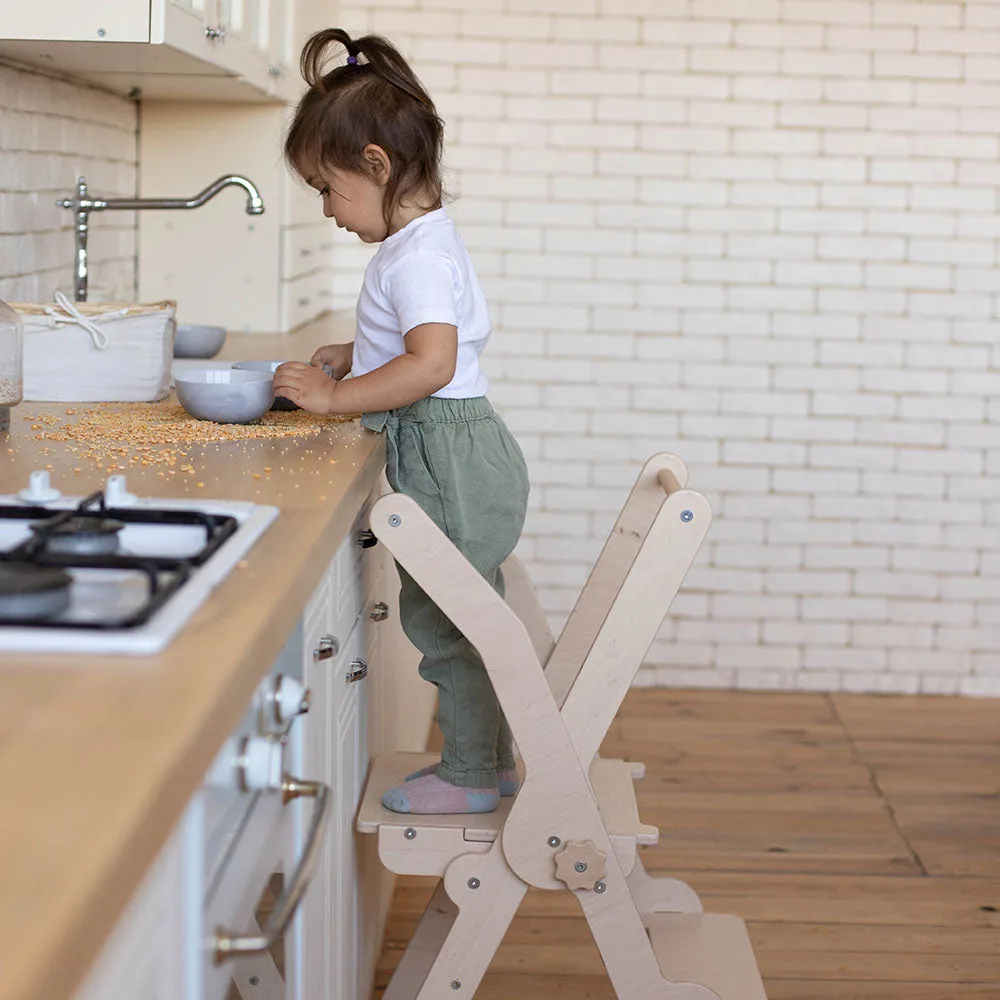
If your kitchen has a narrow galley aisle, check that the stool does not block a walkway when in use. Because the unit is 36"H, it will sit close to standard counter height; confirm the platform height you choose puts the counter at a comfortable level for your toddler rather than at their chin.
Daily Safety Checks Before Your Child Climbs
- Treads and platform: Wipe up spills on the non-slip treads and platform before use; the catalog lists non-slip treads but does not describe a cleaning method beyond normal care.
- Railing tightness: Give each of the three wooden railings a gentle pull. If any feels loose, tighten the hardware before your child uses the stool.
- Position against the counter: Slide the stool back to the counter edge each time. The anti-tip feet are designed to help, but they cannot compensate for a stool left out in the open.
- Supervision: The product is intended to foster independence in kitchen activities, but the supplied information does not state that it is a substitute for adult supervision. Keep an adult nearby, especially with children near the 18-month minimum.
When to Raise the Platform
Move from 13" to 15" and then to 17" when your child's standing height makes the lower setting feel too low against your counter. There is no supplied age or height chart for each platform position, so use your own observation: if your toddler has to reach up with straight arms or stands on tiptoe, the platform is probably too low for that counter.
Lower the platform again if your child leans over the top railing or seems unsteady. The three platform positions are fixed, so you cannot fine-tune between them; choose the closest setting and adjust the stool's distance from the counter instead.