Quick answer
Jumbo floor puzzles with large, easy-to-handle pieces are excellent tools for developing hand-eye coordination, problem-solving skills, and vocabulary in toddlers. The best choice depends on your child's current interests and whether they need letter recognition or imaginative play.
Why size and piece count matter for toddlers
Toddlers have developing fine motor skills, so oversized puzzle pieces that are easy to grasp reduce frustration and build confidence. A lower piece count (around 26 to 50) is ideal for short attention spans, allowing children to complete the puzzle in one sitting and feel a sense of accomplishment.
Floor puzzles also encourage movement—children sit, kneel, and reach across the puzzle, which supports gross motor development and spatial awareness. The bright, detailed illustrations on these puzzles naturally spark conversation, helping parents expand their child's vocabulary during play.
Thematic engagement vs. educational structure
Some jumbo floor puzzles focus on imaginative themes that invite storytelling and open-ended discussion, while others embed a learning goal like alphabet matching directly into the puzzle. Neither approach is inherently better—it depends on whether your toddler thrives on free exploration or responds well to structured challenges.
A theme that matches your child's current obsessions (vehicles, animals, rescue scenes) will hold their attention longer. If you want to gently introduce letters or numbers, a puzzle that pairs each piece with a letter can make learning feel like a game.
How to choose the right jumbo floor puzzle
- Match piece count to attention span: For toddlers under 3 or those new to puzzles, start with 26 pieces or fewer. Older toddlers (3+) who can focus longer may enjoy 50-piece puzzles. A 26-piece puzzle can be completed in one short session, building confidence for longer puzzles later.
- Choose a theme that sparks conversation: If your child loves vehicles, rescue scenes, or animals, pick a puzzle with a rich illustration that invites you to talk about what you see. This builds vocabulary naturally. The Emergency Rescue puzzle's bright scenes encourage naming vehicles and discussing roles, while Richard Scarry's puzzle has over 40 vehicles to discover.
- Decide if you want built-in learning: Puzzles that incorporate letters, numbers, or shapes turn play into a gentle lesson. If you're ready to introduce the alphabet, a letter-matching puzzle is a smart choice. Richard Scarry's puzzle pairs each piece with a letter, making alphabet practice part of the fun without pressure.
Two jumbo floor puzzles compared
-
Jumbo Floor Puzzle - Emergency Rescue: 50 Pcs: The Jumbo Floor Puzzle - Emergency Rescue: 50 Pcs features 50 large pieces with bright, colorful illustrations that encourage parent-child discussion about pictured objects. The higher piece count (50) offers a longer, more detailed play session, and the rescue theme invites rich storytelling and vocabulary building around emergency vehicles and helpers.
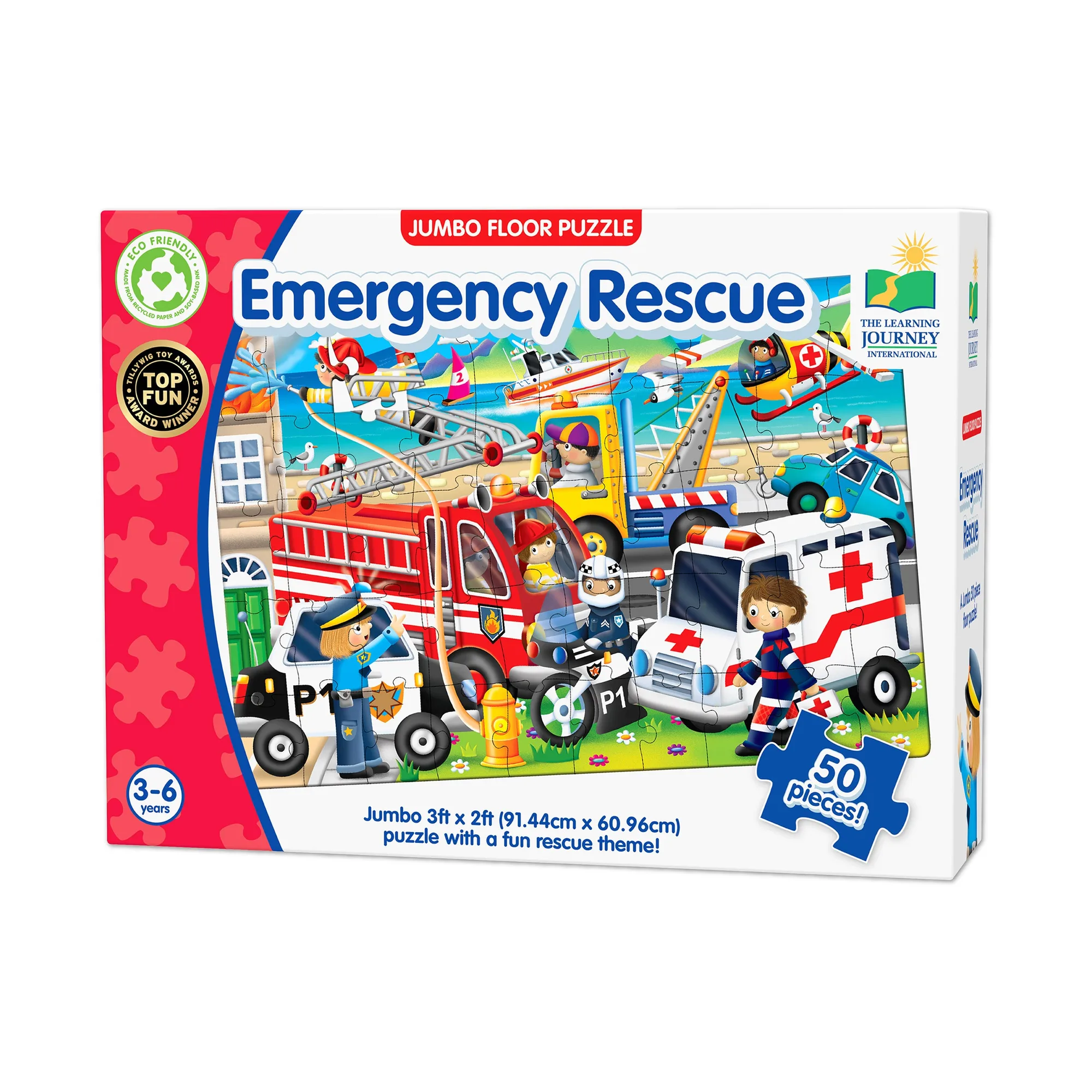
Jumbo Floor Puzzle - Emergency Rescue: 50 Pcs
-
Richard Scarry's Things That Go! Giant Floor Puzzle: 26 Pcs: Richard Scarry's Things That Go! Giant Floor Puzzle: 26 Pcs helps children learn the alphabet by matching letters with over 40 wacky vehicles from Richard Scarry's Busytown. With only 26 large pieces, this puzzle is quicker to complete and directly teaches letter recognition, making it ideal for toddlers who are starting to show interest in the alphabet.
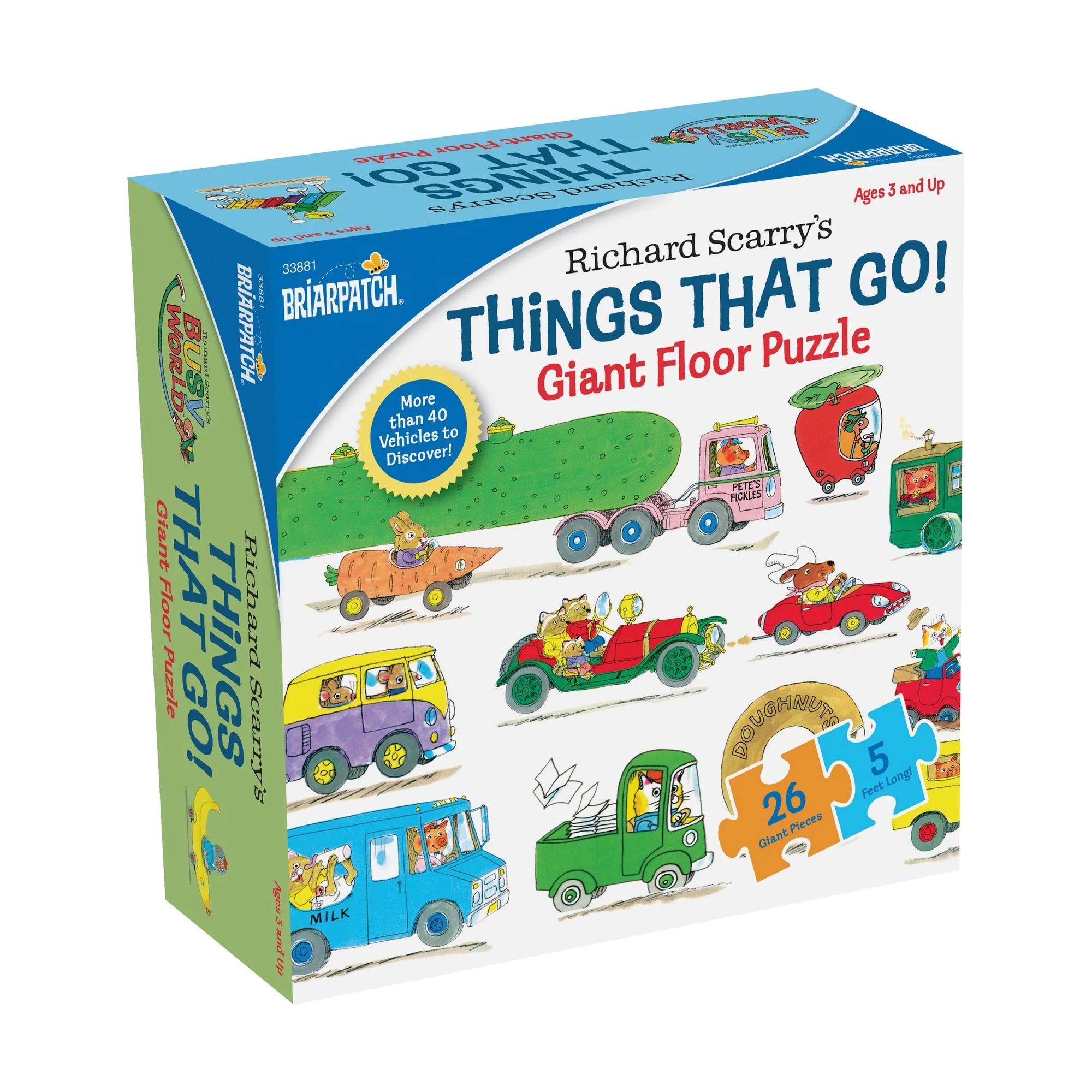
Richard Scarry's Things That Go! Giant Floor Puzzle: 26 Pcs
Which puzzle fits your toddler?
Best for
- Toddlers who love imaginative rescue play and can handle a longer puzzle session (50 pieces)
- Families wanting a conversation-rich activity that builds vocabulary around community helpers and vehicles
Not ideal for
- Children who easily get overwhelmed by many pieces—start with a 26-piece puzzle instead
- Parents who specifically want letter-recognition practice built into the puzzle (choose the Richard Scarry option for that)