Quick answer
Yes, with a caveat. Jumbo triangular crayons are designed to encourage the preferred grip for later writing skills, and their chunky, roll-resistant shape makes them easier for small hands to hold. But the crayon is a tool, not a training program. Grip development still comes from repeated practice, adult modeling, and letting your child scribble on their own terms.
The claim: triangular crayons build a better pencil grip
The pitch sounds convincing: three flat sides force little fingers into a tripod position, so every coloring session becomes handwriting practice. That's the claim. The reality is more nuanced, and it matters because parents spend real money chasing the "right" first crayon.
Here's what the design actually does. A triangular barrel gives kids three natural resting points for their fingers instead of a single round surface that can slip. That makes the crayon easier to control, which in turn gives a toddler more successful marks on paper. Success feels good, so they color longer. Longer sessions mean more fine motor practice. That's the real chain of benefits, and it's worth understanding before you buy.
What the shape does (and doesn't do)
A triangular crayon doesn't teach a grip by itself. It removes one common frustration: the crayon rolling off the table or twisting out of position mid-stroke. When the tool stays put, a child can focus on the mark they're making rather than on chasing the crayon.
What the shape can't do is correct a fist grip, force a mature tripod hold before a child is ready, or replace the hand strength that comes from squeezing, pinching, and manipulating everyday objects. If your child is still in a full-fist stage, that's developmentally normal. A triangular crayon simply gives them a more stable object to hold while they build up to a more refined grip.
- Triangular barrels offer three stable finger rests and resist rolling.
- They make early coloring more successful, which encourages longer practice.
- They do not replace hand-strengthening play or adult modeling.
- They are not a handwriting curriculum in crayon form.
How to actually support crayon grip development
The most effective thing you can do is make drawing easy and appealing. Keep crayons within reach, use paper large enough that your child doesn't have to fight the edges, and sit beside them to model a relaxed grip without correcting every stroke.
Short, frequent sessions beat long forced ones. A five-minute coloring burst after lunch, repeated most days, does more for fine motor crayon skills than a single 30-minute "practice" session. If your child wants to scribble in circles rather than color inside a shape, let them. The motion is the point.
Also watch for fatigue. If your child switches hands, drops the crayon repeatedly, or starts pressing too hard, the session is probably over. Grip endurance builds gradually, and pushing through frustration teaches them that drawing is a chore.
Material matters more than most parents expect
Wax crayons snap. Plastic crayons usually don't. That difference matters for toddlers who press hard, drop things constantly, and treat every art supply as a percussion instrument. A crayon that survives the drop test stays in rotation, which means more practice time.
Plastic also changes the feel. It's smoother and firmer than wax, so the crayon doesn't crumble or leave waxy smears. For a child still learning how much pressure to apply, that consistency can make marks look more like what they intended, which is quietly motivating. The tradeoff is that plastic crayons can feel slick to some kids, and they don't have the classic crayon smell or texture that some children enjoy.
When triangular crayons are the wrong choice
If your child is under about 18 months, a jumbo triangular crayon may still be too small or too tempting to mouth. Chunky is not the same as mouth-safe, and crayons are not a snack. Supervise closely or wait.
If your child already holds a standard crayon comfortably and colors with control, a triangular barrel is optional rather than essential. The benefit is greatest for kids in the early grab-and-scribble stage who need a tool that cooperates with their hands.
And if the goal is handwriting readiness, crayons are one input among many. Playdough, tearing paper, stacking blocks, and picking up small objects all contribute to the same underlying hand strength and coordination.
Verdicts on common crayon grip claims
- Triangular crayons automatically teach a proper grip: The shape encourages a preferred grip by giving fingers three stable resting points, but it doesn't correct a fist hold or force a tripod position before a child is ready. Verdict: Partly true. Helpful tool, not a teacher.
- You need special crayons to develop fine motor skills: Fine motor crayon skills grow from repeated practice, hand-strengthening play, and adult modeling. A triangular crayon makes practice easier and more successful, but it isn't the source of the skill. Verdict: False. The crayon supports practice; it doesn't replace it.
- Plastic crayons are a gimmick compared to wax: Plastic is more durable and won't roll away, which keeps the crayon in your child's hand and out of the floor-and-lose cycle. The tradeoff is a smoother, slicker feel that some kids notice. Verdict: False. Different material, real practical advantages.
- Longer coloring sessions build grip faster: Short, frequent sessions work better than long forced ones. Watch for hand switching, dropping, or pressing too hard, and end the session before frustration sets in. Verdict: False. Frequency beats duration.
A crayon built for this exact stage
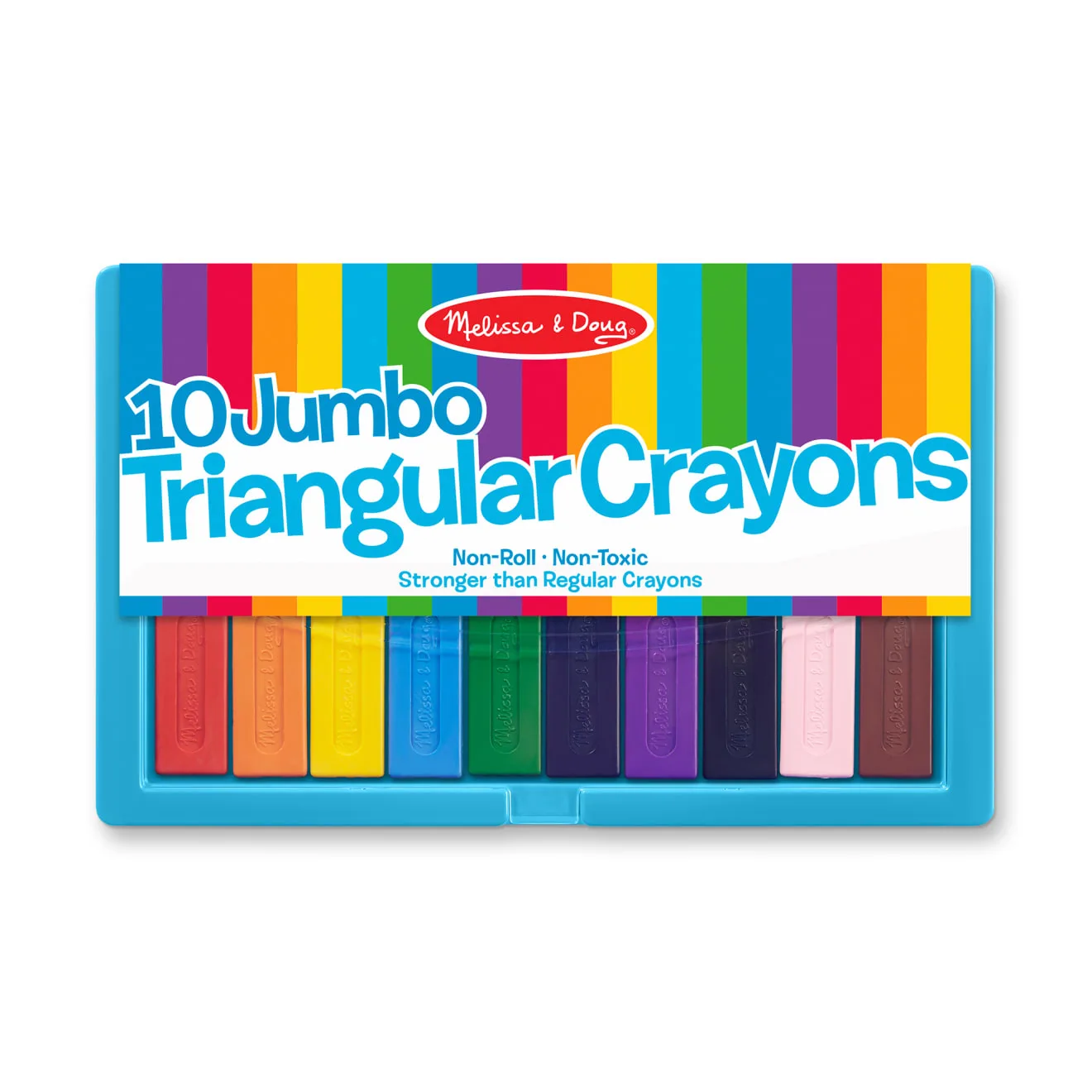
- Jumbo Triangular Crayons: The bright colors of these crayons will encourage your child's creativity and the unique triangular shape will help develop the preferred grip for later writing skills. The triangular shape is the core feature here, and it's aimed squarely at the grip-building stage this article is about.
- Jumbo Triangular Crayons: They are made of plastic, not wax, for additional durability and their easy to grasp design won't allow them to roll away. Plastic means they survive drops and heavy pressure, and the no-roll shape removes a common toddler frustration that interrupts practice.
- Jumbo Triangular Crayons: A flip-top case makes clean-up and travel a snap. Easy storage means the crayons are more likely to be available for short, frequent coloring sessions, which is how grip skills actually develop.