Quick answer
Choose a stationary activity center or a 2-in-1 jumper when your baby can hold their head up steadily and is around 6 months old, and skip a door jumper unless you have a safe, dedicated doorway and want a short-use option. A 2-in-1 like the Ingenuity Spring & Sprout 2-in-1 Baby Activity Center Jumper gives you jumper mode first and table mode later, so it earns its space longer than a single-mode jumper.
The real difference is how long the product stays useful
A door jumper hangs from a frame and is used only during the jumping phase. An activity center is a freestanding seat with a stable base, and some convert to a toddler table. That conversion matters because most babies outgrow jumping well before they outgrow a low table.
If you are shopping for a first jumper, look at the upper age and mode limits, not just the lower age. A product that stops working at 12 months may cost more per month than a 2-in-1 that stays in use past 24 months.
Door jumpers are convenient but have narrower use
A door jumper clamps to a doorframe, so it takes no floor space and packs away easily. The trade-off is that it depends on a suitable doorway and a baby who is actively jumping. Once your baby wants to sit, stand, or play at a surface, a door jumper no longer fits the routine.
Check your doorframe and trim before buying any door jumper. The clamp needs a solid, correct fit, and the doorway must be clear of hazards on both sides.
Age and weight are both readiness checks
Most activity centers and jumpers list a starting age around 6 months, but age alone is not enough. Your baby should also have good head and neck control and be able to bear some weight on their legs with support.
Weight limits vary by model, so read the specific product label rather than assuming a standard. If your baby is at the top of the weight range or not yet steady, wait or choose a floor-based play option instead.
Decision rules for choosing a jumper or activity center
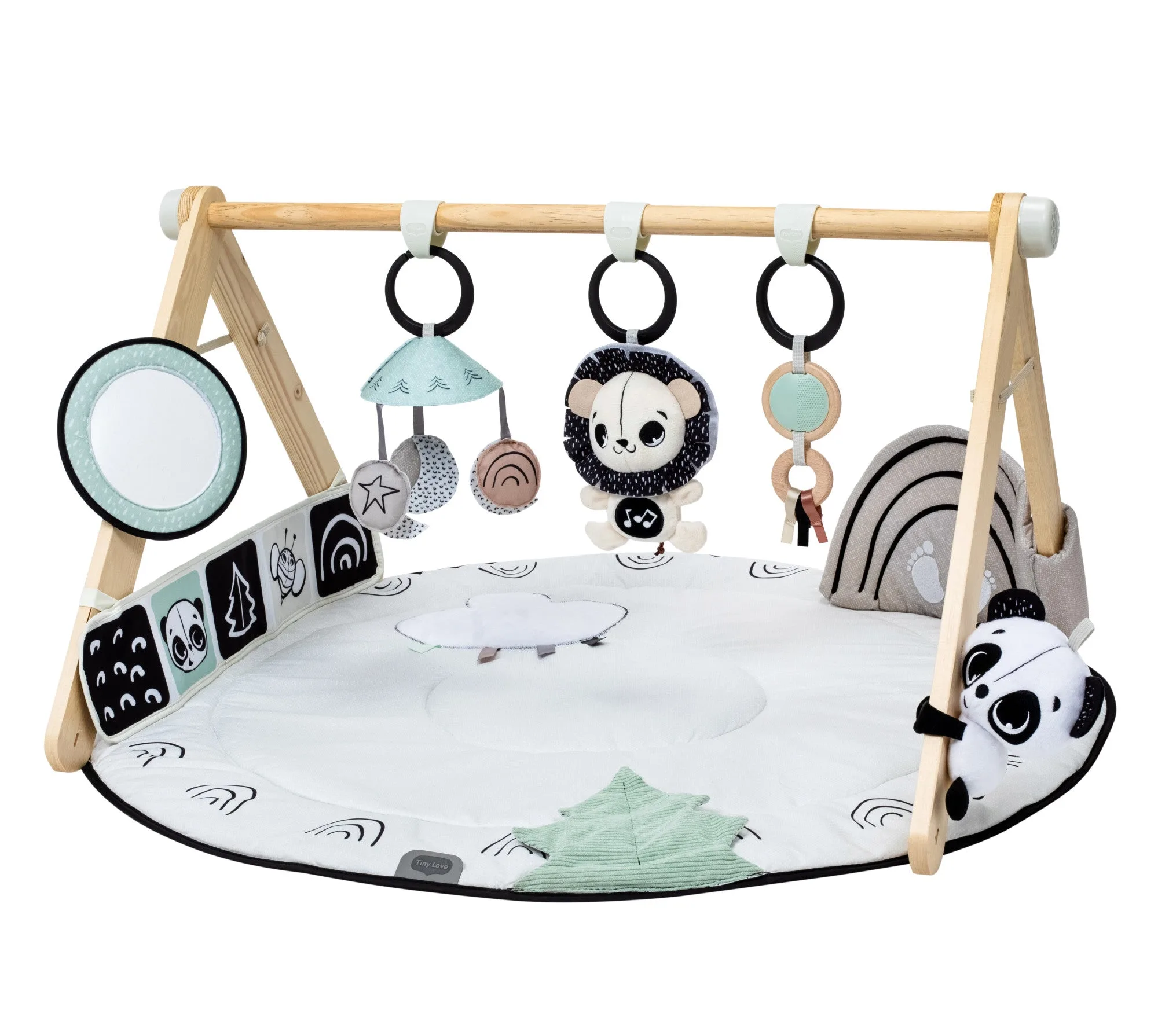
- If your baby is under 6 months or still wobbly: Wait. Use a floor gym or play mat until head control is steady and the product's minimum age is met. Do not use a jumper or activity center early to try to speed development.
- If you want one product to last past the jumping stage: Choose a 2-in-1 activity center jumper with a table mode, like the Ingenuity Spring & Sprout, and check that the upper age fits your child. Confirm the table mode weight and age limits before relying on the second stage.
- If you have limited floor space and a suitable doorway: A door jumper can work for short, supervised sessions, but only if the doorframe is compatible and the area is clear. Measure the doorway and test the clamp before first use.
- If your baby is near the top of the weight range: Check the specific product's weight limit. If your baby exceeds it, stop using the jumper or activity center and switch to floor play. Weight limits are per product, not universal.
Product facts that affect the decision
-
Ingenuity Spring & Sprout 2-in-1 Baby Activity Center Jumper: 2-in-1 design with jumper mode and toddler activity table mode for ages 6–24+ months. You get a jumping phase and a later table phase from one purchase, which can justify the floor space.
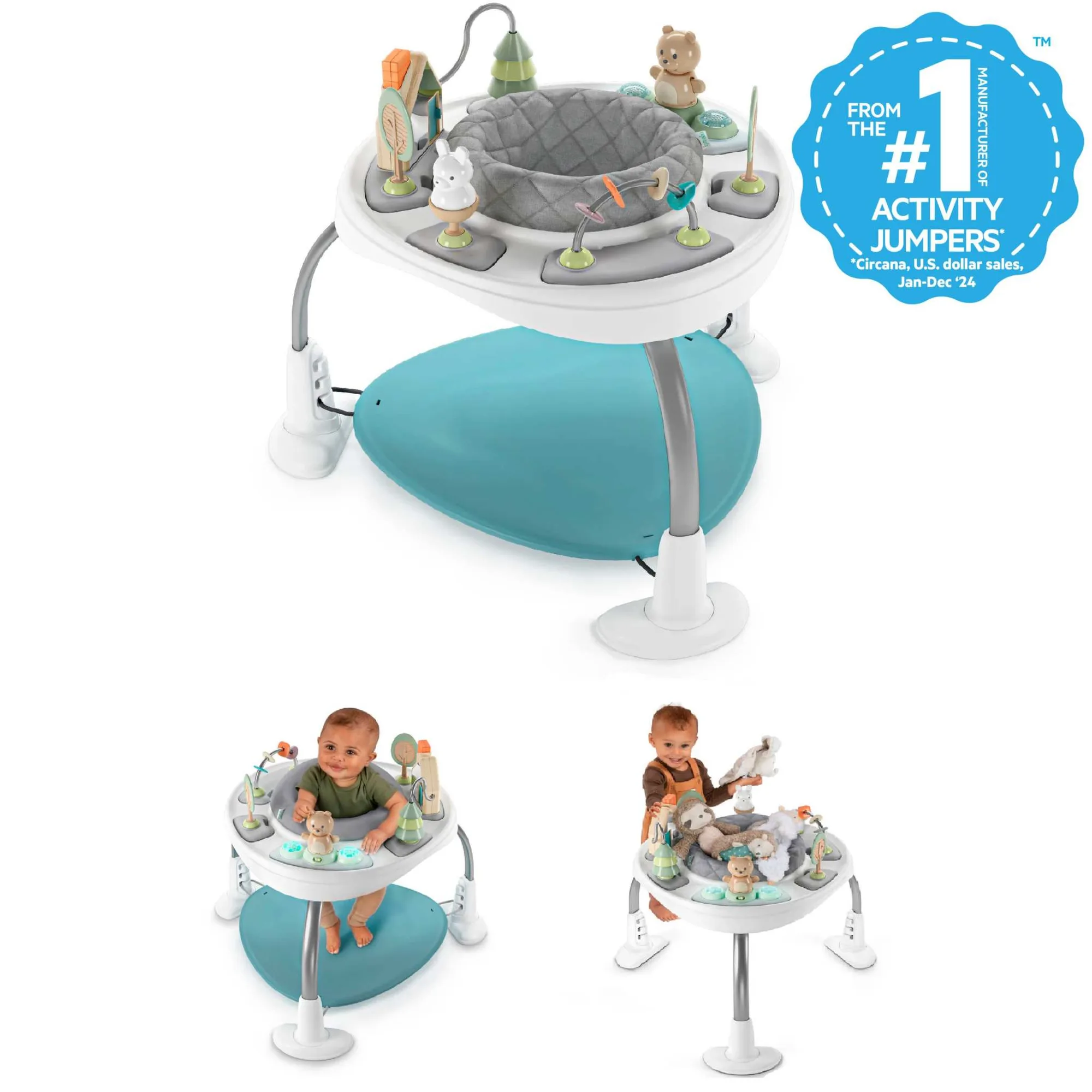
Ingenuity Spring & Sprout 2-in-1 Baby Activity Center Jumper
Who each option fits
Best for
- Parents who want a jumper that converts to a toddler table and stays useful past 12 months
- Families with a dedicated floor space for a freestanding activity center
- Babies around 6 months who have steady head control
Not for
- Babies under 6 months or those who cannot yet hold their head up
- Homes without a safe, compatible doorway if you are considering a door jumper
- Parents looking for a walker or push toy, which is a different product category