Quick answer
For most small-to-medium dogs, a 4 to 5 foot leash is the sweet spot for daily walks: enough slack to sniff and move naturally, short enough to keep control near traffic. If you mostly train or walk in busy areas, go shorter (around 3 to 4 feet). The K9R M2L LightSpeed Leash is built specifically for small to medium dogs, so match its length to your walking environment and your dog's pulling habits rather than to the dog's weight alone.
Why leash length matters more than most owners think
Leash length decides how much freedom your dog gets and how quickly you can respond. A longer leash gives your dog room to sniff, circle, and move at its own pace, which supports calmer walks. A shorter leash gives you faster, more precise control in traffic, around other dogs, or during training.
The mistake is buying one length for every situation. A 6-foot leash that feels great on a quiet trail can become a tangled, hard-to-manage loop on a crowded sidewalk. The M2L LightSpeed Leash is designed as a lightweight, streamlined option for small to medium dogs, so the length you choose should match the job you're asking it to do.
Match length to your walking environment
Urban and suburban sidewalks: a 4-foot leash keeps your dog close without constant tension. You can still give slack for sniffing, but you won't have a long loop dragging on the ground or wrapping around your legs.
Parks and quiet neighborhoods: a 5-foot leash is a good middle ground. It gives your dog more room to explore while staying manageable if a distraction appears.
Trails and open space: if local rules allow, a 6-foot leash gives more freedom. Just remember that a longer leash also means more slack to manage, so it works best for dogs that already walk without hard pulling.
Training vs. daily walks: two different length needs
For training, shorter is usually better. A 3 to 4 foot leash lets you keep your hand close to your body and deliver clear, timely cues. It also reduces the chance of your dog building speed before you can redirect.
For daily walks, a 4 to 5 foot leash is more comfortable. It gives your dog enough room to move without turning the walk into a constant correction session. If you're working on loose-leash skills, start with a shorter length and add slack as your dog improves.
How the M2L LightSpeed Leash fits into the decision
The M2L LightSpeed Leash is made for small to medium dogs, with nylon parachute-grade tubular webbing that keeps the leash light without giving up holding power. The wrist strap is soft, heavy-duty nylon webbing with neoprene padding inside, which matters on longer walks when a thin strap would dig into your hand.
Because the leash is lightweight, a longer length stays manageable. A heavier leash in the same length can feel clumsy and tiring. If you're choosing between two lengths, the lighter build of the M2L makes the longer option more practical than it would be with a bulkier leash.
Fit checks before you commit to a length
Hold the leash at your normal walking position with your dog beside you. The handle should sit comfortably in your hand without forcing your arm to bend or stretch. If you have to reach, the leash is too short for relaxed walking.
Check the slack. With your dog standing calmly, there should be a gentle curve in the leash, not a tight line and not a pile on the ground. If the leash drags, it's too long for that environment. If it's taut while your dog is just standing, it's too short.
Consider your dog's size and gait. A small dog with a short stride may do fine with a 4-foot leash, while a medium dog that likes to range will benefit from 5 feet. The M2L is built for small to medium dogs, so if you're walking a large breed, look at a harness and leash combination designed for that size instead.
Decision rules for choosing your M2L leash length
- If you walk in busy areas: Choose a 3 to 4 foot length. It keeps your dog close and reduces the chance of tangles around people, strollers, or other dogs. Shorter is safer in traffic.
- If you want one leash for everyday walks: Choose 4 to 5 feet. This range balances freedom and control for most small-to-medium dogs on sidewalks and neighborhood routes. The middle range is the most versatile.
- If you train frequently: Start with 3 to 4 feet for clear cues, then move to a longer length as your dog's loose-leash skills improve. Length should follow skill, not the other way around.
- If you walk a large dog: The M2L is built for small to medium dogs. Use a large-dog harness like the M1 LightSpeed Harness for Large Dogs and a leash matched to that size. Match the gear to the dog, not just the walk.
Product facts that affect your length choice
- K9R - M2L LightSpeed Leash: The M2L LightSpeed Leash is a lightweight, streamlined leash built specifically for small to medium dogs, with nylon parachute-grade tubular webbing and a soft, heavy-duty nylon wrist strap with neoprene padding. The light build makes a longer length easier to manage, and the padded strap reduces hand fatigue on longer walks.
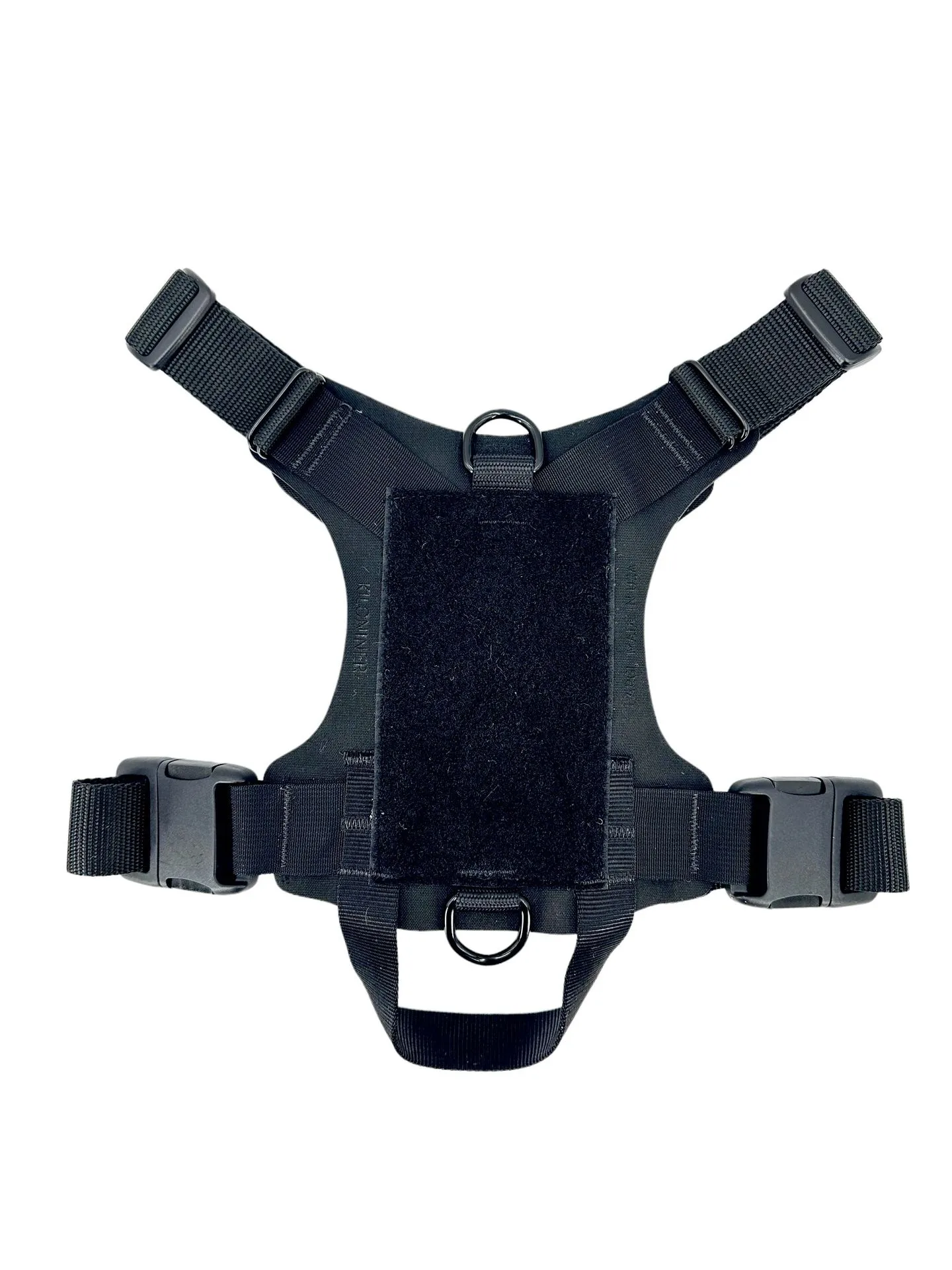
- K9R - M1 LightSpeed Harness Large: The M1 LightSpeed Harness for Large Dogs is hand-built in-house with a laser-cut, low-profile pattern scaled up for large breeds. If you walk a large dog, pair a large-dog harness with a leash rated for that size rather than relying on a small-to-medium leash.
Who the M2L LightSpeed Leash is for
Best for
- Owners of small to medium dogs who want a lightweight daily leash
- Walkers who prefer a padded wrist strap for longer outings
- Owners who want a simple, streamlined leash without extra bulk
Not for
- Owners of large or strong dogs that need a heavier-duty leash and large-dog harness
- People looking for a retractable or variable-length leash
- Owners who need a leash longer than 6 feet for open-space recall work