Quick answer
Match the speaker's woofer size and rated power to the space and crowd you actually have. For a typical living room or small home party, a compact all-in-one system with a single 8-inch woofer is plenty. For a large room, backyard, or event with 30 or more people, choose a tower or 18-inch party speaker with three 8-inch woofers or a large single woofer. Bigger is not automatically better; an oversized speaker in a small room often sounds boomy and is harder to place.
Most karaoke speaker advice starts with wattage, but wattage alone tells you very little. A 15W boombox and a 200W tower can both be called 'powerful'. What actually determines whether a speaker fills your room is the combination of woofer size, cabinet design, and how the system is meant to be used. This karaoke speaker buying guide walks through the decision rules that matter: room size, crowd size, indoor or outdoor, and whether you need portability or a fixed setup.
We will use real Dolphin models as concrete examples so you can see how the numbers translate into a purchase. The goal is not to sell you the biggest speaker, but to help you pick the one that fits your space, your guests, and how often you will move it.
Start With Room Size, Not Wattage
A karaoke speaker for room size is really a question of air volume and how many people will absorb sound. A small bedroom or living room under 200 square feet needs very little output; a compact speaker with a 15W to 30W amp and a single small driver will already be loud enough. A medium living room or finished basement of 200 to 500 square feet benefits from a tower or a speaker with a dedicated woofer, because the larger cabinet moves more air and keeps vocals clear at higher volumes.
Once you move past roughly 500 square feet, or into an open-plan space with hard floors and high ceilings, you need a speaker designed to project. That is where multi-woofer towers and large single-woofer party speakers earn their place. The practical rule: if you have to raise your voice to talk to someone three feet away while the music plays, the speaker is either too small for the room or positioned badly.
- Measure your room before you shop; square footage is a better guide than 'small, medium, large' labels.
- Hard floors, glass, and bare walls reflect sound and can make a small speaker sound harsh, so rugs and soft furnishings help.
- If you host in more than one room, prioritize portability over maximum output.
How Much Power Does a Karaoke Speaker Need?
There is no single wattage number that guarantees a good karaoke experience, because power ratings are measured differently between brands. What you can compare is the physical driver configuration. A single 8-inch woofer in a well-tuned cabinet will handle a living room and a small home party comfortably. Three 8-inch woofers in a tower, as on the KaraokeBox 380, move noticeably more air and are built for larger rooms and louder playback without straining.
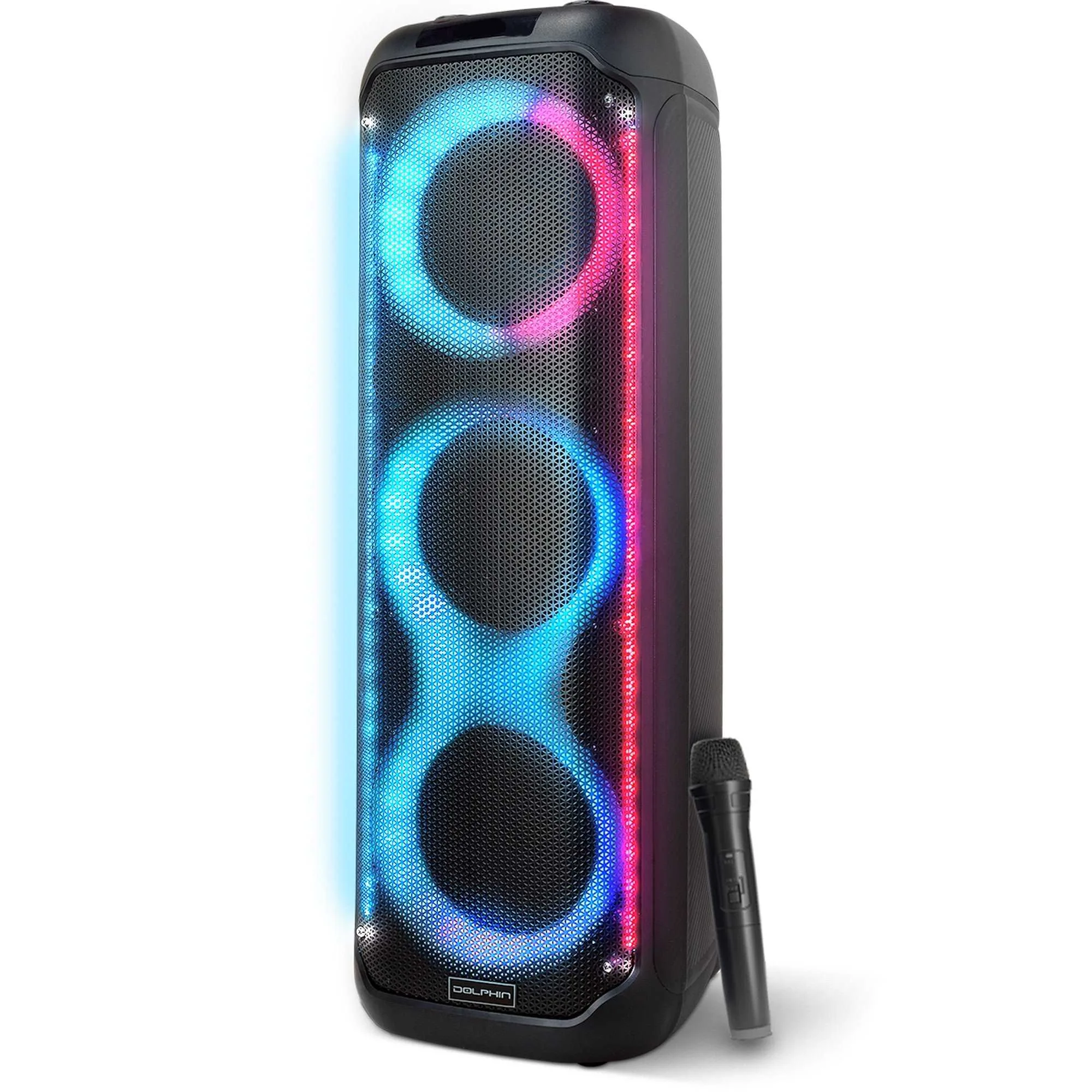
KaraokeBox 380
The honest trade-off is size and weight. More woofers and a bigger cabinet mean better projection, but also a speaker that is harder to carry, harder to store, and more likely to overwhelm a small room. If your karaoke sessions are mostly family and a few friends in a normal living room, a compact system will sound cleaner and be far easier to live with. If you regularly host 20 or more guests, the extra headroom is worth the bulk.
- Treat wattage as a rough guide only; driver size and cabinet volume are more reliable indicators of real-world loudness.
- A speaker with more headroom can play at lower volume and still sound full, which often sounds better than a small speaker pushed hard.
- If you cannot audition in person, buy from a store with a clear return policy.
Indoor Home Parties vs. Outdoor Events
Indoor karaoke is forgiving. Walls and ceilings reinforce bass, so a modest speaker can sound surprisingly full. The main risk indoors is too much bass in a small room, which muddies vocals. Look for a system with a rechargeable design and built-in LED lights if you want atmosphere without extra gear, and check that it has the input options you need for a phone, a second microphone, or a music player.
Outdoor karaoke is the opposite: there are no walls to reinforce sound, and open air swallows bass quickly. For a backyard party or an event, choose a speaker with a large woofer and enough power to project across the space. A rechargeable party speaker with a remote and a wireless microphone, like the BoxParty 18, is designed for exactly this scenario. For outdoor use, also plan for power or a long battery runtime, and consider a tripod stand to get the speaker off the ground and closer to ear level.
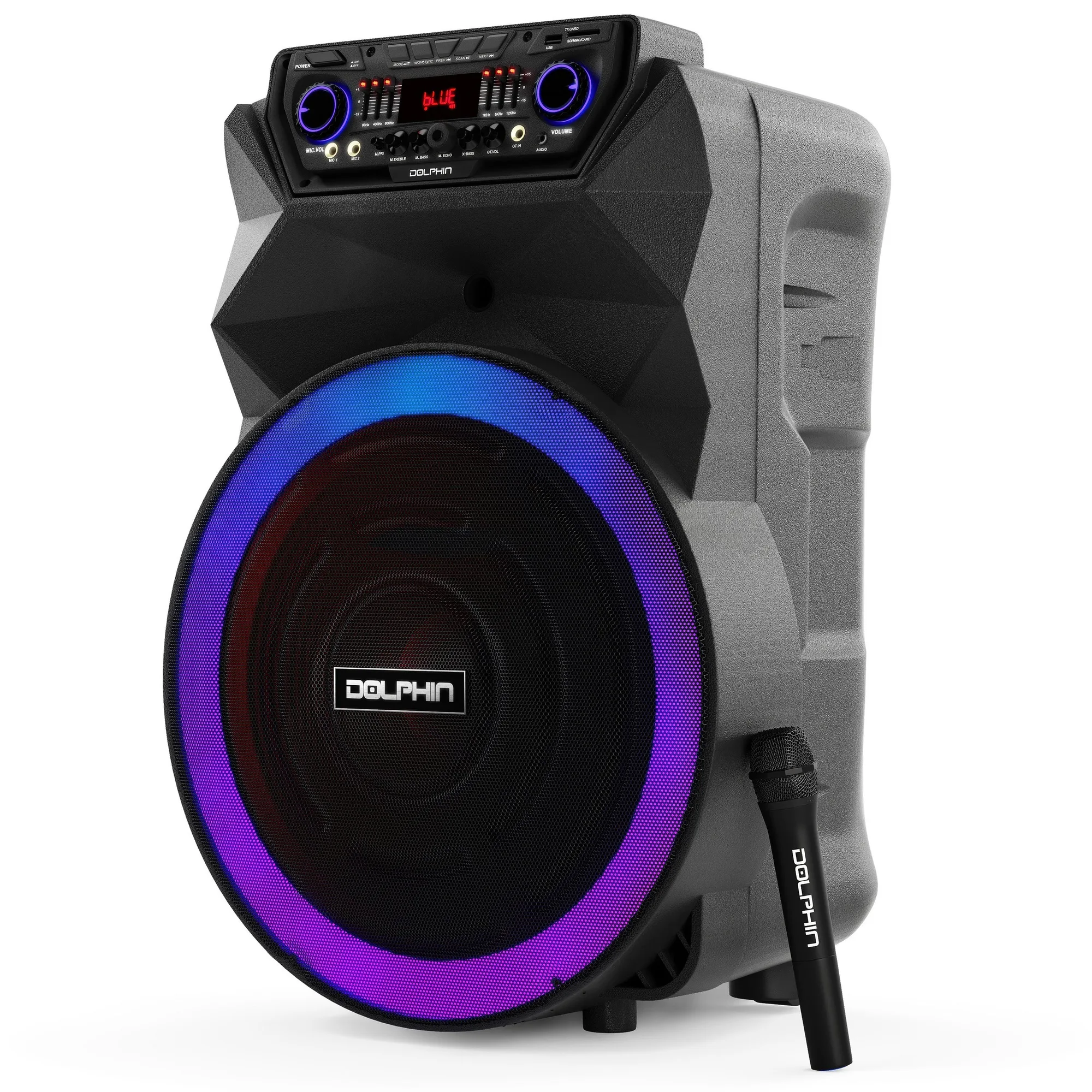
BoxParty 18
- For outdoor events, place the speaker on a stand or raised surface so sound reaches the audience instead of the grass.
- Bring a spare microphone or check whether the system supports a second mic input if you expect multiple singers.
- Test your setup outdoors before the event; what sounds loud in a garage can disappear in an open yard.
Portability, Setup, and the Accessories That Matter
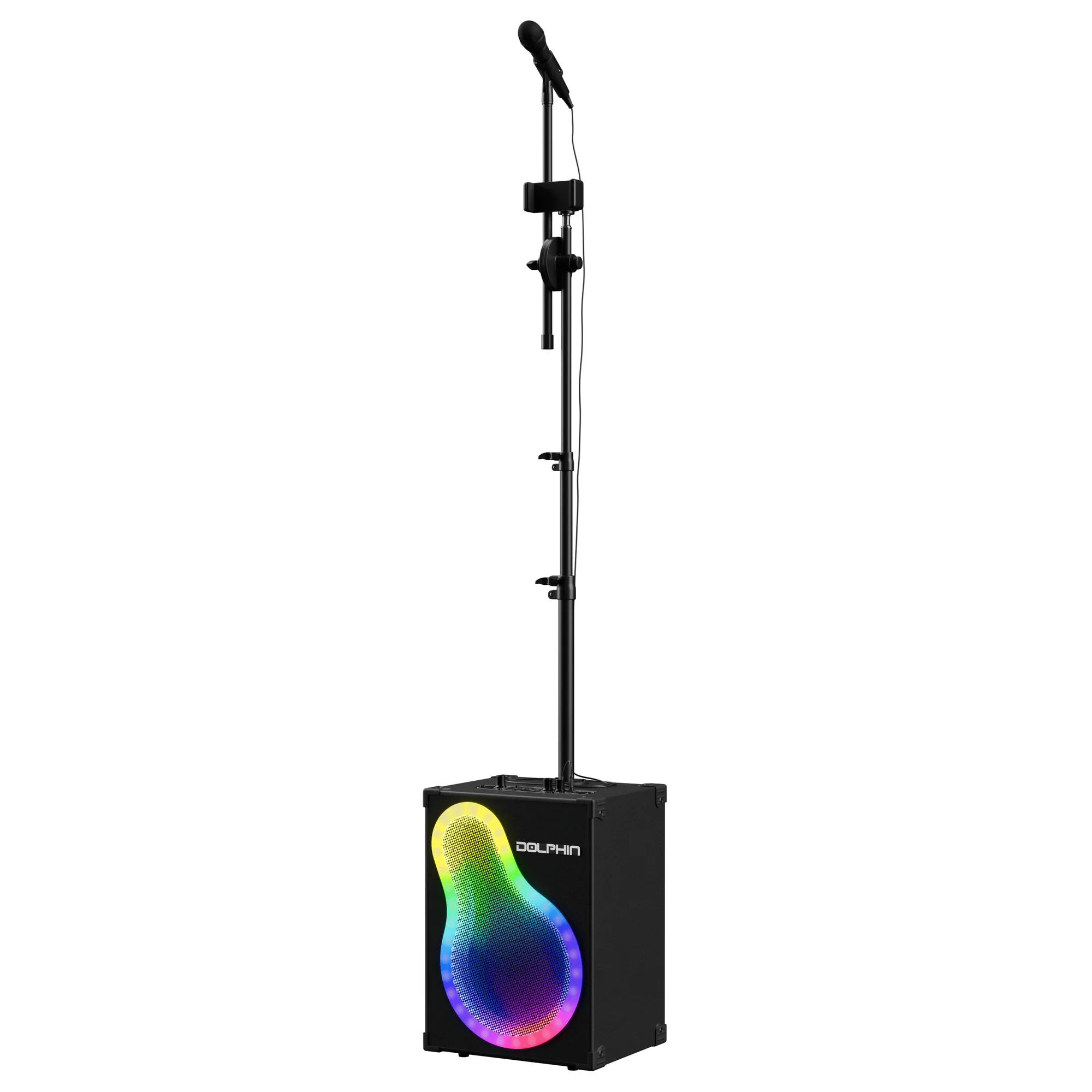
A karaoke speaker is only useful if you can set it up without help. Rechargeable designs remove the need for a power outlet near the performance area, which matters for balconies, patios, and rented venues. Built-in phone holders and adjustable mic stands, as found on the KaraokeBox 500, reduce the amount of extra gear you have to pack. If you plan to move the speaker often, weight and handle design become as important as sound quality.
For a fixed home setup, a tripod stand is a worthwhile addition. It raises the speaker to a better height, reduces floor vibration, and makes the vocals easier to hear. Check that the stand's load rating matches your speaker; a heavy tower speaker needs a sturdier stand than a compact boombox. If you are unsure about a specification, treat the absence of a stated rating as a reason to ask the store rather than assume.
- Rechargeable speakers are convenient, but battery runtime varies; check the stated hours if you plan long events.
- A built-in phone holder keeps your lyrics screen visible and your phone off the floor.
- If you use a tripod stand, set it up on a level surface and keep the speaker's weight within the stand's limit.
Decision rules for matching power to room size
- Rule 1: Size the speaker to the room, not the party: For rooms under 200 square feet, a compact speaker with a single small driver is enough. For 200 to 500 square feet, choose a tower or a speaker with a dedicated woofer. Above 500 square feet or outdoors, choose a multi-woofer tower or a large single-woofer party speaker. If you are between two sizes, pick the smaller one for indoor-only use and the larger one if you also host outdoors.
- Rule 2: Match features to how you actually host: If you move the speaker often, prioritize rechargeable power, a built-in phone holder, and an adjustable mic stand. If it stays in one room, invest in a tripod stand and a second microphone instead. Write down your last three karaoke sessions and buy for that pattern, not for an imagined future event.
- Rule 3: Treat missing specifications as a question, not a guess: If a product page does not state a battery runtime, a stand load rating, or an input type you need, ask the store before buying. Do not assume a feature exists because a similar model has it. A quick question before checkout is cheaper than a return after the party.
Real Dolphin models and what they tell you
- KaraokeBox 380: A Bluetooth tower speaker with three 8-inch woofers, a rechargeable design, and built-in LED lights with multiple modes. The three-woofer tower layout is built for larger rooms and louder playback, while the rechargeable battery and LED lights make it easy to move between indoor and outdoor spaces.
- KaraokeBox 500: A portable karaoke and PA system with Bluetooth streaming, WaveSync technology, an adjustable mic stand, a built-in phone holder, and multiple input options. The integrated mic stand and phone holder reduce setup time, making it a practical choice for home parties and small performances where you want everything in one unit.
- BoxParty 18: An 18-inch rechargeable party speaker with sound-activated LED lights, a remote control, and a wireless microphone included. The large woofer and included wireless mic suit outdoor events and bigger crowds where projection and easy control from across the room matter.
Who should choose which size
Best for
- Home hosts with a living room or small party space who want a compact, easy-to-store karaoke system
- Families and casual singers who value a built-in mic stand, phone holder, and rechargeable power
- Event hosts with a backyard or larger venue who need a big woofer and a wireless microphone included
Not for
- Professional DJs or bands who need a full PA with separate mixer and monitor speakers
- Buyers who want a permanent installed system with wired microphones and no portability
- Anyone shopping purely by wattage number without considering room size and driver configuration
Match the speaker to the room you actually use, then add the accessories that make setup easy. A well-chosen mid-size system will outperform an oversized one in a small space, and a large-woofer party speaker will keep an outdoor event sounding full. Use the decision rules above, check the specifications you care about, and ask the store when something is unclear.