Match the mode to the moment, not a milestone
The Ingenuity Keep Cozy 3-in-1 doesn't have a calendar-based switch date. The supplied information gives you two hard boundaries: the seat is intended for children from 0 to 30 months and up to 40 pounds. Within that range, the mode you choose depends on what your baby needs right now—soothing motion, a safe place to sit, or a stationary seat at the table.
That means you can move between bouncing, rocking, and stationary seat modes as your child's needs change, rather than waiting for a single age to flip a switch. The rest of this guide covers how to tell which mode fits, what to check before each switch, and the care steps that keep the seat ready for the next stage.
The limits that decide when to switch
-
Ingenuity Keep Cozy 3-in-1 Grow with Me Baby Bouncer, Rocker & Toddler Seat, Lily: Grow-with-me design ages up from 0-30 months and accommodates children up to 40 pounds. These are the outer limits for the whole seat, so any mode switch has to stay inside them.
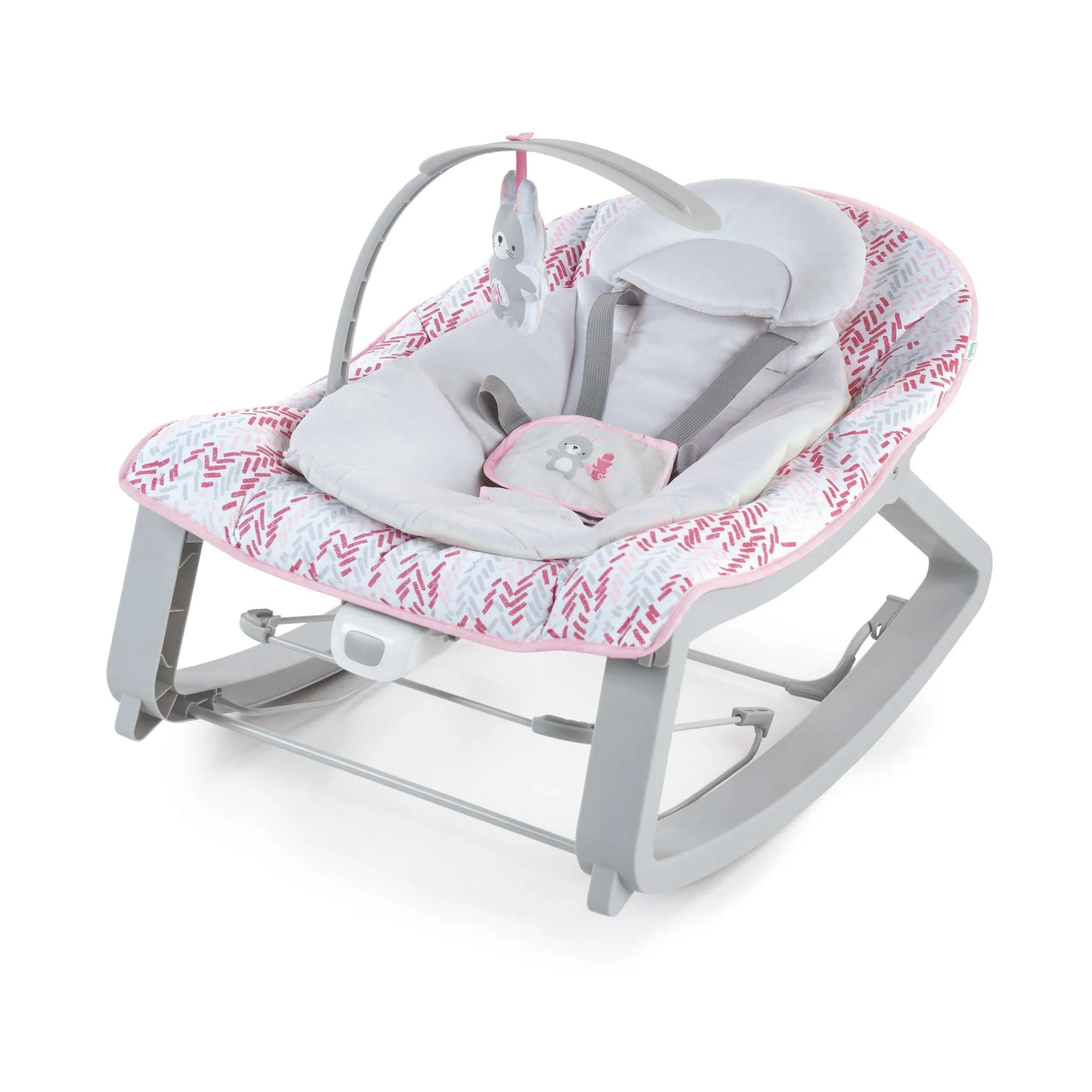
Ingenuity Keep Cozy 3-in-1 Grow with Me Baby Bouncer, Rocker & Toddler Seat, Lily
-
Ingenuity Keep Cozy 3-in-1 Grow with Me Baby Bouncer, Rocker & Toddler Seat, Lily: The seat has 3 modes in 1: bouncing, rocking, or a stationary seat for your toddler using the kickstand at the rear. The stationary toddler seat is the final mode, so the kickstand is the physical signal that you have moved past the motion stages.
-
Ingenuity Keep Cozy 3-in-1 Grow with Me Baby Bouncer, Rocker & Toddler Seat, Lily: Two reclining positions keep baby comfortable. Recline is separate from mode, so you can adjust comfort without changing whether the seat bounces, rocks, or stays still.
Signs it's time to change modes
- Your baby no longer settles with motion: If bouncing or rocking seems to wind your child up rather than calm them, the stationary seat is the next option. The kickstand at the rear converts the chair to a fixed toddler seat.
- Your child wants to sit up and engage: The stationary seat gives a toddler a stable place to sit with the family. The supplied information describes it as a seat with the family, not a sleep surface.
- The infant bolster is getting in the way: The removable infant bolster helps newborns sit securely. Once your baby outgrows it, remove it so the seat fits the older child properly.
- You are approaching 40 pounds or 30 months: Those are the stated limits for the seat. Plan the move out of the Keep Cozy before you reach them, not after.
How to switch from bouncer to rocker to toddler seat
The supplied instructions cover assembly and the kickstand, but they do not spell out a numbered mode-change procedure. Use these steps as a practical checklist built from the confirmed features, and check the owners manual for anything not covered here.
- Secure your child first: Fasten the 5-point harness before you adjust anything. The harness is the confirmed restraint for all modes.
- Remove the infant bolster when it no longer fits: The bolster gives newborns extra support. Take it out once your baby outgrows it so the seat fits correctly.
- Choose bounce or rock for motion: Bouncing and rocking are the two motion modes. Pick whichever your baby responds to; the supplied information does not rank one above the other.
- Deploy the rear kickstand for the stationary seat: The kickstand at the rear of the chair converts it to a stationary toddler seat. This is the mode to use when you want the seat to stay still.
- Recheck the harness and recline: After any change, confirm the 5-point harness is snug and the seat is in one of the two reclining positions that suits your child.
Bouncer, rocker, or toddler seat: what each mode is for
Bouncing and rocking are the soothing modes. The supplied information describes soothing vibrations, powered by 1 C battery (not included), as a way to help keep baby calm, and includes a detachable plush bunny toy for playtime. Those features support the motion stages rather than the stationary toddler seat.
The stationary seat is the grow-with-me endpoint. With the kickstand down, the chair stops moving and becomes a fixed seat for a toddler up to 40 pounds. Think of the progression as motion for soothing, then stillness for sitting with the family—not as three products you graduate through on a schedule.
Setup and care facts for every mode
- Ingenuity Keep Cozy 3-in-1 Grow with Me Baby Bouncer, Rocker & Toddler Seat, Lily: Assembled dimensions are 23.62" (H) x 19.69" (W) x 28.74" (L); assembly is required. Check the footprint against your room before you commit a corner to the seat, and plan time for assembly.
- Ingenuity Keep Cozy 3-in-1 Grow with Me Baby Bouncer, Rocker & Toddler Seat, Lily: Seat pad, bolster, and headrest remove from the frame and are machine washable in cold water on a gentle cycle; tumble dry low or air dry, no bleach. Mode changes often come with messes, so knowing what comes off the frame makes cleaning between stages easier.
- Ingenuity Keep Cozy 3-in-1 Grow with Me Baby Bouncer, Rocker & Toddler Seat, Lily: Wipe the frame with a soft, clean cloth and mild soap; wipe the toy bar and toys with a damp cloth and mild soap, and do not immerse them in water. The frame and toy bar stay put through every mode, so this is the routine that keeps the whole seat usable as your child grows.
What the supplied information does not settle
The supplied records do not give a specific age or weight at which to move from bouncing to rocking, or from rocking to the stationary seat. They also do not describe safe-sleep use or car-seat compatibility, so treat the Keep Cozy as a supervised seat, not a sleep or travel solution. If your child is near the 30-month or 40-pound limit, or you are unsure whether the harness and bolster are adjusted correctly, check the owners manual that comes with the seat before your next mode change.