Quick answer
Walk your dog in the early morning or after sunset, keep the route short and shaded, bring water, and watch for heavy panting, slowing down, or bright red gums. If you see those signs, stop, move to shade, offer water, and cool the paws and belly. Gear like a shock-absorbing leash or a sun-protective shirt helps, but timing and route choice matter most.
Check the pavement and the forecast before you clip the leash on
Place the back of your hand on the pavement for five seconds. If it is too hot for your hand, it is too hot for your dog's paws. Air temperature alone is misleading because asphalt, sand, and artificial turf can run much hotter than the shade. Humidity also matters: when the air is heavy, panting is less efficient, so a 78°F humid afternoon can be harder on your dog than a dry 85°F morning.
A common mistake is trusting the weather app's high for the day. Check the hour you plan to walk, the surface you will cross, and whether the route has continuous shade. If you cannot find a shaded loop, shorten the walk and add a cool floor session at home instead.
Adjust the route and pace for the heat, not for your usual mileage
Heat changes how far your dog can safely go. Cut the distance by roughly half on the first hot day, then add a few minutes only if your dog is still moving easily and breathing normally at the end. Let your dog set the pace on the way home, and avoid long stretches of open sun, hot metal grates, or dark asphalt. Grass, dirt paths, and shaded sidewalks stay cooler.
A checkpoint: if your dog starts lagging behind, pulling toward shade, or lying down mid-walk, that is a stop signal, not stubbornness. Rest in shade for a few minutes. If your dog does not recover quickly, carry them or call for a ride rather than pushing the last block.
Use gear that reduces heat and handling strain without adding bulk
Light-colored, breathable gear reflects more sun than dark, heavy gear. A sun-protective shirt can help short-haired, light-pigmented, or freshly groomed dogs that burn easily, but it should fit snugly without bunching at the shoulders. For dogs that pull, a shock-absorbing leash reduces the jerk on your arm and your dog's neck, which matters more when both of you are hot and tired.
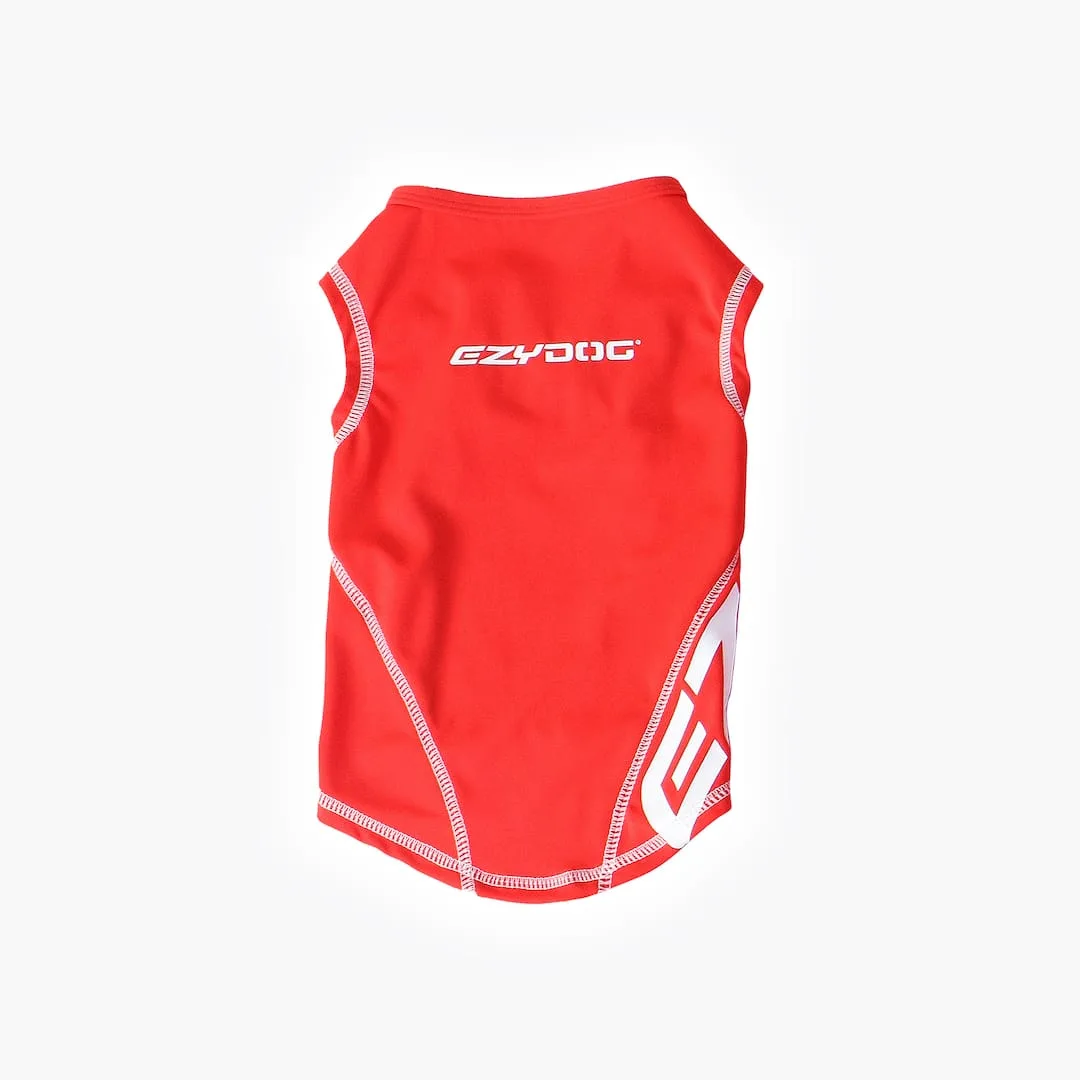
The EzyDog Dog Rashie Shirt is designed as a protective dog rash guard against sunburn and heat rash, originally inspired by surfers' rash guards. It is not a cooling vest and does not replace water or shade, so treat it as one layer of protection on beach days, boat days, or long exposed walks. If your dog overheats easily, a wet towel over the back and belly in shade does more immediate work than any shirt.
Handle the car ride so the walk does not start or end in a hot box
Park in shade, crack windows only when you are with the car, and never leave a dog unattended in a vehicle in warm weather. If your dog rides loose, they can climb into the front seat or bolt out an open door when you are unloading. A car restraint keeps them in the back seat area while still allowing some movement.
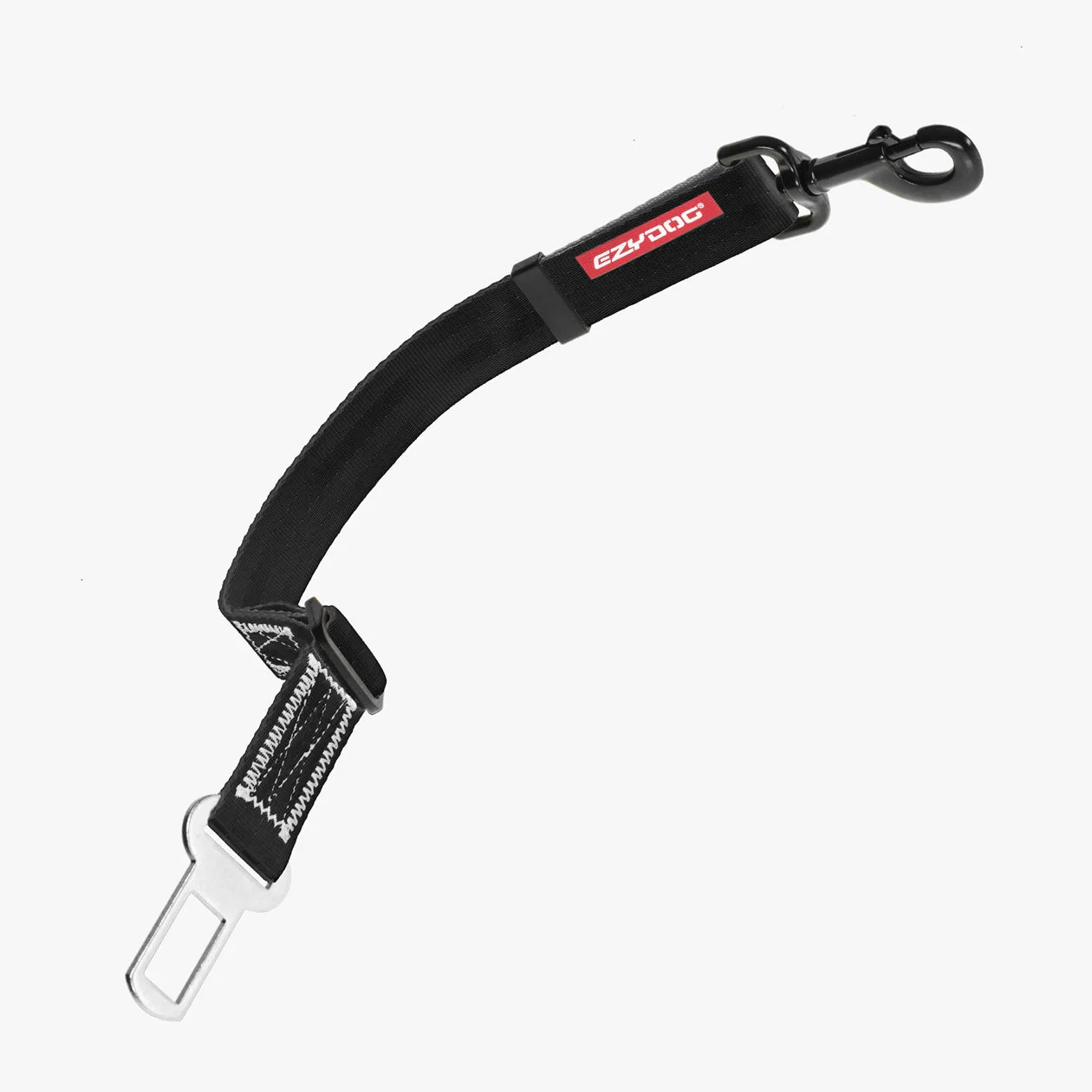
The EzyDog Click Adjustable Car Restraint is a dog seat belt designed to keep your dog under control while driving and to prevent them from jumping to the front seat or out the door. It is intended to be used with an EzyDog harness, so check that pairing before you rely on it. A common mistake is clipping a restraint to a flat collar; that puts pressure on the throat in a sudden stop.
Know the heat exhaustion signs and the first three things to do
Early signs include heavy panting that does not slow down after resting, thick drool, bright red gums, wide eyes, and a dog that stops responding to you. As it worsens, you may see vomiting, diarrhea, wobbling, or collapse. These are emergencies, not wait-and-see symptoms.
If you see early signs, move to shade or air conditioning, offer small amounts of cool water, and wet the paws, belly, and inner thighs with cool water. Do not use ice-cold water or force your dog to drink. Call your vet if the signs do not improve within a few minutes, if your dog vomits, or if they seem disoriented. A checkpoint before every summer walk: know the nearest shaded spot and the fastest route home.
Your summer walk routine, step by step
- 1. Time the walk for cool surfaces: Walk in the early morning or after sunset. Test pavement with the back of your hand for five seconds. If it is too hot for you, it is too hot for paws. Checkpoint: if you cannot hold your hand on the ground, skip the walk or drive to a shaded grass loop.
- 2. Shorten the route and build in shade stops: Cut your usual distance by about half on the first hot day. Choose grass, dirt, or shaded sidewalks over open asphalt, and plan a shady rest spot roughly every ten minutes. Checkpoint: if your dog is lagging or lying down, stop in shade and reassess before continuing.
- 3. Carry water and offer it before your dog asks: Bring a bottle and a collapsible bowl. Offer small amounts every few minutes rather than one large drink at the end. Avoid letting your dog gulp from puddles or standing water. Checkpoint: a dog that refuses water and keeps panting hard needs to stop and cool down, not push on.
- 4. Use light, breathable gear and a shock-absorbing leash: Choose light-colored, snug-fitting sun protection for dogs that burn easily, and a leash that absorbs sudden pulls if your dog lunges or pulls. Avoid heavy packs and dark, thick fabrics in direct sun. Checkpoint: if gear is bunched, rubbing, or trapping heat, take it off and walk without it.
- 5. Secure the car ride before and after the walk: Use a car restraint paired with a harness so your dog stays in the back seat and cannot bolt out an open door. Park in shade and never leave your dog alone in a warm vehicle. Checkpoint: a restraint clipped to a collar instead of a harness is a safety risk, not a shortcut.
- 6. Cool down and check for delayed signs: Once home, offer water, wet the paws and belly with cool water, and let your dog rest on a cool floor. Watch for heavy panting, drooling, or wobbling for the next hour. Checkpoint: if early heat exhaustion signs do not improve within a few minutes, call your vet.
Gear that helps on hot-weather walks
- Dog Rashie Shirt: The Dog Rashie Shirt is a protective dog rash guard designed to help protect against sunburn and heat rash, inspired by surfers' rash guards. Useful for short-haired or light-pigmented dogs on exposed beach or boat days, but it is not a cooling vest and does not replace shade and water.
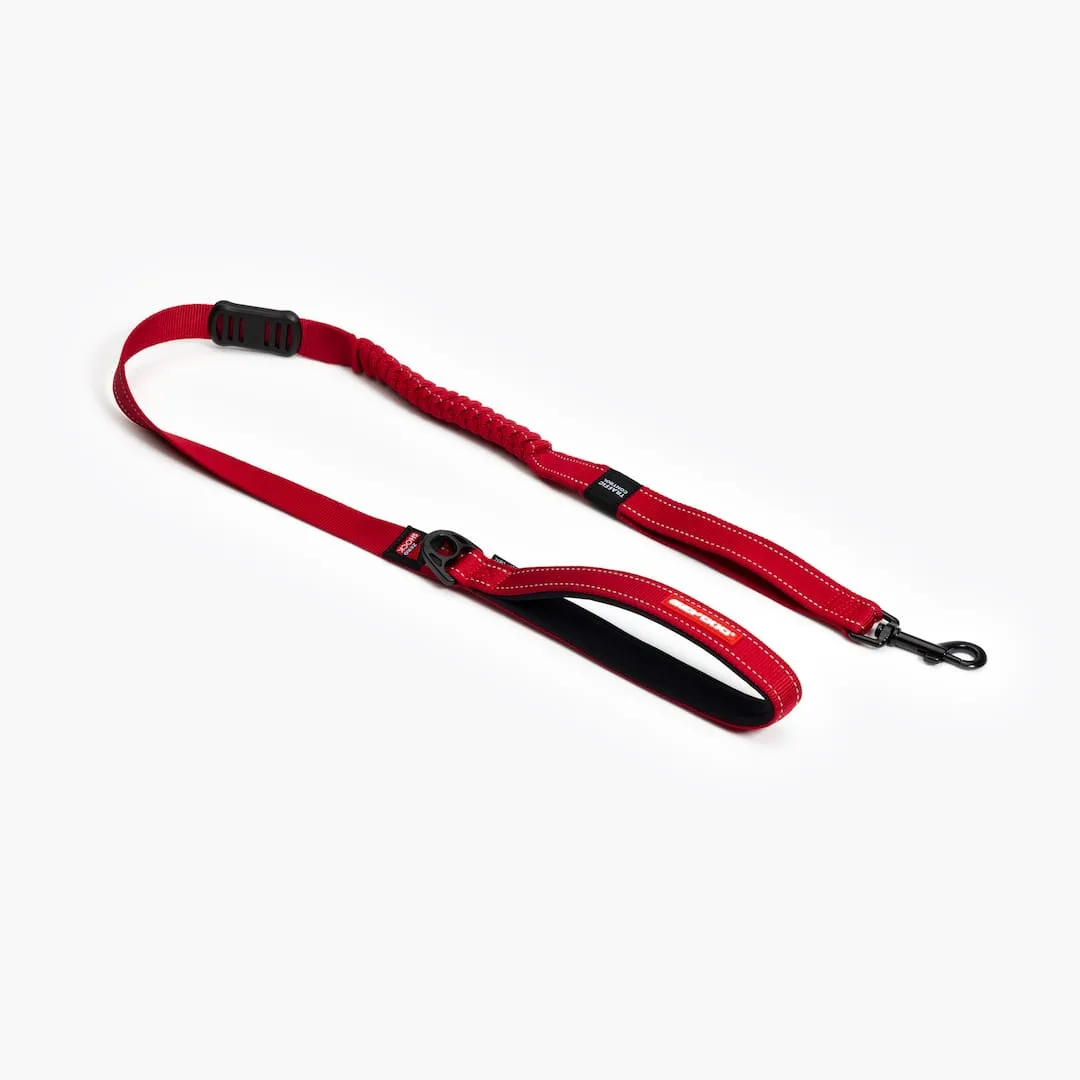
- Zero Shock™ Leash: The Zero Shock Leash uses a shock-absorbing core to reduce sudden pull tension and has soft neoprene handles and reflective stitching. Less jarring on your arm and your dog's neck when both of you are hot and tired, and the reflective stitching helps on late-evening walks when the pavement has cooled.
- Click™ Adjustable Car Restraint: The Click Adjustable Car Restraint is a dog seat belt that keeps your dog under control in the car and is designed to be used with an EzyDog harness. Prevents your dog from climbing into the front seat or bolting out the door during hot-weather drop-offs, but only if paired with a compatible harness.