Quick answer
Put a light on the dog, not just in your hand: a rechargeable, weather-resistant light clipped to the collar or leash is the single most effective change you can make. Then walk a familiar route at a predictable time, keep the dog on a short leash near traffic, and carry a backup light source. The goal is to be seen by drivers from the side and front, not just from behind.
Why a handheld flashlight is not enough
A flashlight points where you look, which is usually ahead of you, not at the dog. Drivers approaching from a side street see the beam before they see the animal, and a dark dog against dark pavement stays nearly invisible. Visibility gear worn on the dog moves with the dog, so the light stays attached even when your attention shifts to a curb, a leash, or a passing car.
This is also why reflective trim alone is a weak plan. Reflective material only lights up when a car's headlights hit it at the right angle. A powered light is visible from more angles and at greater distance, which matters most at intersections and on streets without sidewalks.
Choose the light that matches your walk
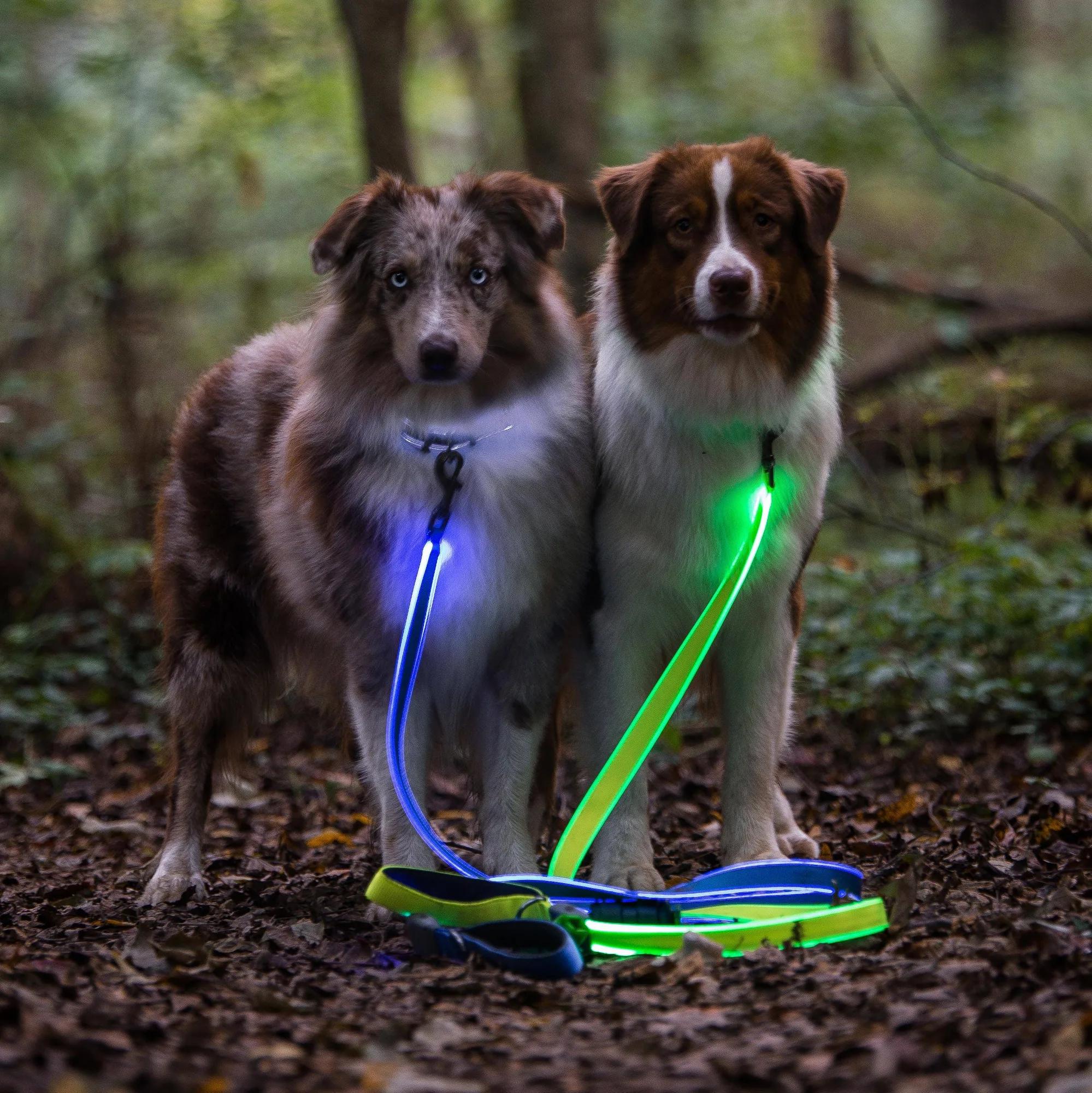
Collar and leash lights work for most neighborhood walks because they sit at the dog's neck or along the leash, roughly at driver eye level. A light-up leash is a good fit if your dog walks close and you want one piece of gear instead of two. A collar light is better if your dog is off-leash in a fenced area or if you switch leashes often.
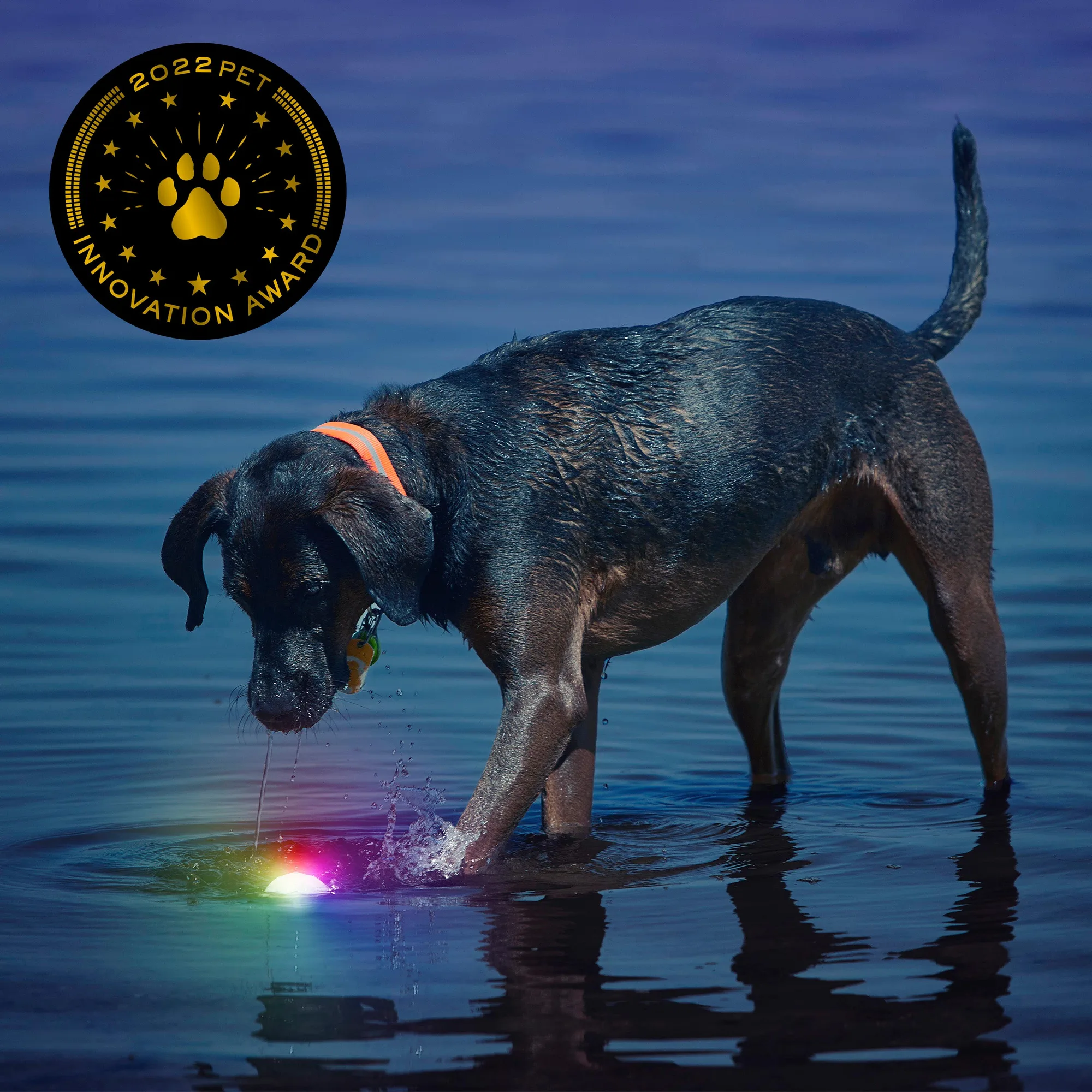
For dogs that fetch after dark, a light-up ball solves a different problem: you can see where the toy went, and the dog can track it. That is play gear, not traffic visibility, so do not count it as your only light on a street walk.
Rechargeable models cut the cost and waste of disposable batteries, but they add a routine: charge after every walk or two. If you know you will forget, keep a spare small light in your treat pouch as a backup.
Fit the gear so it stays on
A light that spins, slides, or dangles is a light that ends up pointing at the ground. Attach collar lights so the light faces outward and sits high on the neck, then check it after the first block. On a leash, clip the light near the handle end so it does not swing into your dog's face or catch on bushes.
Check the fit before you leave: you should be able to slide two fingers under the collar, no more. A collar that is too loose lets the light rotate to the underside of the neck, where it is hidden from drivers.
Build a repeatable night route
Pick a route with sidewalks, good street lighting, and few uncontrolled driveways, and walk it at roughly the same time. Predictable routes help you learn where the dark patches, blind corners, and loose dogs are. Walk facing traffic when there is no sidewalk so you can see approaching cars and step aside.
Cross at corners rather than mid-block, and make eye contact with drivers before stepping into a crosswalk. A driver who has not looked at you has not seen you, no matter how bright your dog's light is.
Handle the dog, not just the gear
Keep the leash short and your hand low near traffic so the dog cannot bolt into the road. If your dog pulls toward other dogs or lunges at cars, change direction and add distance rather than standing still and tightening the leash. A tight leash increases reactivity, which is a safety problem when you are standing near a curb.
Bring treats and reward calm walking past distractions. A dog that is focused on you is easier to steer out of a bad situation than one scanning the dark for triggers.
What to skip
Do not rely on a phone flashlight as your visibility plan; it drains your battery and points at the ground. Do not use a light that is so bright it blinds oncoming drivers or washes out your own night vision. And do not assume a light makes an off-leash dog safe on a street; it does not replace a leash where one is required.
Your night walk checklist
- Charge the light before you leave: Plug in your rechargeable collar or leash light after the previous walk, or keep a charging cable by the leash hook. Confirm the light turns on and is not stuck on a dim setting. Checkpoint: if the light looks dim, charge it now rather than gambling on a dark walk.
- Attach the light high and facing out: Clip the light to the collar near the buckle or to the leash near the handle, with the lens pointing away from the dog. Tug gently to confirm it will not rotate or slide. Common mistake: clipping a collar light under the chin, where it points at the ground.
- Do a two-minute visibility check: Stand ten feet in front of your dog in the driveway and look at the light from the front, side, and behind. If you cannot see it clearly from the side, adjust the position. Checkpoint: side visibility is what protects you at intersections.
- Walk facing traffic on streets without sidewalks: Stay on the shoulder, keep the leash short, and step off the road when a car approaches. Cross only at corners and make eye contact with drivers before you step out. Common mistake: assuming a driver sees the light and will slow down.
- Keep a backup light within reach: Carry a small spare light in your pocket or treat pouch. If your main light dies or falls off mid-walk, you are not finishing the route in the dark. Next step: replace the backup the same week you use it.
Gear that fits this routine
- NiteDog® Rechargeable LED Leash: NiteDog® Rechargeable LED Leash is rechargeable, weather resistant, and lit end to end, with easy push-button operation. End-to-end illumination is visible from the side and front, not just from behind, and the rechargeable design removes disposable battery swaps from your routine.
- GlowStreak® LED Ball - Disc-O: GlowStreak® LED Ball - Disc-O is bounce-activated, waterproof, and slobber-proof, with color-changing light. A good choice for after-dark fetch in a fenced yard, but it is play gear rather than traffic visibility, so pair it with a collar or leash light on street walks.
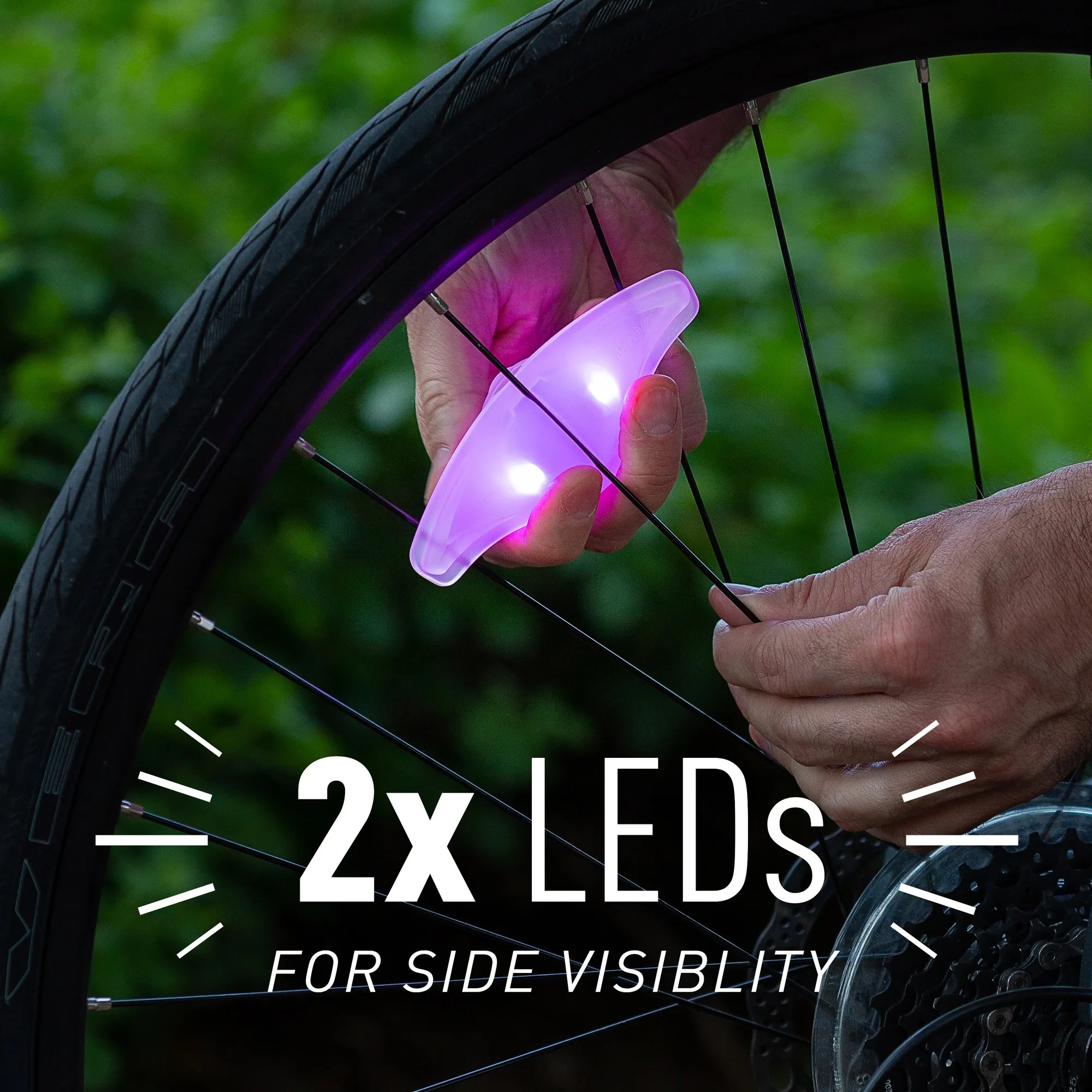
- SpokeLit® Rechargeable Wheel Light - Disc-O Select™: SpokeLit® Rechargeable Wheel Light - Disc-O SelectTM is push-button activated, weather resistant, and attaches securely to most bike spokes. If you bike alongside your dog, this adds side visibility to your bike, which is a separate problem from lighting the dog.