Quick answer
Cool pull apart rolls just until they stop steaming, then seal them airtight while still faintly warm so their own moisture stays in the pack. Reheat them covered at a low oven temperature, or in short microwave bursts, and only rewarm the rolls you plan to eat. The single biggest cause of dry, tough rolls is leaving them uncovered on the counter until they are fully cold.
Why pull apart rolls dry out faster than single rolls
A pull apart roll is baked as one connected piece, so the sides that touch never form a crust. That soft, exposed interior is exactly what makes them pleasant to tear and share, and it is also why they lose moisture quickly once the whole batch is separated or left open. Every roll you pull off exposes two new cut faces to the air.
Starch also firms up as rolls cool, which is normal and reversible. Gentle warmth brings softness back; dry heat pushes it further away. That is the logic behind every step below: trap moisture first, then return heat slowly and briefly.
Cooling, wrapping, and freezing without wrecking the texture
Let rolls rest in the pan for a few minutes after baking so they finish setting, then move them to a rack. The checkpoint is steam: while you can still see it rising off the batch, wrapping will trap condensation and make the bottoms soggy. Once the rolls are warm rather than hot, seal them.
For a same-day batch, a zip-top bag or a tightly covered container works well. For longer storage, wrap the whole connected slab or individual rolls in foil, then bag them, and freeze. Freezing keeps more texture than refrigerating, because the fridge speeds up staling. Thaw in the wrapping so the rolls reabsorb their own moisture instead of dripping it onto the counter.
Reheating methods ranked by how kind they are to texture
A covered low oven is the most forgiving method for a full batch: about 300°F (150°C) with foil over the pan, until the rolls are warm through, roughly 10 to 15 minutes for a standard dozen. Uncover for the last couple of minutes only if you want the tops slightly crisp.
For one or two rolls, the microwave is faster but less even. Use 10- to 15-second bursts, covered with a damp paper towel, and stop as soon as they feel warm. A dry paper towel or a long run turns the edges rubbery. A steamer or a covered skillet over low heat also works if you prefer to avoid the microwave.
Serving and storage habits that keep the second day good
Keep the rolls connected until people are ready to eat. Pulling the whole batch apart early exposes more surface area and speeds drying, so let guests tear from the slab. If you are setting a bread basket, keep the basket lined and covered between passes rather than leaving rolls open on the table.
Store leftovers sealed at room temperature for a day or two, and freeze anything beyond that. Reheat only what you will eat; every reheat cycle costs a little moisture. If rolls have already dried out, a brief covered steam — damp towel in the microwave or foil over a low pan — recovers more softness than adding heat alone.
Step-by-step: soft pull apart rolls from oven to leftovers
- 1. Rest, then vent: Leave the baked rolls in the pan for a few minutes, then move them to a rack so steam escapes from the bottom. Mistake to avoid: wrapping straight from the oven. Trapped steam makes the bottoms gluey.
- 2. Wrap while faintly warm: Seal the rolls in a bag or covered container once they are warm, not hot, so their own moisture stays inside. Checkpoint: no visible steam before you seal.
- 3. Store connected, not separated: Keep the slab intact at room temperature for a day or two, or wrap and freeze for longer. Mistake to avoid: refrigerating, which stales the crumb faster than freezing.
- 4. Reheat covered and low: Warm a full batch at about 300°F (150°C) under foil for 10 to 15 minutes, or microwave single rolls in 10- to 15-second bursts under a damp towel. Checkpoint: pull them as soon as they are warm, before the edges firm up.
- 5. Reheat only what you will eat: Return the rest to its sealed storage immediately after serving. Mistake to avoid: repeated reheat cycles, which quietly dry out the batch.
- 6. Rescue dry rolls with steam: If rolls have already firmed up, use a damp towel or covered pan and gentle heat rather than more dry oven time. Steam restores softness; dry heat only removes more moisture.
Products that fit this routine
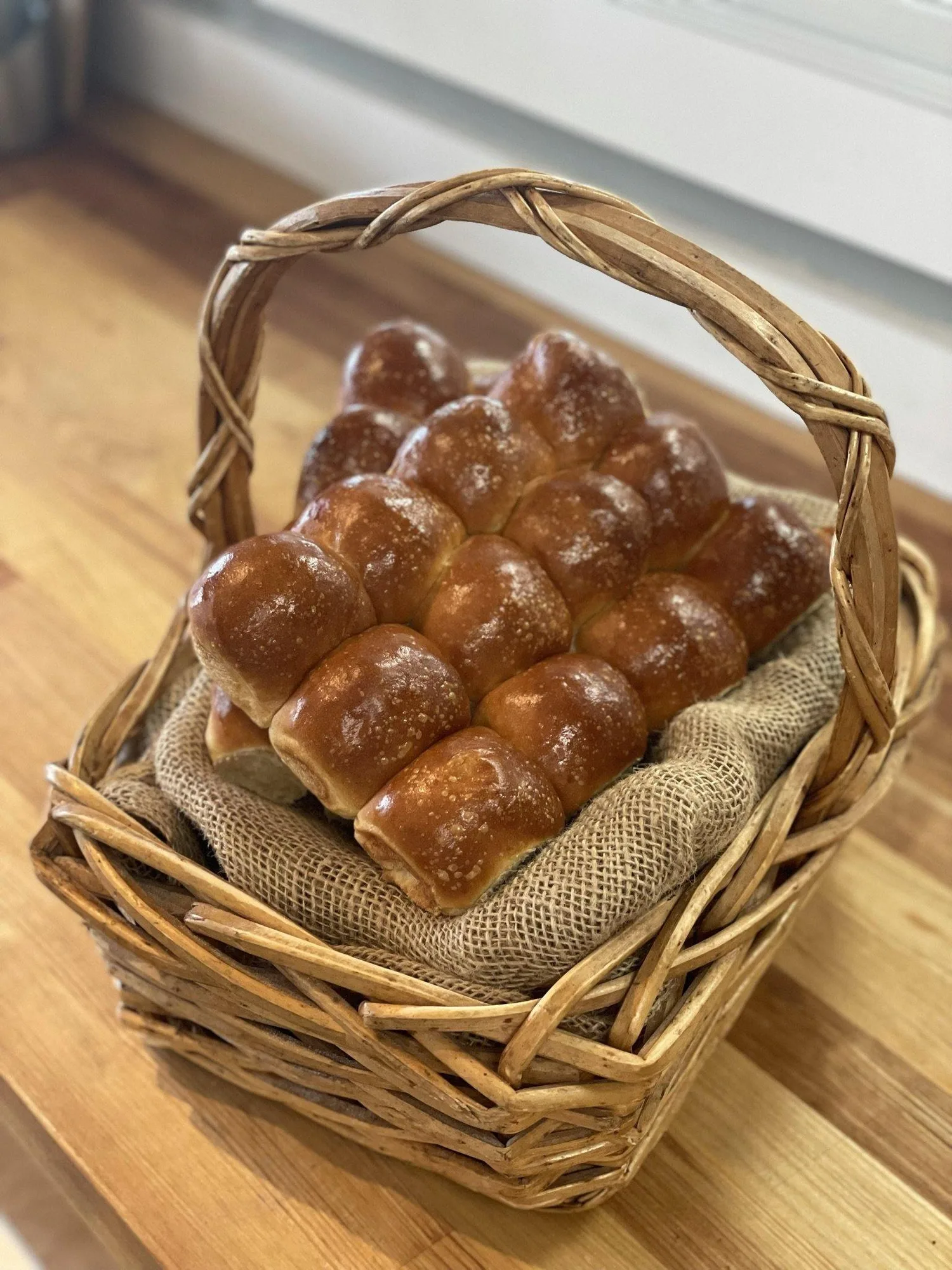
- Pull Apart Rolls (dozen): Pull Apart Rolls (dozen) are buttery parker house style rolls sold as a set of twelve, designed to be pulled apart and shared at the table. Because they are meant to stay connected until serving, they reward the keep-them-together habit above and reheat well as a single covered slab.
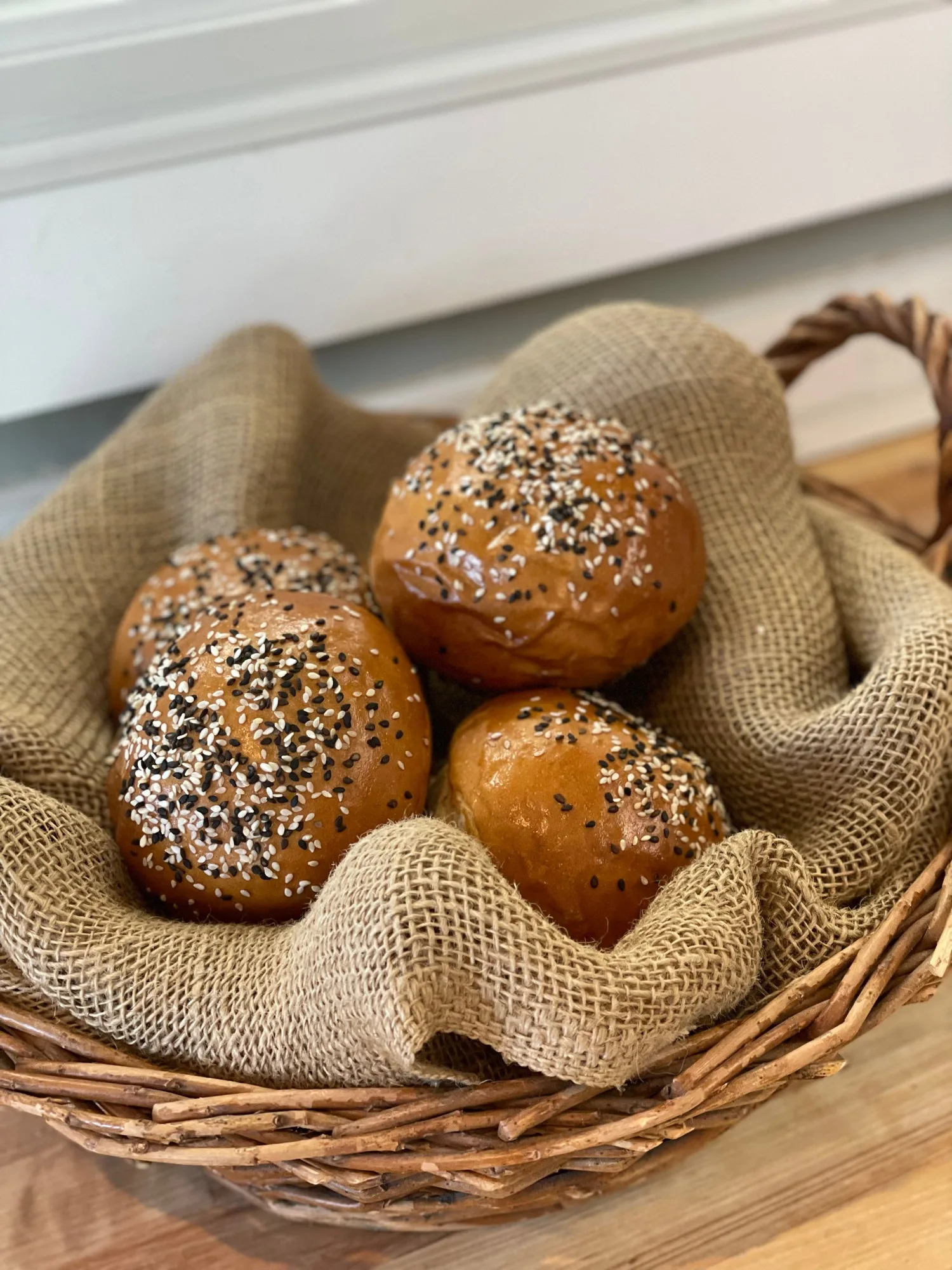
- Hamburger buns: Hamburger buns are a sesame soft roll suited to burgers and casual gatherings. If you are reheating soft rolls for a cookout, the same covered, low-heat approach protects the sesame-topped surface from drying and scorching.