Quick answer
Start by identifying which light source actually wakes your child, because hotel rooms leak light from different places than nurseries do. Fix the easy leaks first: tuck curtains, roll a towel along the door gap, and cover small electronic status lights. If the room still glows at bedtime, a portable blackout setup is the practical next step rather than taping the whole room.
Why hotel rooms leak more light than home
Hotel windows are usually framed for quick cleaning, not for darkness. Curtain panels overlap in the middle but often leave a vertical gap at the center seam and a bright strip along the top rail or the side wall. Add a hallway light under the door, a glowing thermostat, and a bathroom nightlight, and a room that looks dim to you can still read as daytime to a baby who needs darkness to settle.
Shared rooms make this worse because you cannot simply leave the room while your child falls asleep. You need enough light to move around quietly, and your child needs enough dark to stop tracking you. That tension is the real problem, not the window itself.
Fix the three leaks that matter most
Work in order of impact, not effort. The window is usually the biggest offender, so press the curtain edges against the wall and weight the center seam with a rolled towel or a clip. Next, handle the door: a folded towel or a travel door draft stopper blocks the bright hallway line that runs across the floor. Finally, walk the room at your child's eye level and look for small glowing points.
Small lights are easy to dismiss, but a thermostat or charging brick at crib height sits directly in a baby's line of sight. SleepBetter DarkOut Stickers are made to block out status lights on electronics so the room reads as complete darkness. They are a low-cost fix for a specific symptom, not a substitute for covering a bright window.
When portable blackout is the right call
If you have already tucked, clipped, and rolled, and light still spills across the sleep area, the room needs a barrier rather than more adjusting. Portable blackout solutions exist for exactly this situation: rooms where you cannot install hardware and cannot control the curtains. Choose based on what your child sleeps in, not on what looks neatest.
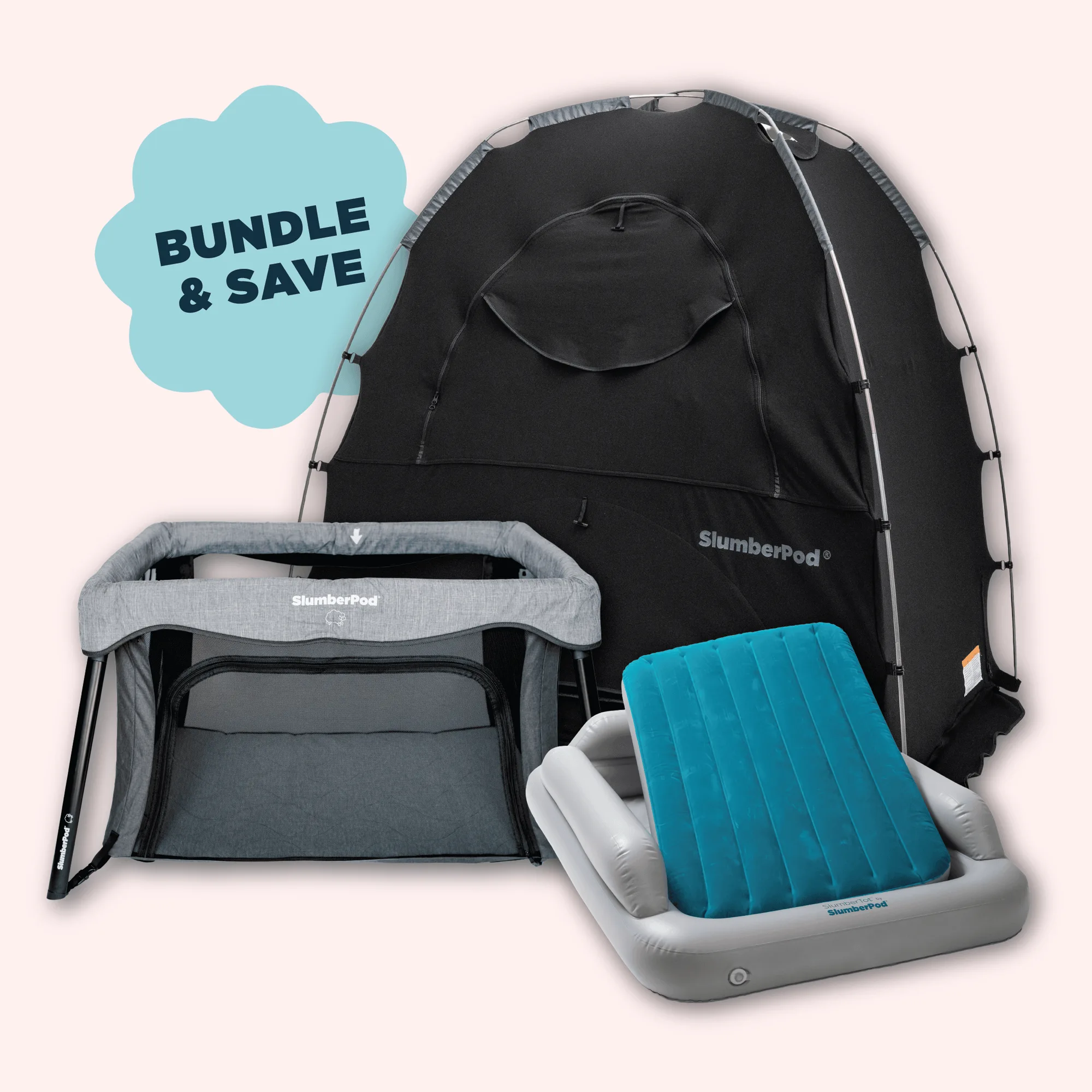
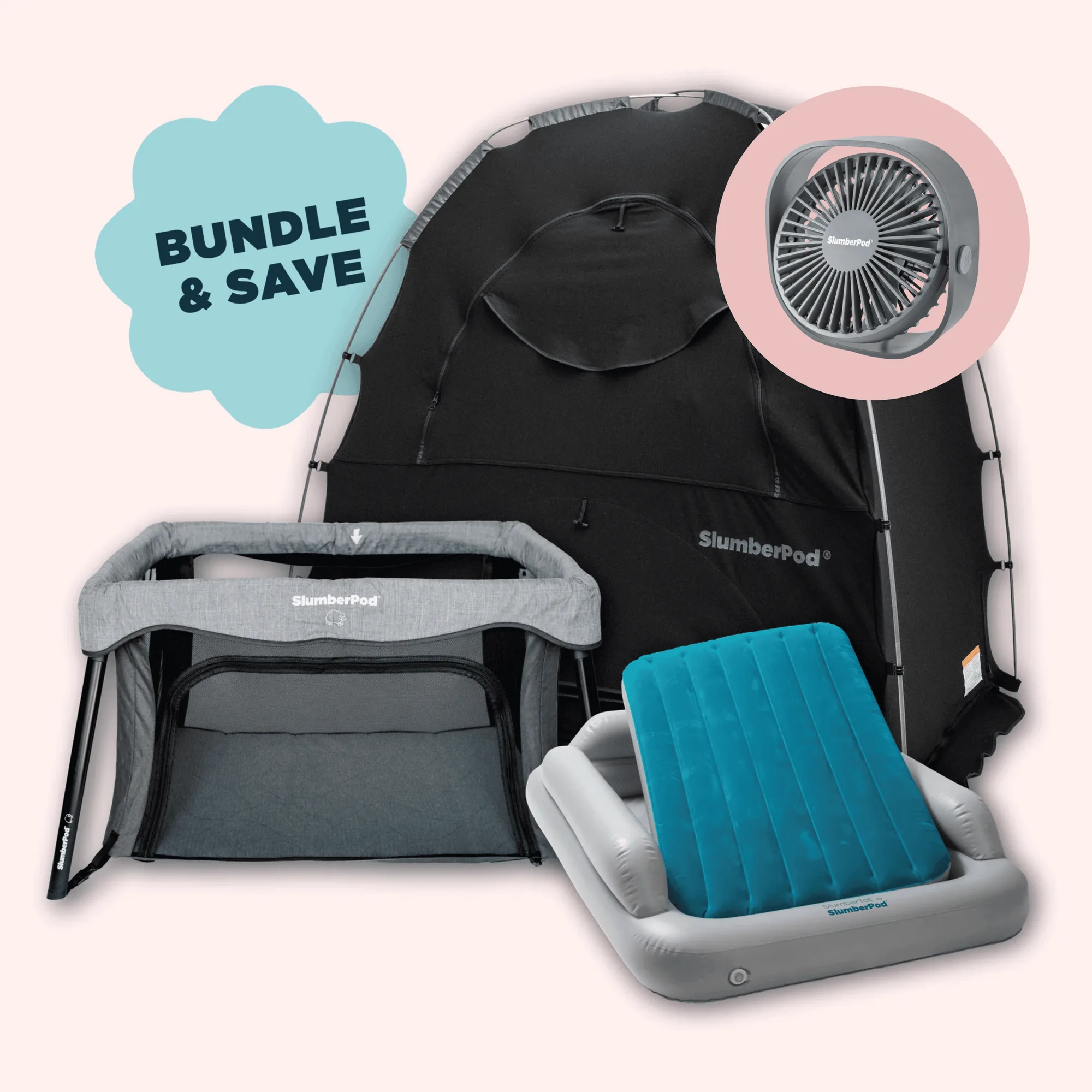
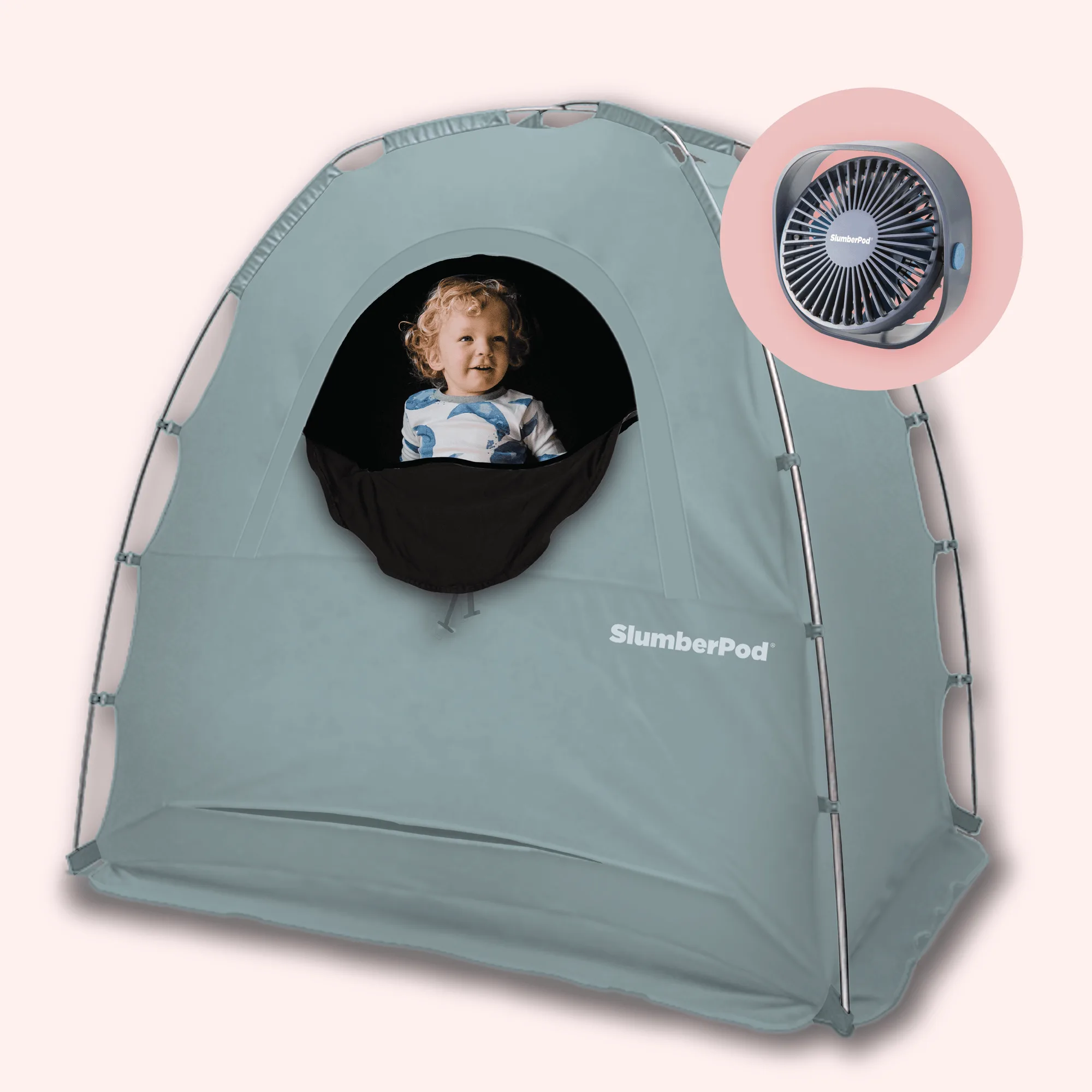
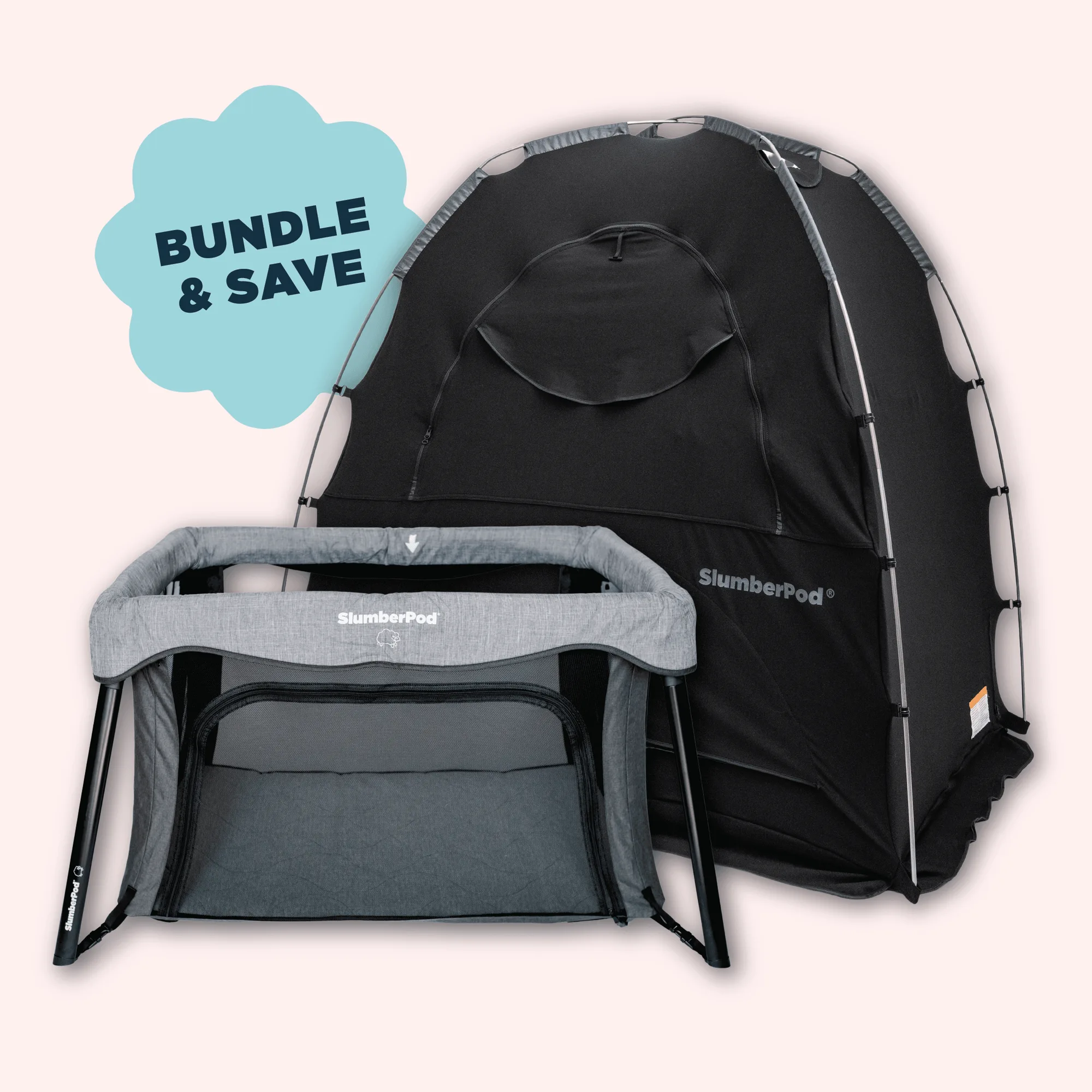
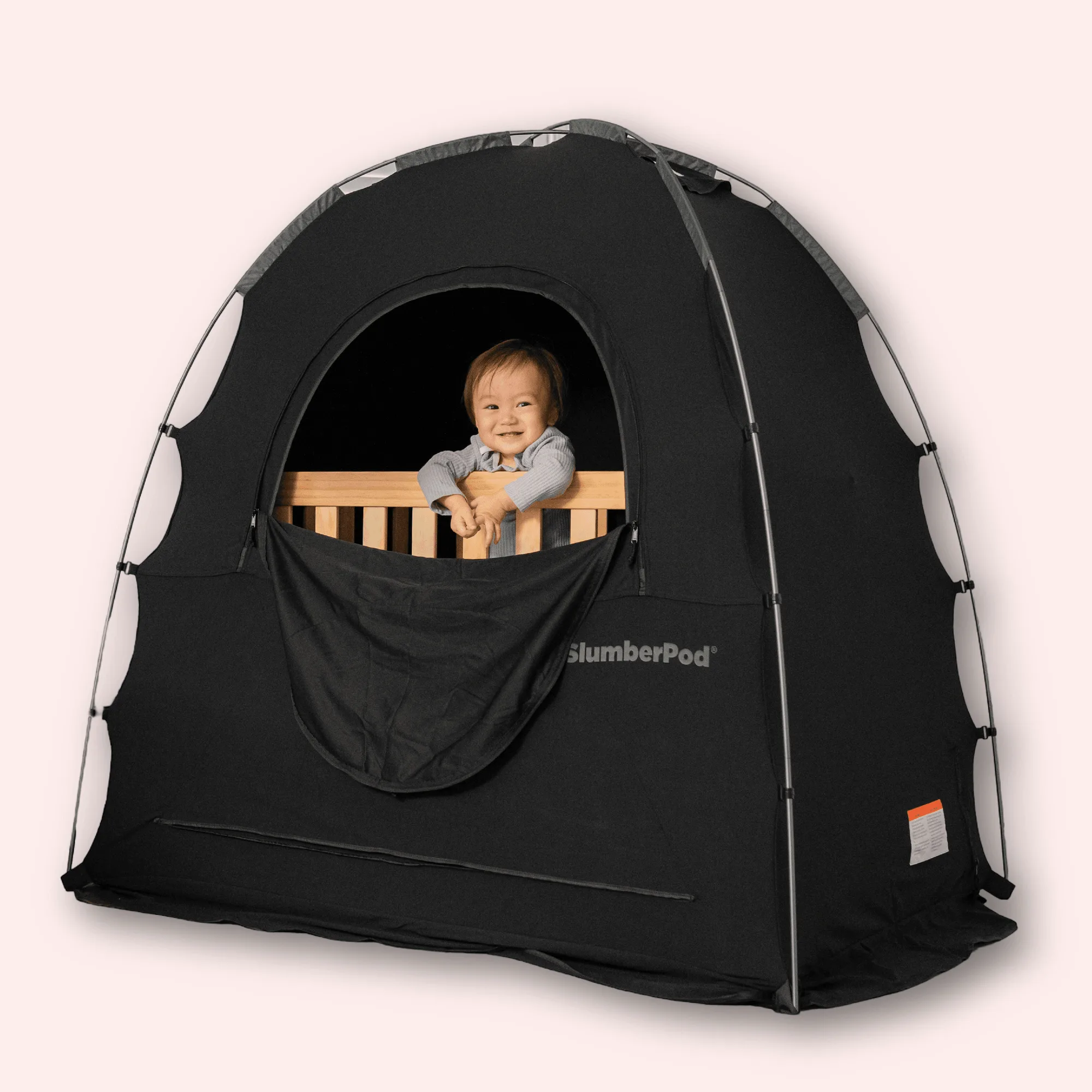
For babies and toddlers still in a playard or mini crib, a portable dark sleep space can sit over the mattress and remove the window problem entirely. For children who have outgrown a playard but still need darkness, a bundle that pairs a dark enclosure with a low inflatable bed keeps the same routine while giving them more room. Neither option helps if your child is already climbing out of everything, so match the tool to your child's stage.
Keep the room usable for you
Total darkness is the goal for your child, not for you. Leave one dim, warm light on the far side of the room, away from the sleep area, so you can find your bag or the door without turning on an overhead light. A small plug-in or battery night light placed low and behind furniture gives you just enough glow to move safely.
If your child is used to a night light at home, removing it abruptly on the first night of a trip can backfire. Bring the same small light you use at home and place it exactly where it sits in your child's room, so the only thing that changes is the walls around it. The Little Lights Mini Bird Lamp is a handmade pinewood children's night light that can sit on a dresser or hang on a wall, which makes it easy to recreate the same position in a hotel.
Diagnose the light before you buy anything
- Symptom: your child wakes at the same time every morning, earlier than at home: Likely cause: a bright window edge or top rail letting in early daylight. Corrective action: press and clip the curtain edges and weight the center seam, then reassess the next morning. If the wake time shifts later, you fixed it. If not, move to a portable blackout barrier.
- Symptom: your child stares past you or tracks movement during bedtime: Likely cause: a small glowing light at eye level, such as a thermostat, standby light, or charging brick. Corrective action: cover those points with darkout stickers or move the device out of sight. This is a five-minute fix. Try it before buying anything larger.
- Symptom: the room looks dark to you but your child still will not settle: Likely cause: light spill across the sleep area that your adult eyes adjust to but a baby does not. Corrective action: check from the mattress, not from standing height, then choose a portable dark sleep space if the spill remains. Stop adjusting curtains at this point. The room needs a barrier, not more tucking.
Products that solve specific light problems
- SleepBetter DarkOut Stickers: SleepBetter DarkOut Stickers are designed to block out status lights on electronics, creating complete darkness in your room. Use them on the thermostat, TV standby light, or charging brick that sits at your child's eye level in a shared room.
- Perfect Pair Bundle: The Perfect Pair Bundle combines SlumberPod and SlumberTot so children who have graduated from a playard or mini crib can sleep in a dark, private space on SlumberTot's inflatable bed. This is the option for toddlers who still need darkness but have outgrown a playard, and SlumberTot can also be used on its own.
- Little Lights Mini Bird Lamp: The Little Lights Mini Bird Lamp is a handmade children's night light made from 100% natural pinewood that can sit bedside, on a dresser, or be hung on the wall. It lets you recreate your child's familiar night-light position in a hotel room without lighting up the whole space.