Quick answer
Store bead kits in their original candy-jar containers with the lid snapped shut, keep the elastic thread wound on a card rather than loose, and put clasps in a small zip bag inside the same jar. If a kit has 220 beads and 12 charms, that single jar is the storage system; adding a second loose bin just creates more places for beads to hide. Choose the kit whose theme your child will actually finish, because an unfinished theme is the main reason beads end up scattered.
Why bead kits fall apart between sessions
Bead kits are small, numerous, and easy to tip. A typical kit with 220 beads, 12 charms, 5 clasps, and 3 meters of nylon elastic thread has more than 230 loose pieces once the bag is opened. The thread is the part that suffers most: nylon elastic kinks, tangles, and picks up lint when it is left loose in a drawer. The clasps are the second loss point because they are tiny and roll.
A workable routine is to treat the jar as the home base and never let beads migrate to a shared craft bin. Shared bins feel organized but mix themes, which makes it harder to finish a bracelet and easier to lose charms that belong to a specific set.
A five-minute cleanup routine that actually gets followed
Run the same three steps at the end of every session: pour loose beads back into the jar, wind the remaining thread around a piece of cardboard, and drop clasps and charms into a small zip bag that lives inside the jar. This takes about five minutes and prevents the slow spread of beads across the table, floor, and couch.
Keep a shallow tray or rimmed plate as the work surface. Beads that roll stay on the tray instead of the floor, and the tray can be tipped straight back into the jar. If your child is still building motor skills, a tray with a lip is more useful than a flat mat.
- Pour, don't pick: tip the tray into the jar rather than gathering beads one at a time.
- Wind thread on a card so it does not tangle with beads still in the jar.
- Bag the clasps and charms together so a matching set stays complete.
- Snap the lid fully closed; a partly closed lid is how jars spill in a bag.
Choosing kits that are easier to keep tidy
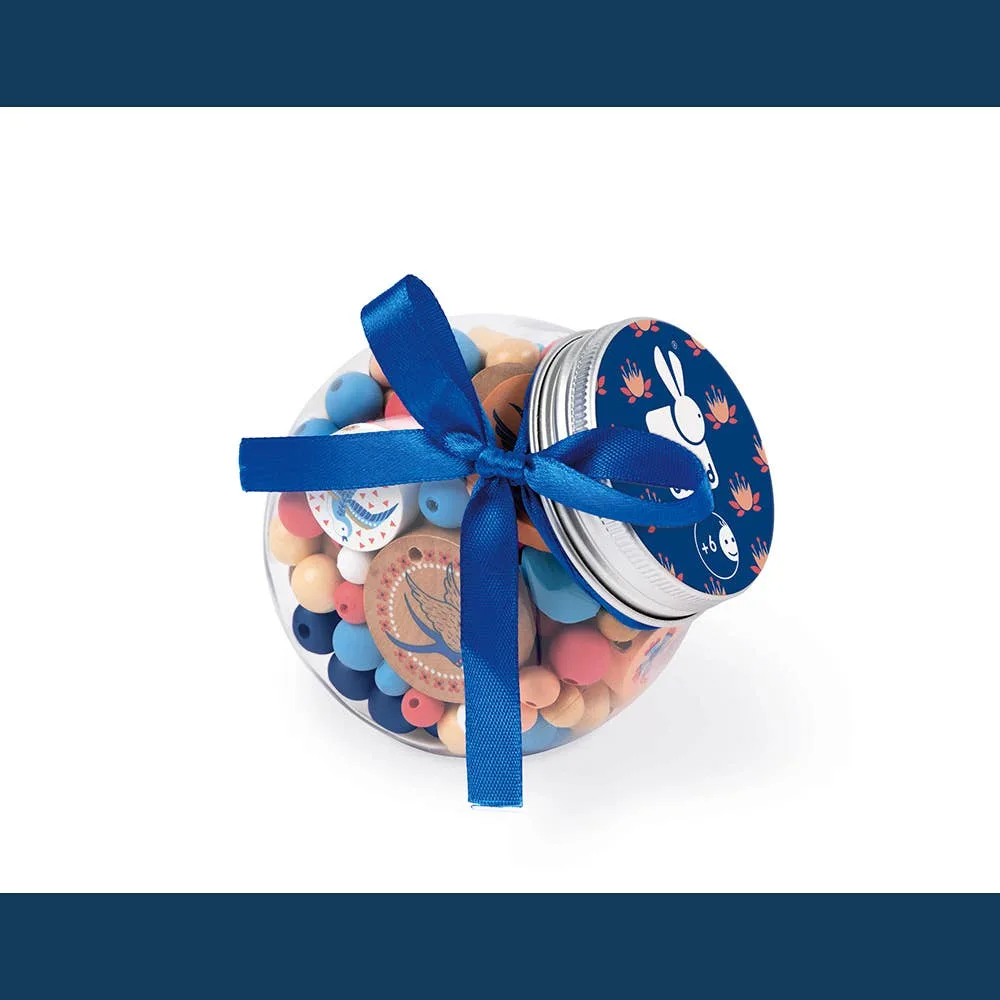
The container matters as much as the beads. A kit that comes in a candy-jar holder with a screw or snap lid is easier to reseal than a kit that arrives in a resealable bag, because bags crease and stop sealing after a few uses. When you compare kits, check the stated container size and whether the lid is rigid.
Theme also affects tidiness. A bird-and-fruit theme with 12 charms gives children a clear stopping point: when the charms are used, the kit is done. Open-ended bead assortments with no theme tend to stay half-finished, and half-finished kits are the ones that get dumped into a general craft bin.
Storage spots that survive real households
A shelf at child height beats a high cupboard. If the jar is easy to reach, it gets put back; if it is hard to reach, it gets left out. Keep the jar upright in a shallow box or basket so several kits can slide out together without tipping.
Avoid storing bead kits in a hot car or a sunny windowsill. Nylon elastic thread and some bead finishes do better in a stable indoor spot. A closed cabinet or a shaded shelf is enough; you do not need special equipment.
Decision rules for bead kit storage
- If your child finishes projects in one sitting: Keep the original jar and skip extra organizers. A single container with the lid closed is faster to use and faster to put away than a multi-compartment box. One kit, one jar, one shelf spot.
- If your child stops and restarts over several days: Wind the elastic thread on a card and bag the clasps and charms inside the jar so a half-finished bracelet can be resumed without hunting for matching pieces. Protect the thread and the clasps first; beads are replaceable, matching charms are not.
- If you own more than two bead kits: Label each jar by theme and store them upright in a shallow basket. Do not combine themes into one shared bin, even if it looks tidier on the shelf. Mixed bins save shelf space but cost you finished projects.
- If beads keep ending up on the floor: Change the work surface before you buy more storage. A rimmed tray catches rolling beads and can be tipped straight back into the jar. Fix the surface, then the shelf.
Product facts that affect storage
- Birdy | Swallows - 220 Beads | Arts and Crafts | Ages 6+: 220 beads including 12 charms on a bird and fruit theme, with 5 clasps, 3 meters of nylon elastic thread, and a candy jar holder sized about 3.3 x 2.3 x 3.2 inches. The jar is small enough to sit on a child-height shelf and holds the whole kit, so you do not need a separate bead organizer. The 3-meter thread length is enough for several sessions if you wind the leftover on a card instead of leaving it loose.
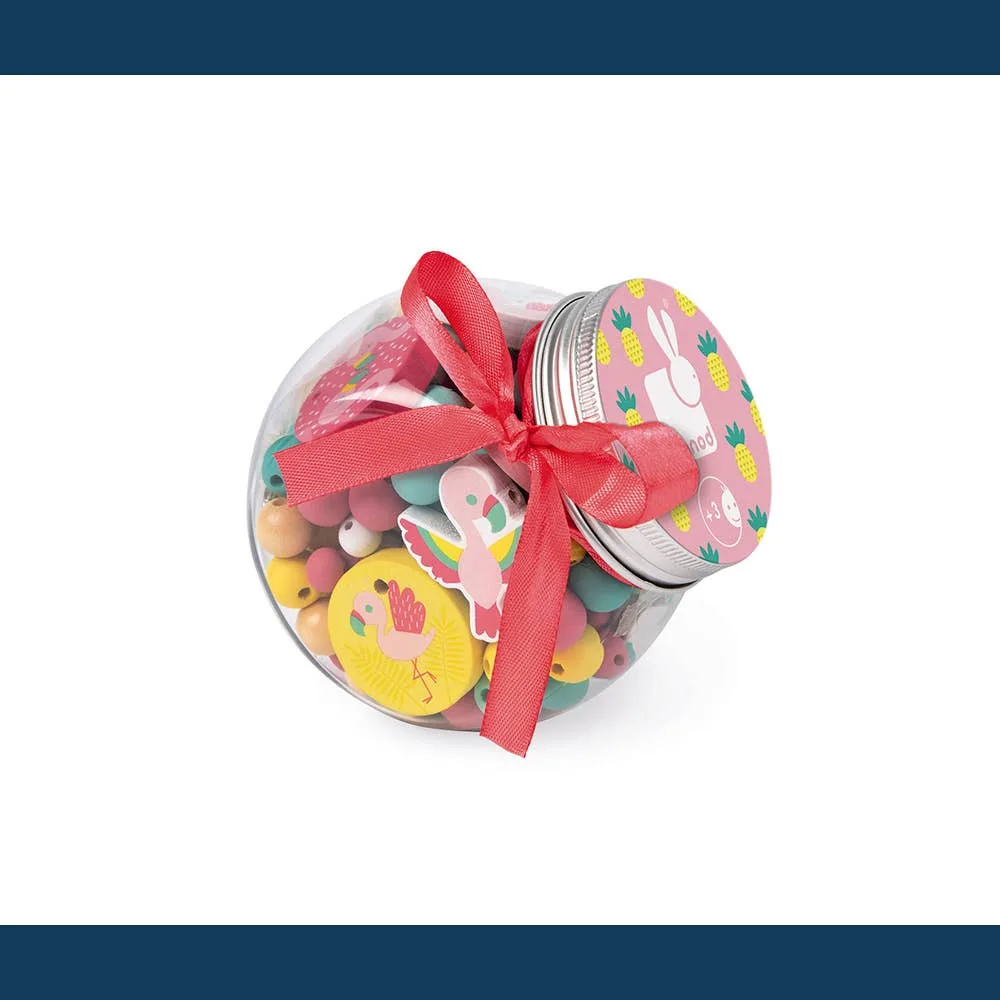
- Birdy | Flamingos - 220 Beads | Arts and crafts | Ages 6+: 220 beads including 12 charms on a flamingo theme, with 5 clasps, 3 meters of nylon elastic thread, and the same candy jar holder format. Because the container format matches the bird kit, two themed kits stack and store the same way. Keeping each theme in its own labeled jar prevents the charms from mixing, which is the most common reason a themed kit cannot be finished.
Who this storage approach fits
Best for
- Families with one or two themed bead kits who want a five-minute cleanup routine
- Children ages 6 and up who can snap a lid closed and wind thread on a card with light help
- Households that want kids craft supplies organization without buying a new shelving system
Not for
- Families with large mixed bead collections that need sorting by color or size
- Children under 6 who still mouth small parts; beads and clasps are a choking risk and need closer supervision
- Anyone looking for a display-style craft room setup rather than everyday storage