Quick answer
Wash kids bedding on a gentle, cool cycle with mild detergent, dry it fully before use, and rotate two or three sets so each one rests between washes. This single habit does more to extend bedding life than any specialty product. Small doll bedding sets follow the same logic on a smaller scale.
Bedding that frays, fades, or pills after a few months usually is not a fabric quality problem. It is a routine problem: the same set washed too often, dried too hot, and stuffed back into the same spot. Fix the routine and most kids bedding lasts noticeably longer.
This guide separates the symptom from the likely cause, gives a corrective action, and tells you when to stop repairing and replace instead. The same habits apply whether you are caring for a full-size duvet or a doll pram bedding set.
Symptom: bedding feels rough or stiff after washing
Roughness after washing almost always comes from overwashing, too much detergent, or a hot dryer cycle. Fabric fibers swell and abrade when they are agitated repeatedly, and detergent residue left behind makes the surface feel stiff even when the bedding is clean.
Switch to a gentle, cool cycle with half the detergent you normally use, and add an extra rinse if your machine has that option. Dry on low or line dry. If the fabric still feels rough after two or three washes with this method, the fibers are worn and no amount of fabric softener will restore them.
- Use mild, liquid detergent rather than powder, which can leave residue in thick seams.
- Skip fabric softener on children's bedding; it coats fibers and reduces absorbency.
- Wash bedding separately from towels and jeans to reduce abrasion.
Symptom: colors fade unevenly across the set
Uneven fading usually means one piece is washed more often than the others, or the set is dried in direct sun while the rest sits in a cupboard. It is a rotation problem, not a dye problem. The piece that gets washed weekly will always look older than the piece that gets washed monthly.
Wash the full set together, inside out, and dry all pieces under the same conditions. If you use a dryer, keep the temperature low and remove bedding while it is still slightly damp to reduce heat exposure. Rotating two sets means each one is washed roughly half as often, which slows fading across the whole collection.
- Turn printed or dyed pieces inside out before washing.
- Avoid prolonged direct sunlight when drying colored bedding.
- Rotate sets on a schedule rather than washing one set until it wears out.
Symptom: seams pull or stitching comes loose
Loose seams are usually caused by overloaded washing machines. When bedding is packed tightly, the drum pulls at seams instead of letting fabric move freely. Overloading also prevents proper rinsing, which leaves detergent in the stitching and weakens it over time.
Wash one bedding set per load, or two at most if your machine is large. Fasten zippers and close pillow openings before washing so they do not catch on other fabric. If a seam has already opened, a simple stitch repair is worth doing once; if the same seam opens again within a few washes, the fabric around it is failing.
- Leave the drum about two-thirds full so bedding can move freely.
- Close zippers and button covers before washing.
- Repair a pulled seam once; repeated failures mean it is time to replace.
Symptom: bedding smells musty even after washing
A musty smell that survives a wash usually means the bedding was stored damp or dried in a humid space. Damp storage lets mildew settle into the filling, and a normal wash cycle may not reach the center of a thick duvet or mattress pad.
Dry bedding completely before storing it, and store it somewhere with airflow rather than in a sealed plastic bin. If the smell persists after a full wash and a thorough dry in sunlight, the filling has likely absorbed mildew and the item should be replaced rather than repeatedly washed.
- Dry bedding fully before folding and storing.
- Choose breathable cotton storage bags over sealed plastic.
- Air stored bedding for a few hours before putting it back on the bed.
How rotation actually extends bedding life
Children bedding rotation is simple: keep two or three sets in active use and cycle them, so each set is washed less often and has time to rest between uses. Fabric fibers recover when they are not constantly agitated, and elastic and stitching last longer when they are not under daily strain.
A practical rotation is one set on the bed, one in the wash or drying, and one stored clean. Label shelves or bins so anyone in the household can put the right set back in the right place. If you only own one set, wash it less aggressively rather than more often; spot-clean small messes instead of stripping the whole bed.
- Aim for two sets in rotation, three if you have the storage space.
- Spot-clean small spills instead of washing the full set.
- Store clean sets folded, not compressed, to protect elastic and seams.
Kids bedding washing tips that apply to every fabric
Check the care label first, because the correct temperature and drying method depend on the fabric blend, not on the brand. Wash on the gentlest cycle the label allows, use mild detergent, and avoid bleach unless the label specifically permits it. Bleach weakens fibers and speeds up fading, especially on colored bedding.
Dry bedding completely before it goes back on the bed, and never store it damp. If you are short on drying space, a second set in rotation solves the problem without forcing you to dry bedding in a rush.
- Follow the care label over any general advice, including this article.
- Use the gentlest cycle and lowest temperature the label allows.
- Never put damp bedding into storage, even briefly.
Bedding problem diagnosis: symptom, cause, action, and when to stop
- Rough or stiff after washing: Caused by overwashing, excess detergent, or high dryer heat. Wash on a gentle, cool cycle with half the usual detergent and dry on low. If two or three gentle washes do not soften the fabric, the fibers are worn; replace rather than treat.
- Uneven color fading: Caused by washing one piece more often than the rest, or drying in direct sun. Wash the full set together, inside out, and rotate two sets. If fading is already patchy across a set, rotation will slow further fading but will not restore color.
- Pulled or loose seams: Caused by overloading the washing machine. Wash one set per load and close zippers before washing. Repair a seam once; if the same seam fails again within a few washes, the surrounding fabric is failing and the set should be replaced.
- Musty smell after washing: Caused by storing bedding damp or drying it in a humid space. Dry completely and store in a breathable bag with airflow. If the smell survives a full wash and a thorough dry, mildew has reached the filling; replace the item instead of washing it repeatedly.
Doll bedding that fits the same care routine
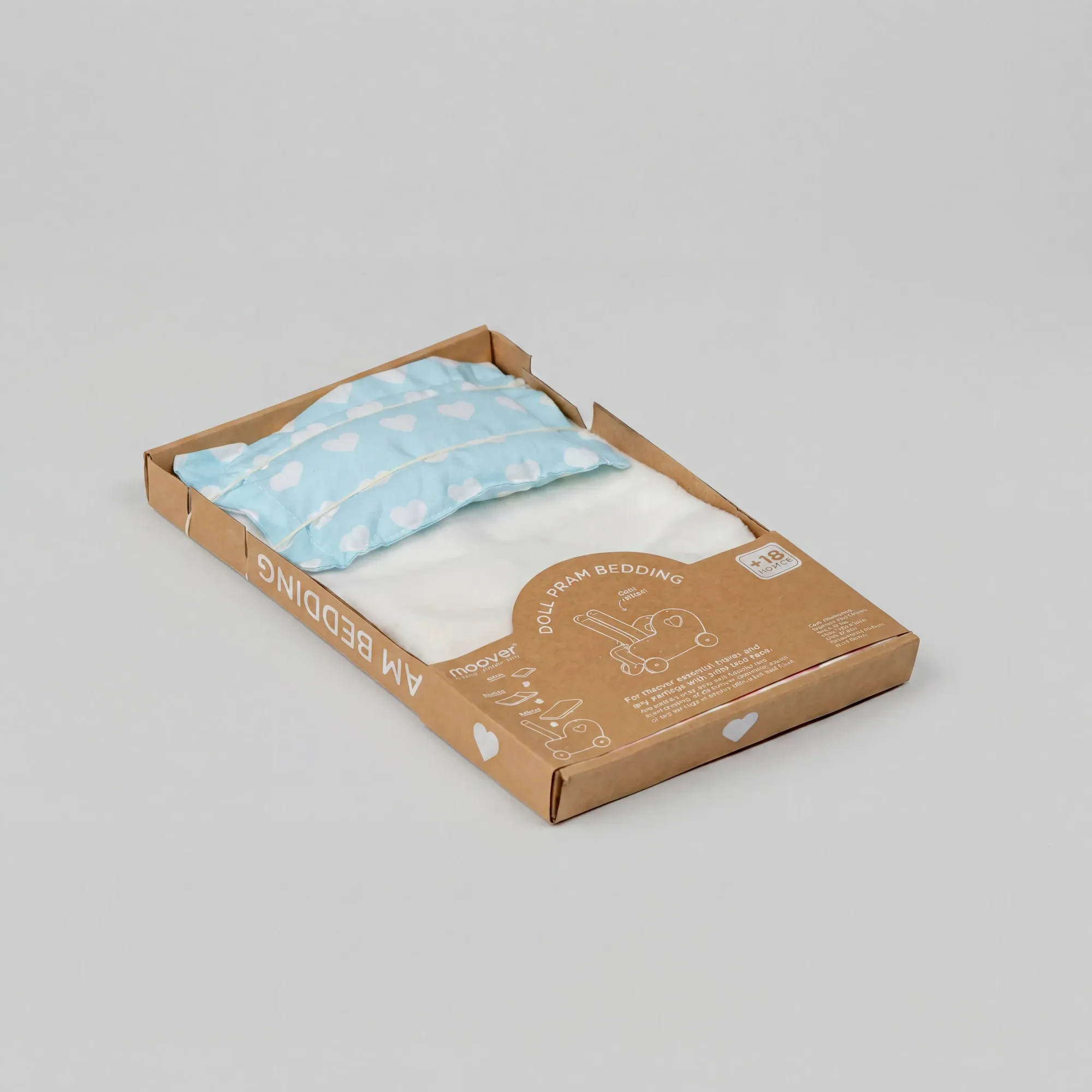
- Dolls pram classic bedding set Light Blue: Includes a dolls mattress, sheets, pillow, and blanket, sized to fit the regular Moover CLASSIC Stroller at 11.8 x 2.8 x 7 inches (30 x 7 x 18 cm). Because it is a complete set, you can wash the pieces together and rotate the whole set, which is exactly the habit that keeps colors and seams consistent over time.
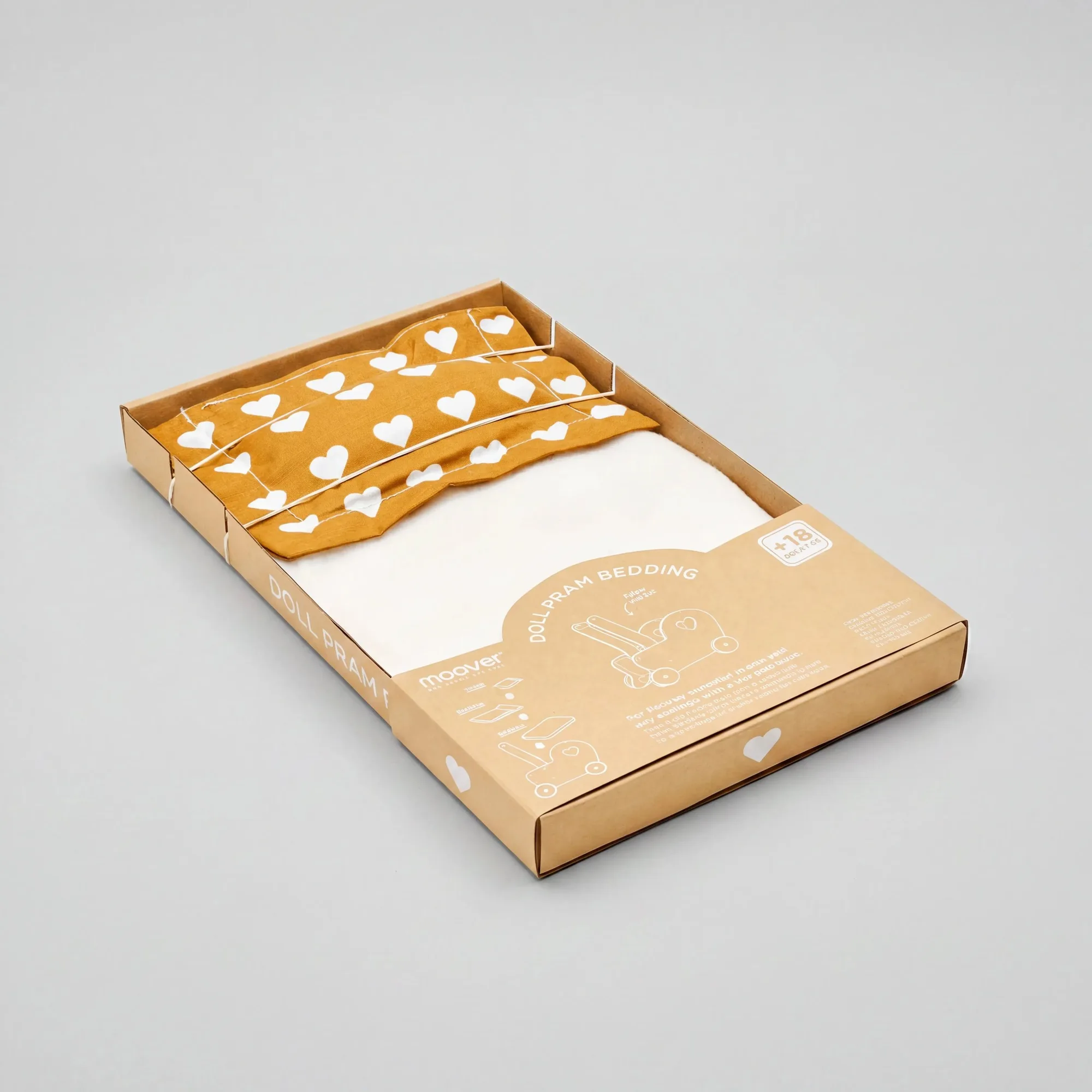
- Dolls pram classic bedding set Brown: Also includes a dolls mattress, sheets, pillow, and blanket, and can be used as a playtime accessory even without a stroller. If your child uses it as a standalone play accessory, it gets handled more than it gets washed, so spot-cleaning and airing between washes will extend its life more than frequent machine washing.
Most bedding does not wear out from age; it wears out from how it is washed, dried, and stored. Wash gently, dry fully, rotate two sets, and check the care label before anything else. Those four habits handle nearly every problem in this guide, and when they stop working, that is your signal to replace rather than repair.