What Makes This a True First Science Kit
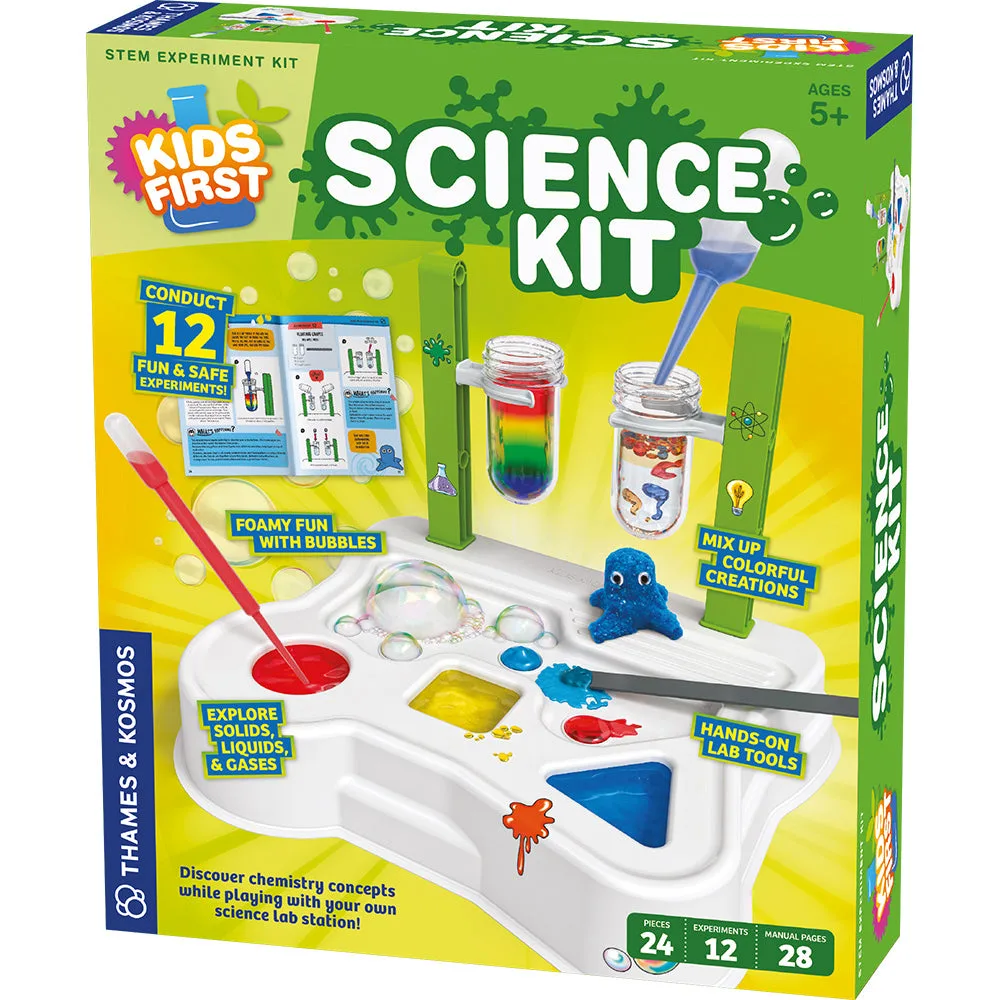
The Kids First Science Kit is designed for children ages five and up who are ready to move from pretend play to real experimentation. It includes 24 pieces and a 28-page full-color manual that guides kids through a dozen STEM activities. The kit's durable plastic base station keeps tools organized, making it easy for young scientists to work independently.
Unlike many toy science sets, this kit uses real chemistry concepts like surface tension, solutions, mixtures, density, and buoyancy. A friendly blob-shaped character named Blobert, created in the first experiment, accompanies kids throughout the kit, adding a playful narrative to the learning.
Kit Specifications at a Glance
-
Kids First: Science Kit: Ages 5+, 12 experiments, 24 pieces, 28-page manual, no batteries required. This tells you the kit is truly entry-level—no reading or tech skills needed, just curiosity and adult supervision for the youngest users.
Kids First: Science Kit
-
Kids First: Science Kit: Product dimensions: 9.6 x 11.5 x 2.6 in.; weight: 1.1 lb. The compact box fits neatly on a shelf or in a bag, making it a practical gift or travel-friendly activity.
The 12 Experiments: What Kids Actually Do
The experiments are quick and easy, designed to hold a young child's attention. Kids start by creating Blobert, their googly-eyed guide. From there, they cast slippery alginate shapes, blow iridescent soap bubbles, create a rainbow in a test tube, and make grapes dance. Each activity introduces a different scientific principle in a playful, hands-on way.
Because the kit focuses on chemistry basics, children explore how liquids behave, how solids dissolve, and how objects float or sink. The manual's step-by-step instructions with colorful illustrations make it easy for parents or older siblings to help without needing a science background.
How This Kit Differs from Other STEM Starters
- Age range and complexity: This kit is specifically for ages 5+, with simple, quick experiments. Many other STEM kits target older kids (8+) or require reading and fine motor skills that younger children haven't developed yet.
- Focus on chemistry vs. broader topics: The Kids First Science Kit is chemistry-focused, covering surface tension, density, and mixtures. Other starter kits might cover physics (magnetism, simple machines) or biology (growing crystals, dissecting). Choose based on what fascinates your child.
- Number of experiments and pieces: With 12 experiments and 24 pieces, this kit offers a focused introduction without overwhelming a beginner. Some kits pack in 20+ activities but require more setup and supervision.
What the Supplied Information Doesn't Cover
The product record confirms the kit includes tools like pipettes, tweezers, spatula, and test tubes, but it doesn't list which common household supplies (e.g., water, oil, food coloring) are needed. You'll want to check the manual PDF for a complete materials list before starting an experiment.
Also, the safety and care instructions are not detailed in the available records. Always supervise children during experiments, especially when using small parts or liquids. The kit is designed for safe exploration, but adult guidance is recommended for the youngest users.