Quick Answer
Kids On Stage is a charades game for kids where players take turns acting out animals, objects, or actions while others guess. No reading is required, making it ideal for ages 3 and up.
Why Kids On Stage Works for Family Game Night
Unlike many board games that require reading or counting, Kids On Stage focuses purely on movement and imagination. This makes it a great icebreaker for mixed-age groups, from preschoolers to grandparents. The game encourages social skills and creative thinking without putting pressure on early readers.
Because there is no text to decode, younger players can participate on equal footing with older siblings. The acting prompts are simple and familiar — hopping like a frog, waddling like a duck — so even shy kids can join in after watching a round or two.
What You Need to Play
The game box includes a game board, playing pieces, and cards with charades prompts. You will need 2 to 6 players, and each round takes about 15–20 minutes. No batteries, pencils, or extra materials are required — just space to act out the clues.
How to Play Kids On Stage: Step-by-Step Rules
- Set Up the Board and Choose a First Player: Place the game board in the center. Each player picks a playing piece and places it on the Start space. The youngest player usually goes first. Shuffle the charades cards and place them face down near the board. Common mistake: letting older players go first can discourage younger ones. Let the youngest start to build confidence.
- Draw a Card and Read the Prompt: The active player draws the top card and looks at the picture or word prompt. Because no reading is required for younger players, an adult or older sibling can quietly whisper the prompt if needed. The prompt shows an animal, object, or action to act out. Checkpoint: if the player cannot read, have a helper whisper the prompt so everyone can participate.
- Act Out the Clue Without Speaking: The player stands up and acts out the prompt using only body movements and sounds. No talking, pointing at objects, or mouthing words is allowed. Animal sounds are permitted. Set a timer for 60 seconds per turn, or let the group decide on a shorter limit for younger players. Common mistake: players sometimes forget and start talking. Remind everyone before each turn that only sounds and movements are allowed.
- Guessing and Scoring: The other players shout out guesses. The first correct guess wins the round, and both the actor and the guesser move their pieces one space forward on the board. If no one guesses correctly within the time limit, no one moves. Play passes to the next player clockwise. Checkpoint: encourage multiple guesses — the more ideas, the more fun. Avoid letting one player dominate the guessing.
- Winning the Game: The first player to reach the Finish space on the board wins. Because the game is cooperative in spirit, you can also play until every player reaches the end, especially with very young children. The goal is laughter and participation, not competition. Common mistake: focusing too much on winning can spoil the mood. Emphasize that acting and guessing are the real fun.
Product Spotlight
-
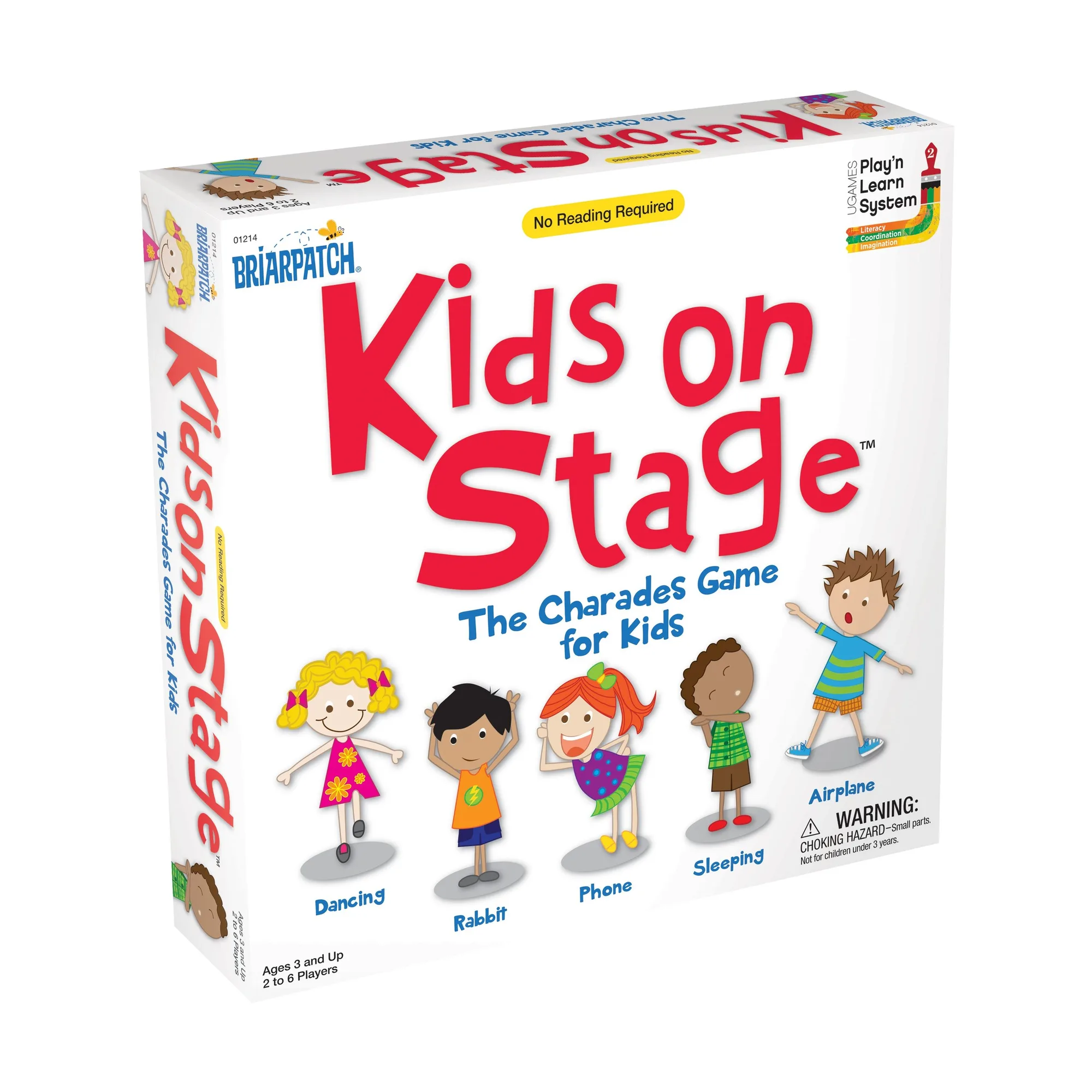
Kids On Stage Board Game: Kids On Stage is a charades game that requires no reading, recommended for 2–6 players. This makes it accessible for preschoolers and early readers, so the whole family can play together without frustration.
Kids On Stage Board Game