Quick answer
For most kids, start with 24 pieces around age 2-3, move to 48 pieces at 3-4, try 104 pieces at 5-6, and consider 300 pieces for ages 7-8. Match the piece count to your child's patience and fine motor skills, not just age.
Why piece count matters more than age
Age is a useful starting point, but a child's experience with puzzles and their attention span matter just as much. A 4-year-old who has done many 24-piece puzzles may be ready for 48 pieces, while a 6-year-old new to puzzles might prefer a 104-piece set with a familiar character.
The finished size also affects the experience. A 24-piece puzzle builds to 62 x 42 cm, giving toddlers large pieces that are easy to grip. A 104-piece puzzle finishes at 48.5 x 33.5 cm, a more compact size that still offers a satisfying challenge.
The trade-off between piece size and challenge
Fewer pieces usually mean larger pieces, which are easier for small hands. But a 24-piece puzzle can be too simple for a 5-year-old, leading to boredom. Conversely, a 300-piece puzzle has smaller pieces that require more dexterity and patience—skills that develop gradually.
Consider the theme too. A puzzle with a favorite character like Peppa Pig can motivate a child to try a slightly higher piece count than they might otherwise manage.
Decision rules for choosing a puzzle
- Age 2-3: Choose a 24-piece maxi puzzle with large pieces and a favorite character. It builds observation and manual skills without frustrating small hands. Check that the pieces are truly 'maxi'—at least 5 cm across—for easy gripping.
- Age 3-4: Move to a 48-piece puzzle, or a set of three 48-piece puzzles, to add variety and extend playtime. The Smurfs 3x48 set offers three images in one box. If your child finishes one 48-piece puzzle quickly, a multi-pack gives more value.
- Age 5-6: Try a 104-piece puzzle with a beloved character like Stitch. The finished size is 48.5 x 33.5 cm, which is manageable on a small table. Encourage sorting edge pieces first—it's a key strategy for this piece count.
- Age 7-8: Consider a 300-piece puzzle for a longer project. It requires more patience and fine motor control, but the Winx theme keeps it appealing. Set aside a dedicated puzzle space, as 300 pieces can take several sessions.
Puzzle options to consider
-
PEPPA PIG - 24 pezzi: This 24-piece maxi puzzle measures 62 x 42 cm when complete. The large piece size and bright Peppa Pig artwork make it ideal for toddlers who are still developing fine motor skills.
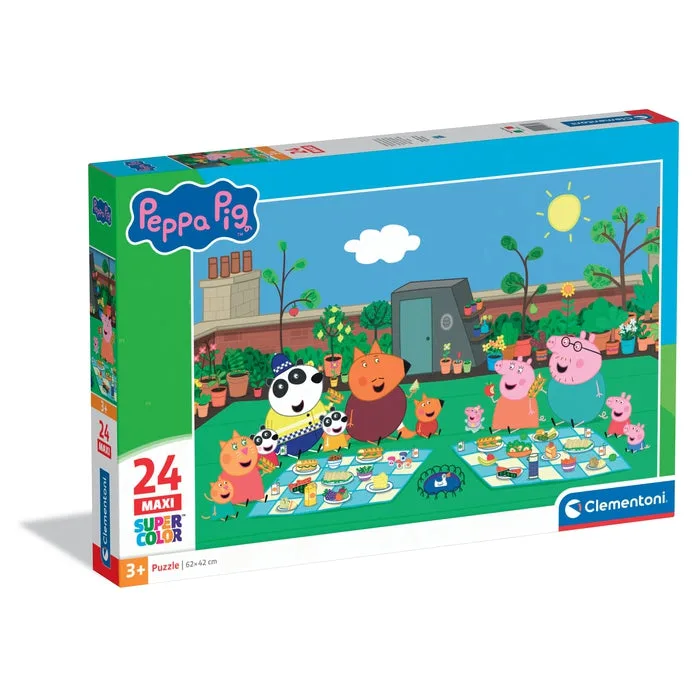
PEPPA PIG - 24 pezzi
-
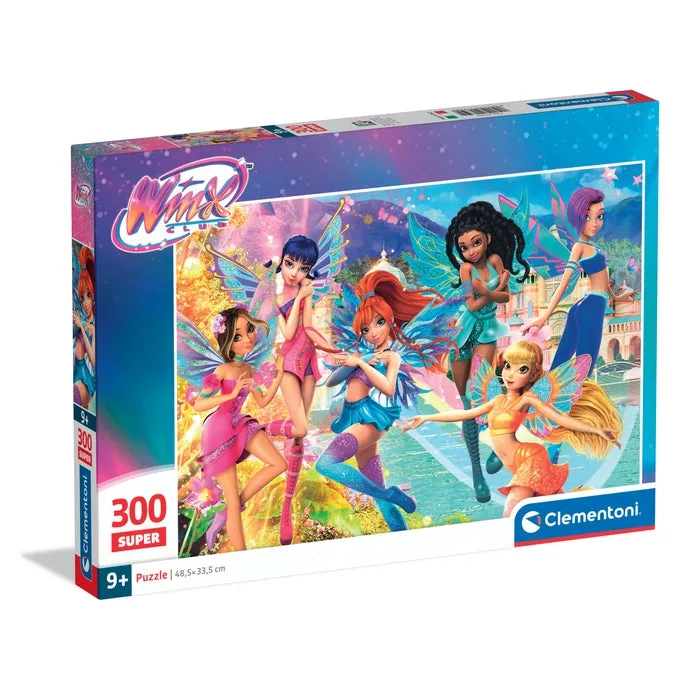
Winx - 300 pezzi: This 300-piece puzzle forms a 48.5 x 33.5 cm image. The smaller pieces and higher count offer a real challenge for older kids, while the Winx theme keeps them engaged.
Winx - 300 pezzi
Who should buy which puzzle
Best for
- 24-piece puzzles: toddlers and younger preschoolers (ages 2-3) who need large, easy-to-handle pieces
- 48-piece puzzles: preschoolers (ages 3-4) ready for a step up, especially with a favorite character
- 104-piece puzzles: kindergarteners (ages 5-6) who can sort and assemble with guidance
- 300-piece puzzles: older kids (ages 7-8) who enjoy a longer, more challenging project
Not for
- 24-piece puzzles: older kids who will finish them too quickly and lose interest
- 300-piece puzzles: young children who lack the patience or fine motor skills to handle small pieces