Quick answer
Match the puzzle to your child's current ability, not just their birthday. A first puzzle for a 2 year old should have 2–4 chunky, easy-to-grab pieces with picture cues; by 3–4, look for 6–12 pieces and simple themes; preschoolers (4–5) can often handle 12–24 pieces and more detailed images. If your child finishes a puzzle in under a minute, it's too easy—move up a level.
Why puzzle difficulty should follow development, not age alone
Age ranges on puzzle boxes are a starting point, not a rule. Two children the same age can be months apart in fine motor control, visual discrimination, and patience. A better approach is to watch how your child plays: do they try different pieces, or do they get frustrated and walk away? A good puzzle stretches their skills just enough to keep them engaged without causing meltdowns.
Use the age on the box as a rough guide, then adjust based on what you see at home. If a puzzle is too hard, children often resort to forcing pieces or asking for help immediately. If it's too easy, they'll finish it in seconds and lose interest. The sweet spot is a puzzle they can almost complete alone, with one or two small hints.
Puzzle difficulty levels at a glance
Most wooden and cardboard puzzles fall into a few broad levels. Knowing these helps you choose the next step without guessing.
Level 1 (around 18 months–2 years): 2–4 pieces, often with pegs or thick knobs. The goal is matching a piece to a single hole, not interlocking. Level 2 (2–3 years): 4–8 pieces, sometimes with a frame or picture underneath to guide placement. Level 3 (3–4 years): 8–12 pieces, often interlocking, with clearer picture cues. Level 4 (4–5 years): 12–24 pieces, more complex images, and less scaffolding. Level 5 (5+): 24+ pieces, often without a frame, requiring trial and error.
These levels are not strict. A 3-year-old who has done lots of puzzles may jump to 12 pieces, while a 4-year-old new to puzzles may still prefer 8. The key is to offer a range and let your child choose.
What to look for in a first puzzle for a 2 year old
For a first puzzle, prioritize ease of handling and clear success. Look for chunky pieces that are easy for small hands to grasp, and a base with a matching picture or shape so your child can self-correct. Avoid puzzles with too many similar pieces or abstract images; a simple animal, vehicle, or fruit is easier to recognize.
Durability matters too. Wooden puzzles with thick pieces and smooth edges tend to survive teething and repeated use better than thin cardboard. If the puzzle has pegs, check that they are securely attached and not a choking hazard. At this stage, the goal is fun and exploration, not completing the puzzle perfectly.
Choosing puzzles for toddlers: signs your child is ready for more
When your toddler consistently completes their current puzzle without help and starts to look bored, it's time to add a piece or two. You can also introduce a new puzzle with a different theme but similar difficulty to build confidence before increasing the challenge.
Another sign is when they start to use trial and error instead of just grabbing. That shows they are thinking about where pieces go. At that point, a puzzle with 6–8 pieces and a picture underneath can be a good next step. Keep sessions short—5 to 10 minutes is plenty for toddlers—and put the puzzle away before frustration sets in.
Best puzzles for preschoolers: adding challenge without frustration
Preschoolers (4–5) are often ready for interlocking puzzles with 12–24 pieces. They can use the picture on the box as a reference and may enjoy puzzles with more detail, such as a scene with multiple characters or a map. This is also a good age to introduce puzzles without a frame, which require more spatial reasoning.
If your child gets stuck, resist the urge to place pieces for them. Instead, ask questions like 'Which piece has a straight edge?' or 'What color is this part?' That keeps them thinking and builds problem-solving skills. Rotate puzzles every few weeks to keep them fresh, and store pieces in a bag or box so they don't get lost.
Decision rules for buying puzzles by age
- If your child is 18 months–2 years: Choose a 2–4 piece puzzle with chunky pegs or knobs and a matching picture underneath. Avoid interlocking pieces or puzzles with more than 5 pieces. Look for 'first puzzle' or 'peg puzzle' labels.
- If your child is 2–3 years: Choose a 4–8 piece puzzle, ideally with a frame or picture guide. If they master it quickly, add 2 pieces at a time. Watch for boredom or forced pieces to know when to level up.
- If your child is 3–4 years: Choose an 8–12 piece interlocking puzzle with a clear theme. Introduce puzzles without a frame only if they are confident. Keep the picture on the box visible for reference.
- If your child is 4–5 years: Choose a 12–24 piece puzzle, possibly without a frame. Look for more detailed images that encourage conversation. Encourage them to sort edge pieces first.
- If your child is 5+: Choose puzzles with 24+ pieces or 3D puzzles. Let them choose themes they love to maintain interest. At this stage, puzzle choice is about passion, not just difficulty.
HABA puzzles and games that build puzzle skills
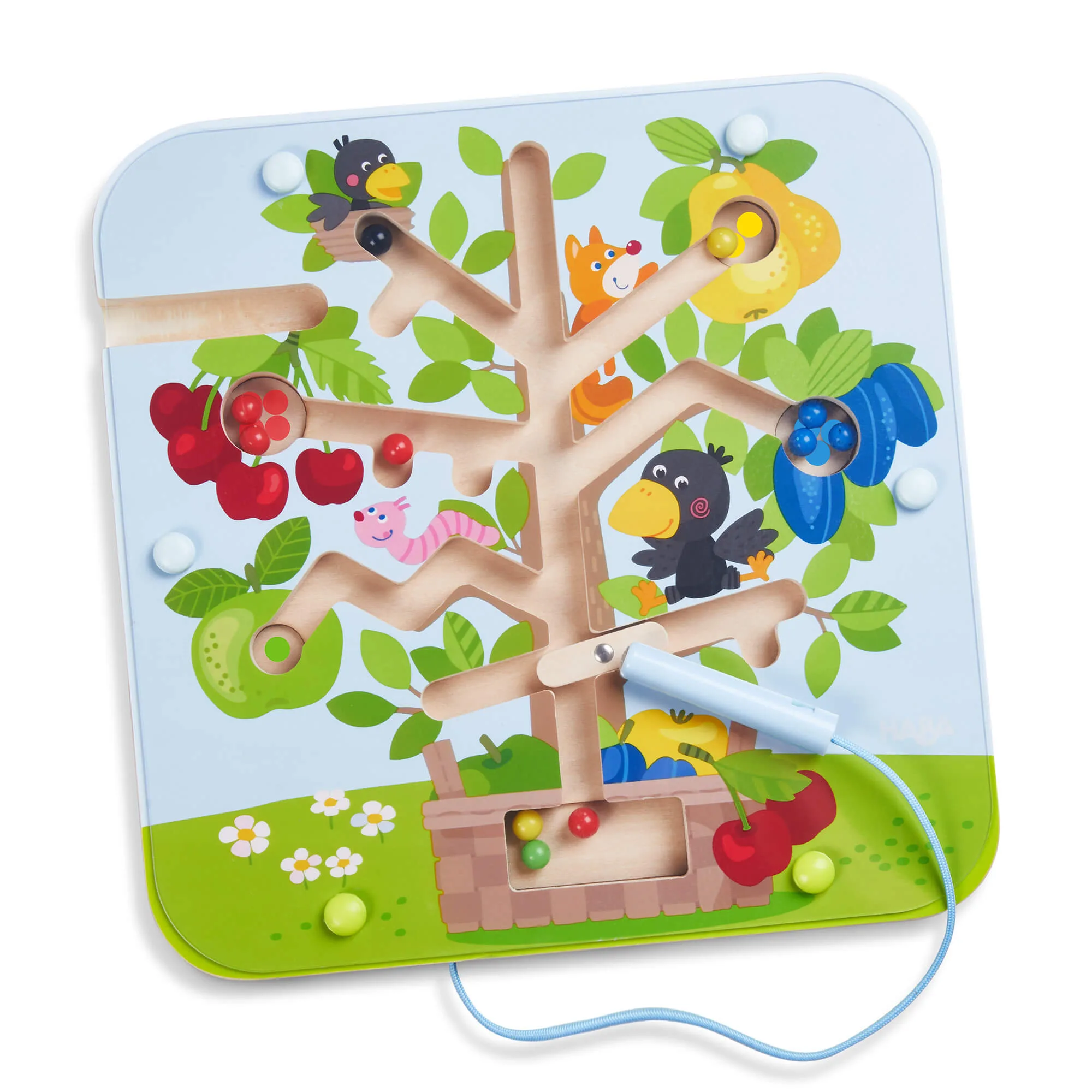
- Orchard Maze Magnetic Sorting Game: Junior orchard farmers can use the magnetic stick to move the balls around, count them or sort them by color. The brightly colored balls become apples, plums, pears and cherries on the tree and can be harvested. But watch out for the black raven ball; this must never be put in the basket! This magnetic sorting game builds the same fine motor control and color matching used in early puzzles, but with a different mechanic. It's a good bridge for a 2–3 year old who is not yet ready for interlocking pieces.
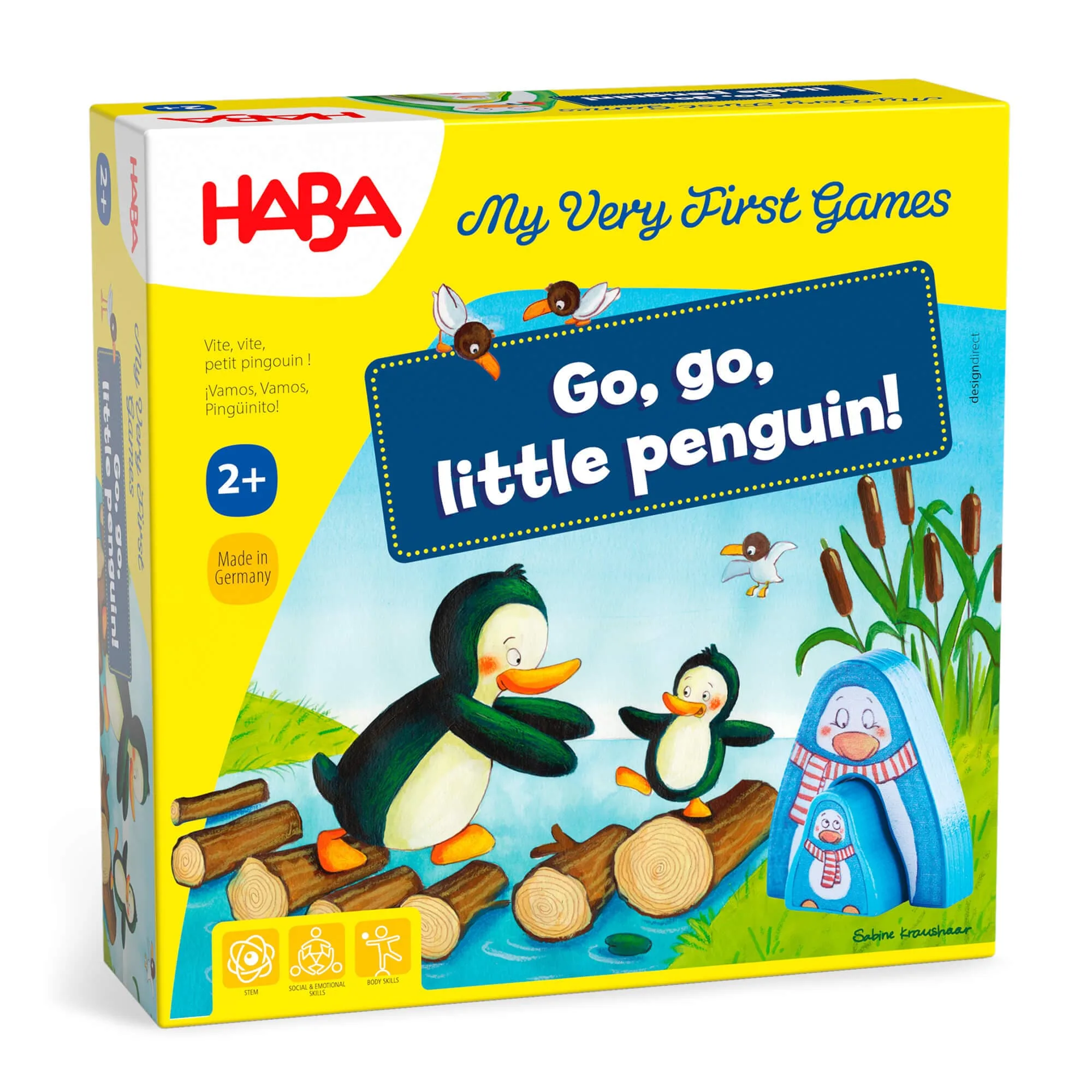
- My Very First Games – Go, Go, Little Penguin!: Number of Players: 2-3 Players; Playing Time: 10 Minutes; Go, Go, Little Penguin is a delightful dice race game where children guide their penguins in a lively race to the fishy picnic on the mainland. This engaging game is part of HABA's My Very First Game series, developed by educators for early childhood development. For a child who enjoys puzzles but wants more social play, this dice race game offers turn-taking and counting practice. It's a good complement to quiet puzzle time and reinforces the visual matching skills puzzles require.
Is a puzzle-based approach right for your child?
Best for
- Children who enjoy quiet, focused activities and building fine motor skills.
- Parents who want a screen-free activity that grows with their child.
- Families looking for a first puzzle for a 2 year old or a step-up for a preschooler.
Not for
- Children who prefer active, social games with lots of movement—consider a dice race game like Go, Go, Little Penguin instead.
- Kids who get easily frustrated by trial and error; start with magnetic sorting or peg puzzles to build confidence first.