Quick answer
Kids' swimwear should fit close to the body without pinching: snug at the waist and leg openings, flat straps that do not slide off the shoulder, and enough stretch to move, jump and swim freely. If you can pull the fabric more than a couple of centimetres away from the body, or if it bunches when your child raises their arms, go down a size. A two-piece only stays put when both the top band and the bottom waistband sit flat against the skin.
How should kids' swimwear fit?
Start with movement, not with the label. Ask your child to reach both arms overhead, squat, and twist. The fabric should follow the body without riding up or leaving gaps at the back. A swimsuit that feels slightly firm when dry is usually the right size, because swim jersey relaxes a little in water.
Check three points before you commit: the shoulder straps should stay on when arms are raised, the leg openings should sit flat without cutting into the skin, and the waistband should not roll down. If any of these fail, the fit is wrong, even if the size chart says otherwise.
How do I choose the right bikini size for a child?
Bikini sizing for children is less forgiving than a one-piece, because the top and bottom are sized together but fit different parts of the body. Measure the chest at its fullest point and the waist just above the hip bone, then compare both to the size chart. If the two measurements point to different sizes, choose the size that matches the larger measurement for the top and check whether the bottom has enough adjustability.
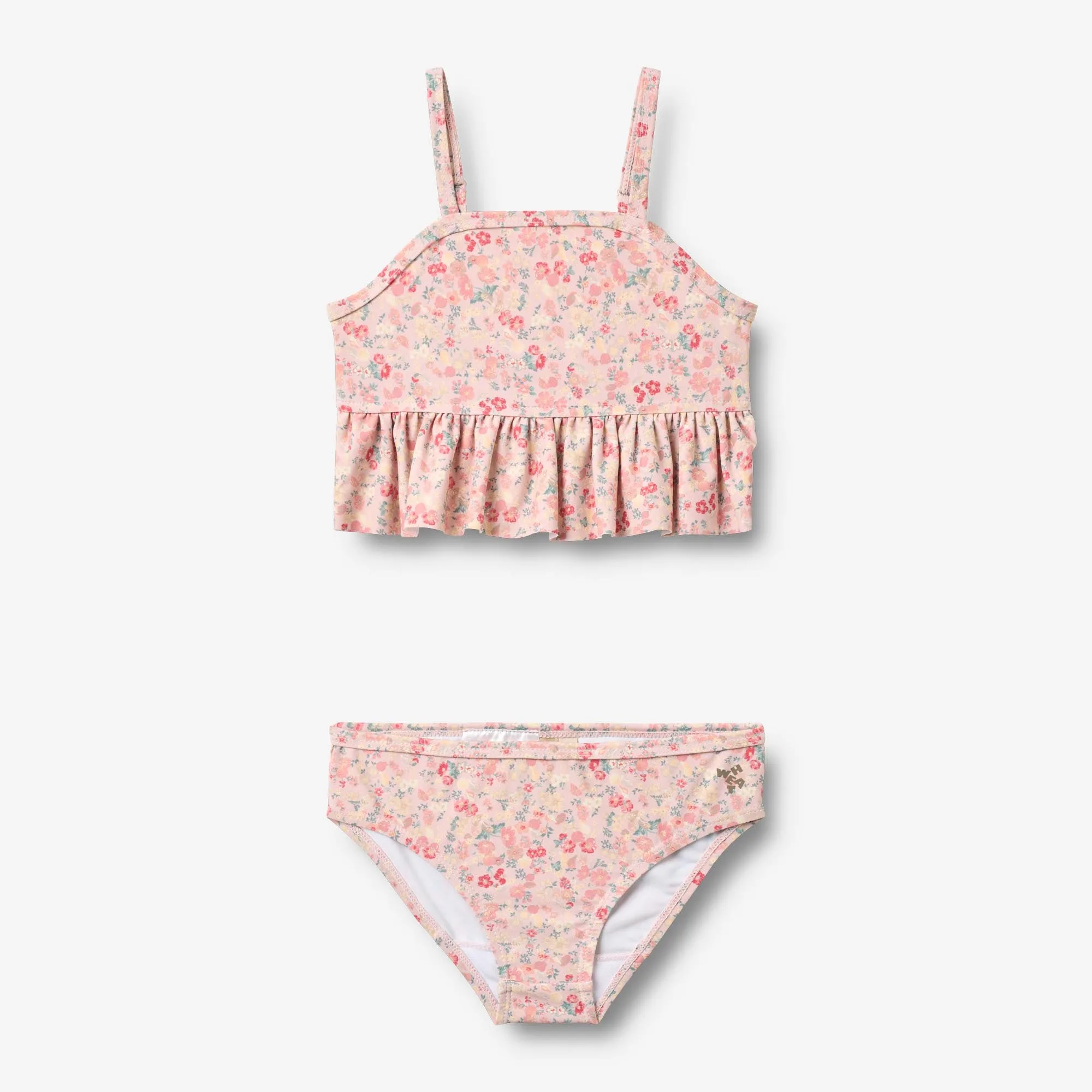
For a two-piece to stay put, the top band should sit level all the way around, not ride up at the back. The bottom should cover the hip comfortably without gaping at the leg. A print with a busy pattern, like a hand-drawn floral, hides small fit imperfections better than a plain colour, which is a small but real advantage for growing children.
Which details keep a swimsuit in place during active play?
Look for flat, wide straps rather than thin spaghetti straps, because narrow straps twist and slip when children run and dive. A lined front panel adds stability without bulk, and a waistband with a bit of width holds better than a thin elastic string.
Fabric matters too. A soft, stretchy swim jersey moves with the body instead of pulling against it, which is what causes straps to slide and bottoms to ride up. If the fabric feels stiff or papery, it will not recover its shape after a few wears.
Is chlorine-resistant swimwear necessary for children?
If your child swims in a chlorinated pool more than once a week, chlorine resistance is worth prioritising. Chlorine gradually breaks down elastane, which is the fibre that gives swimwear its stretch and recovery. Once that goes, the suit loses its shape and starts to sag, and a sagging suit will not stay put no matter how well it fitted at first.
If your child only swims in the sea or a lake, chlorine resistance matters much less. In that case, prioritise fit, sun coverage and comfort over pool-specific fabric claims. Rinse any swimsuit in cool fresh water after every use, whether it saw chlorine or salt, and dry it flat in the shade.
How do I know when a swimsuit no longer fits?
Three signs mean it is time to replace rather than adjust: the straps no longer stay on the shoulders even when tightened, the fabric has lost its snap and hangs loosely when wet, or the leg openings gape enough that your child holds them while swimming. A suit that has gone thin and see-through in the seat or chest has also reached the end of its useful life.
Children often grow a size between one summer and the next, so check the fit at the start of the season rather than assuming last year's suit still works. A suit that fits in June may be tight by August, and a tight suit is more likely to chafe than a slightly loose one.
Quick fit checks before you buy
Arms overhead test
Have your child raise both arms. Straps should stay on the shoulders and the top should not ride up at the back. If it moves, size down or choose a different cut.
Two-finger waist check
You should be able to slide two fingers under the waistband, but not a whole hand. The band should sit flat, not roll. A rolling waistband means the bottom is too loose.
Squat and twist
Watch the leg openings and back. Fabric should follow the body without gaping or pulling tight across the hips. Gaping leg openings will not stay put in the water.
Product facts that matter for fit
- Bikini Lærke - powder flowers and seashells: Two-piece set with a top and bottom in a unique, hand-drawn 'hollyhocks rainbow' print; soft and stretchy swim jersey designed with a focus on comfort and movement. The stretchy jersey and two-piece construction make it easier to check top and bottom fit separately, and the busy print helps disguise small fit changes as your child grows.