Quick answer
Use baby spoons while your child is still working on soft, mashed foods, and switch to a kids utensils set once they start feeding themselves with real fork-and-spoon motions. The trade-off is soft comfort versus actual practice with grown-up shapes.
Why the switch matters
Baby spoons are built for the first puree stage: soft tips, shallow bowls, and a shape that makes it easy for an adult to load and for a baby to gum. They protect tender gums, but they do not prepare a toddler for the fork-and-spoon skills they will need at the family table.
A kids utensils set shifts the job from feeding to self-feeding. The fork and spoon are sized for a small hand, so a toddler can grip, spear, and scoop with more control. That is the main reason to move on from baby spoons once the soft-tip phase ends.
The trade-off: soft tips vs. real tableware
Baby spoons are designed for the first puree stage: soft tips, gentle on gums, and often one piece so there is nothing to worry about. They keep mealtimes safe when your child is still learning to bring food to their mouth. The trade-off is that once your child wants to eat like you, the soft tip becomes a limitation — it bends under pressure and feels different from the metal spoon on your plate.
A kids utensils set moves your toddler to the fork-and-spoon phase. The stainless inserts feel like real cutlery, while the soft silicone handle keeps the grip comfortable for a small hand. The trade-off is that metal is firmer and less forgiving if your child still tends to bite down hard or bang utensils on the table.
When baby spoons still make sense
Soft-tip baby spoons are still the right tool during the first self-feeding attempts, when your child is mostly mashing food and exploring texture. The soft tip protects tender gums, and the shorter handle is easier for a new eater to control. Keep them on hand for purees and the earliest practice sessions.
What to look for in a toddler set
Once your child is past the soft-tip phase, look for utensils that are stainless for durability, sized for a small hand, and comfortable to grip. A soft silicone handle helps little fingers hold on while the metal end handles real food. A fun shape can also make the switch more appealing, since toddlers often want what looks like yours.
Baby spoons vs kids utensils set: the trade-off
- Baby spoons: Choose baby spoons when your child is still in the soft-food stage and needs a shallow, gentle scoop that protects tender gums. Move past soft-tip spoons once your toddler is eating real bites and wants to copy you at the table.
- Kids utensils set: Switch to a kids utensils set when your child has passed the soft-tip phase and can handle real stainless utensils sized for a small hand. Look for a soft silicone handle so the transition stays comfortable while the metal does the actual cutting and scooping.
- How to decide: Start with baby spoons for first purees, then move to a kids utensils set once your child shows interest in self-feeding and can hold a fork or spoon with a firmer grip. Keep the baby spoon on hand for runny foods, and switch to the kids set for thicker meals and practice.
Product facts at a glance
-
Kids Utensils Set - Elephant: The Kids Utensils Set - Elephant is a polished stainless spoon and fork with pale blue-gray silicone handles ending in a small elephant, sized for the fork-and-spoon phase. The stainless inserts handle real food while the soft silicone grip stays comfortable for a toddler's small hand, so the set bridges the gap between baby spoons and adult cutlery.
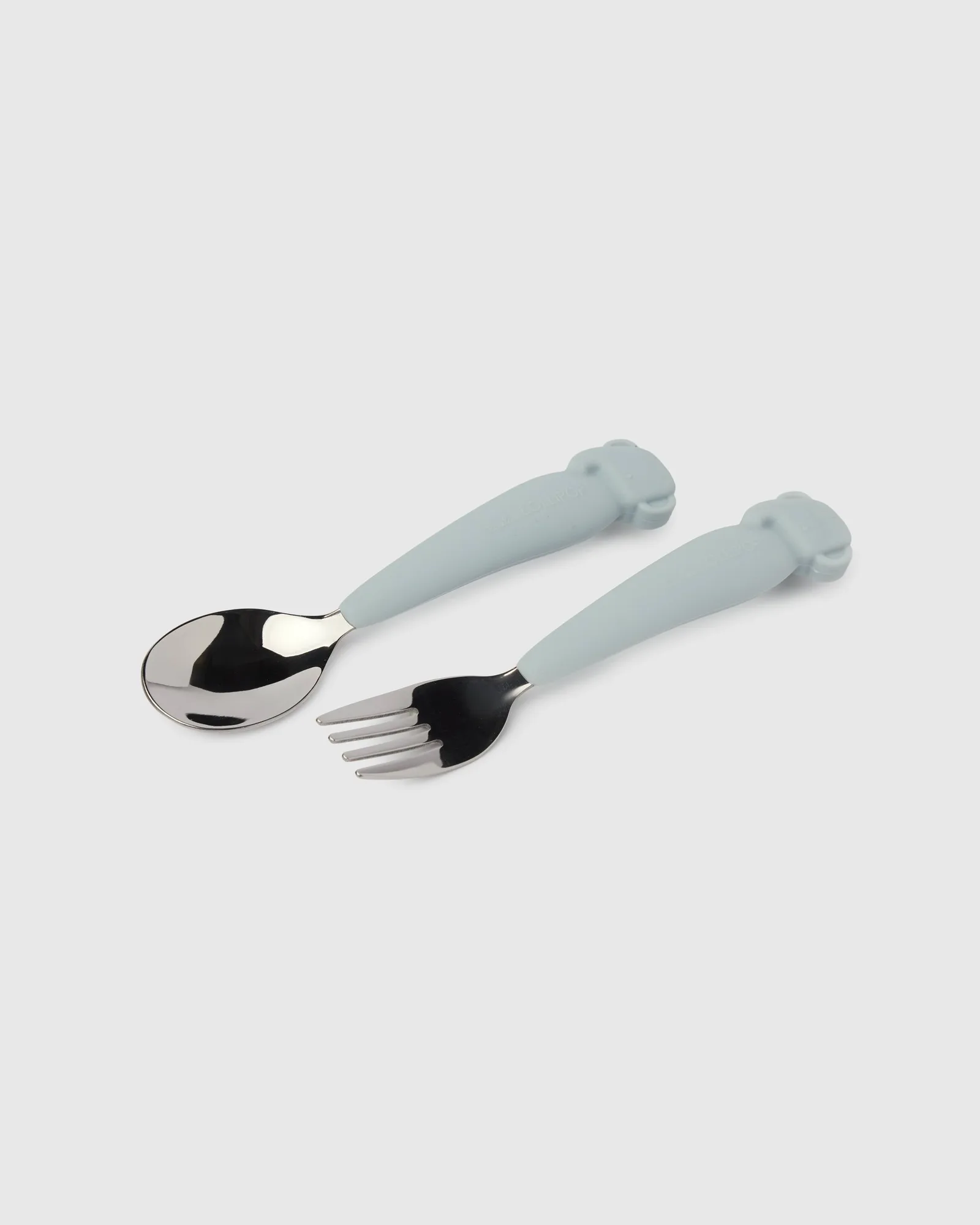
Kids Utensils Set - Elephant
Which option fits your child?
Best for
- Babies in the soft-tip phase who still need gentle silicone spoons for first purees
- Parents who want one set to carry from first bites through independent eating
Not for
- Babies who still need a soft-tip spoon for very first puree feedings