Quick answer
A kimono robe is a lightweight, open-front garment inspired by traditional Japanese design, often made of satin or silk and worn for lounging or layering. A dressing gown is a heavier, wrap-style robe typically made of cotton or terry cloth, designed for warmth and modesty after bathing.
Why the confusion is common
Both garments are loose-fitting and worn at home, so it’s easy to use the terms interchangeably. But the cut, fabric, and intended use differ significantly. A kimono robe usually has wide sleeves, a straight silhouette, and a sash tie, while a dressing gown often features a shawl collar, a belt, and a more tailored wrap fit.
The fabric choice also drives the difference: kimono robes lean toward lightweight, silky materials (like polyester charmeuse) that feel cool and elegant, while dressing gowns favor absorbent, warm textiles like cotton flannel or terry cloth.
Kimono vs Dressing Gown: FAQ
What is a kimono robe?
A kimono robe is a loose, open-front robe with wide, straight sleeves and a wrap closure (usually a sash). It’s inspired by the traditional Japanese kimono but shortened and made from lighter fabrics like satin, silk, or polyester charmeuse. It’s meant for lounging, layering over pajamas, or wearing as a glamorous cover-up.
What is a dressing gown?
A dressing gown is a floor-length, wrap-style robe with a shawl collar, a belt, and often pockets. It’s typically made from thicker, absorbent fabrics like cotton terry, flannel, or waffle knit. Its primary purpose is warmth and modesty after a bath or shower.
Can a kimono robe be used as a dressing gown?
You can wear a kimono robe after a bath, but it won’t absorb moisture well because of the silky fabric. It also provides less warmth. If you want something for both lounging and post-shower use, look for a kimono-style robe made from cotton or a cotton-blend. Check the fabric content before buying if you plan to use a kimono robe for drying off.
Which one is more stylish for everyday wear?
A kimono robe is generally considered more stylish for everyday lounging and layering because of its elegant drape and print options (like floral or leopard). A dressing gown is more utilitarian and cozy, better suited for lazy mornings or bedtime routines.
How do I choose between a kimono and a dressing gown?
Choose a kimono robe if you want a lightweight, beautiful layer for warm weather, lounging, or as a cover-up over lingerie or a slip dress. Choose a dressing gown if you need warmth, absorbency, and modesty after bathing or during cooler months. If you want both, consider having one of each for different seasons or moods.
Product facts to consider
-
Short Kimono Robe Black Leopard: Made of high-quality polyester charmeuse, soft, lightweight and cooling for summer. This makes the Short Kimono Robe Black Leopard ideal for warm-weather lounging or as a light layer over sleepwear, not for post-shower warmth.
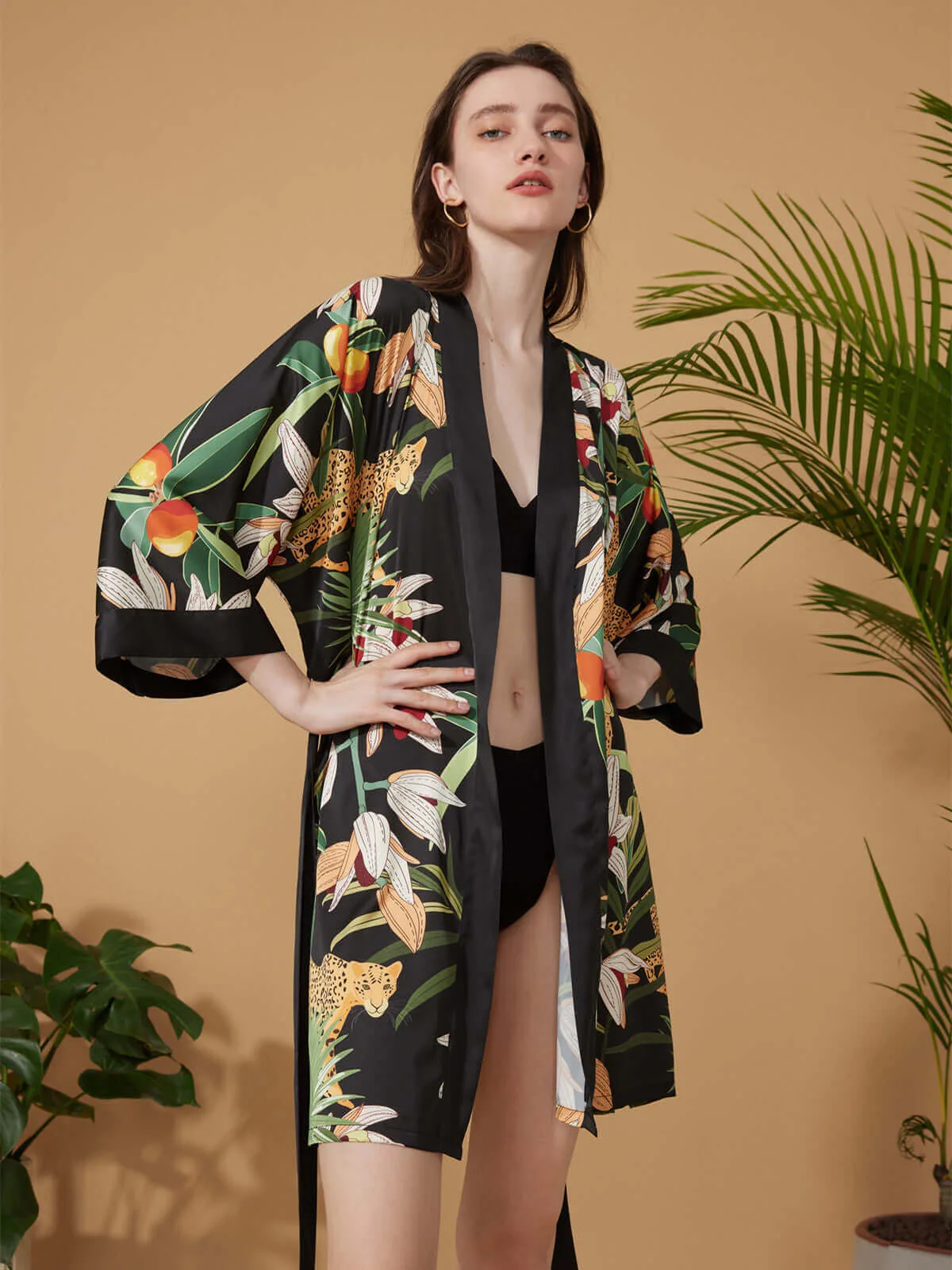
Short Kimono Robe Black Leopard
-
Rose Butterfly Kimono Robe: Ultra-soft, high-quality fabric adorned with stunning floral prints. The Rose Butterfly Kimono Robe offers a decorative, feminine look that works as a stylish cover-up over a cami or slip dress, not as a heavy bathrobe.
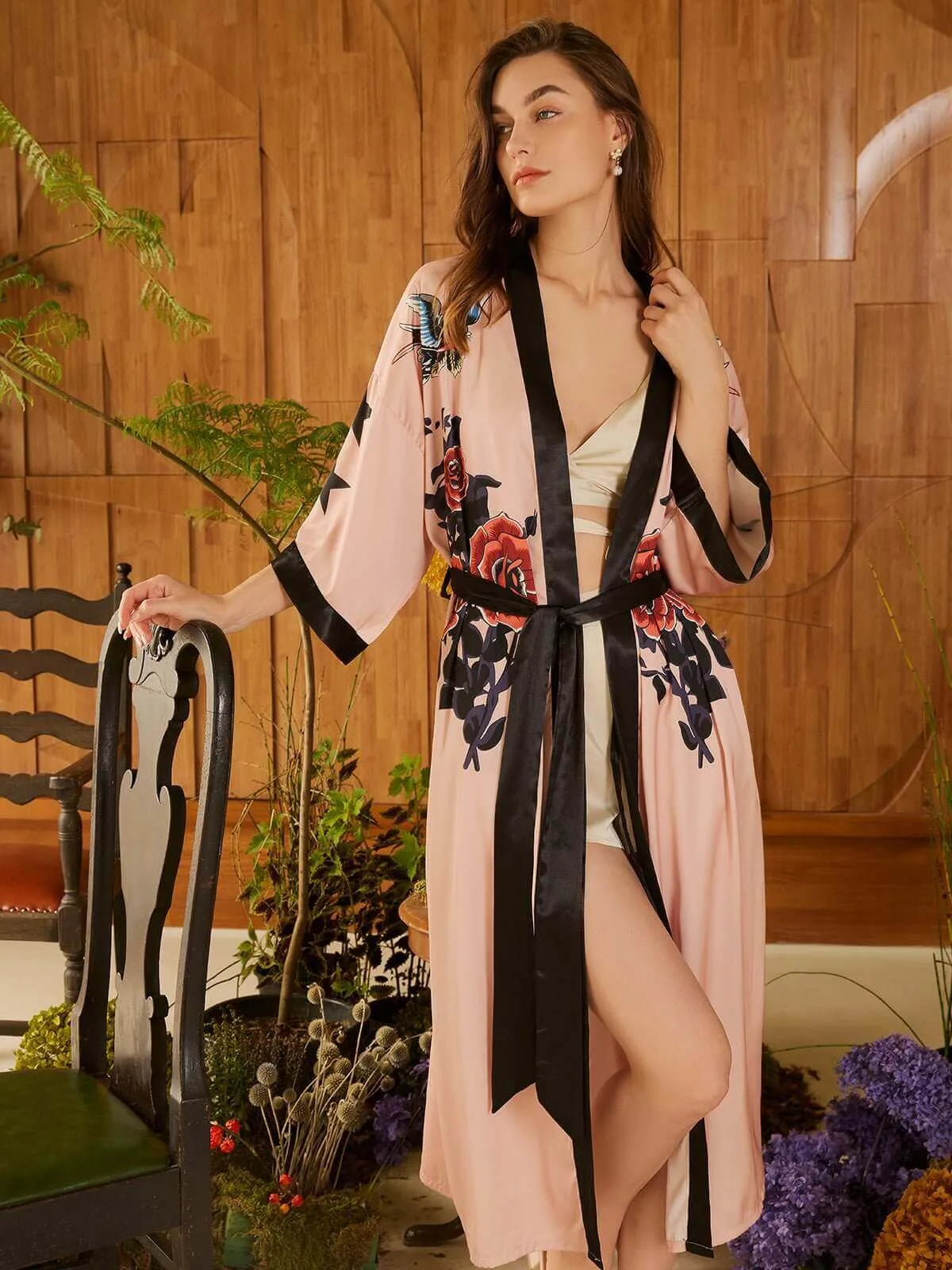
Rose Butterfly Kimono Robe