Quick Answer
For the first weeks, a side-snap kimono bodysuit is usually easier and gentler: it wraps around the body so nothing passes over the head, and the wrap front keeps fabric away from the umbilical cord stump. A pullover bodysuit becomes practical once the cord has healed and you want fewer steps during daytime changes. Many parents keep both on hand and choose by the moment, not by a single winner.
Why the Dressing Method Changes Everything in the Newborn Stage
A newborn's neck is short and floppy, and most resist having fabric pulled over the face. A kimono bodysuit opens flat and closes with side snaps, so you lay baby on top, fold the front panels across the chest, and snap. A pullover bodysuit has to stretch over the head and arms, which takes more handling and often more crying. If you are searching for how to dress a newborn easily, the side-snap method removes the hardest step entirely.
The other factor is the umbilical cord stump. A wrap-front kimono style lets you adjust the overlap so the fabric sits below or beside the stump rather than pressing on it. With a pullover bodysuit, the neckline and chest area are fixed, so you have less control over where the fabric lands. That is why many parents consider a side-snap kimono the best bodysuit for umbilical cord care during the first two weeks.
Night Changes and Daytime Changes Are Different Jobs
At 3 a.m., speed and low stimulation matter more than anything. A kimono bodysuit with snaps down the front and at the crotch lets you change a diaper and reclose the same garment without lifting baby's head or arms through a neck hole. That matters when you are trying not to fully wake a drowsy newborn.
During the day, a pullover bodysuit is often quicker once you have practice. It has fewer closure points to align, and it layers smoothly under rompers, sleep bags, and sweaters because the neckline stays put. If your baby tolerates dressing well and the cord has healed, a pullover style can become your default daytime base layer.
What the Catalog Facts Actually Tell You
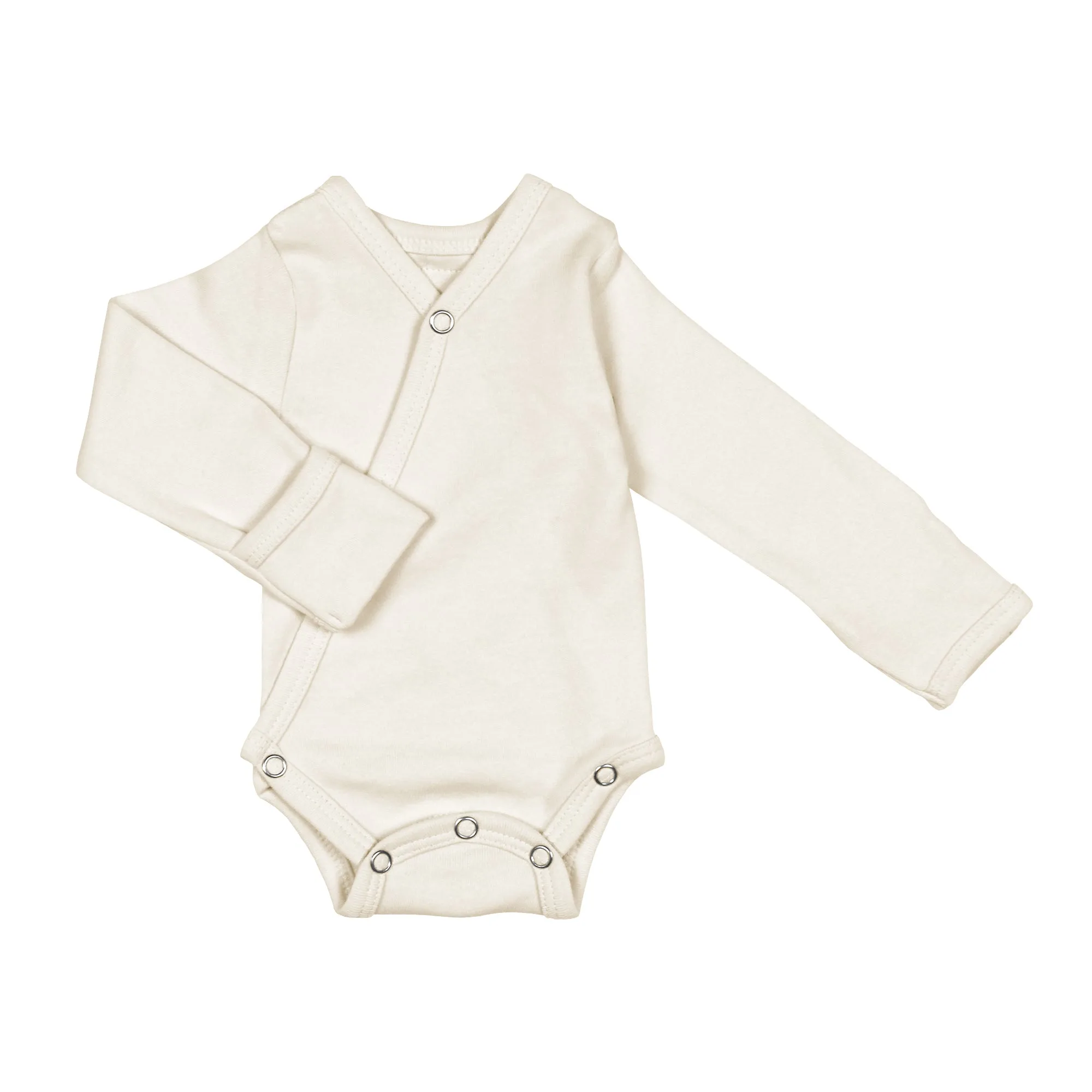
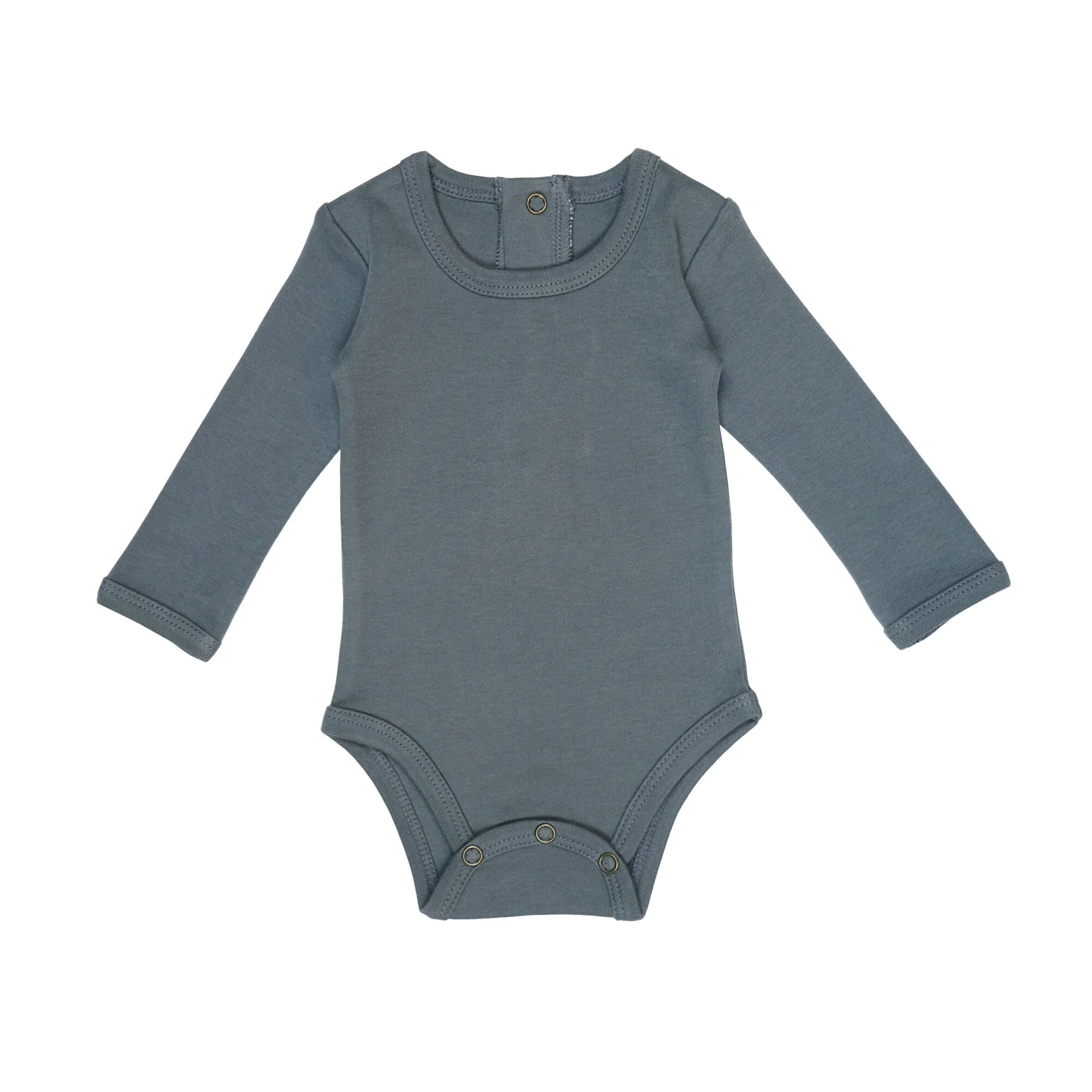
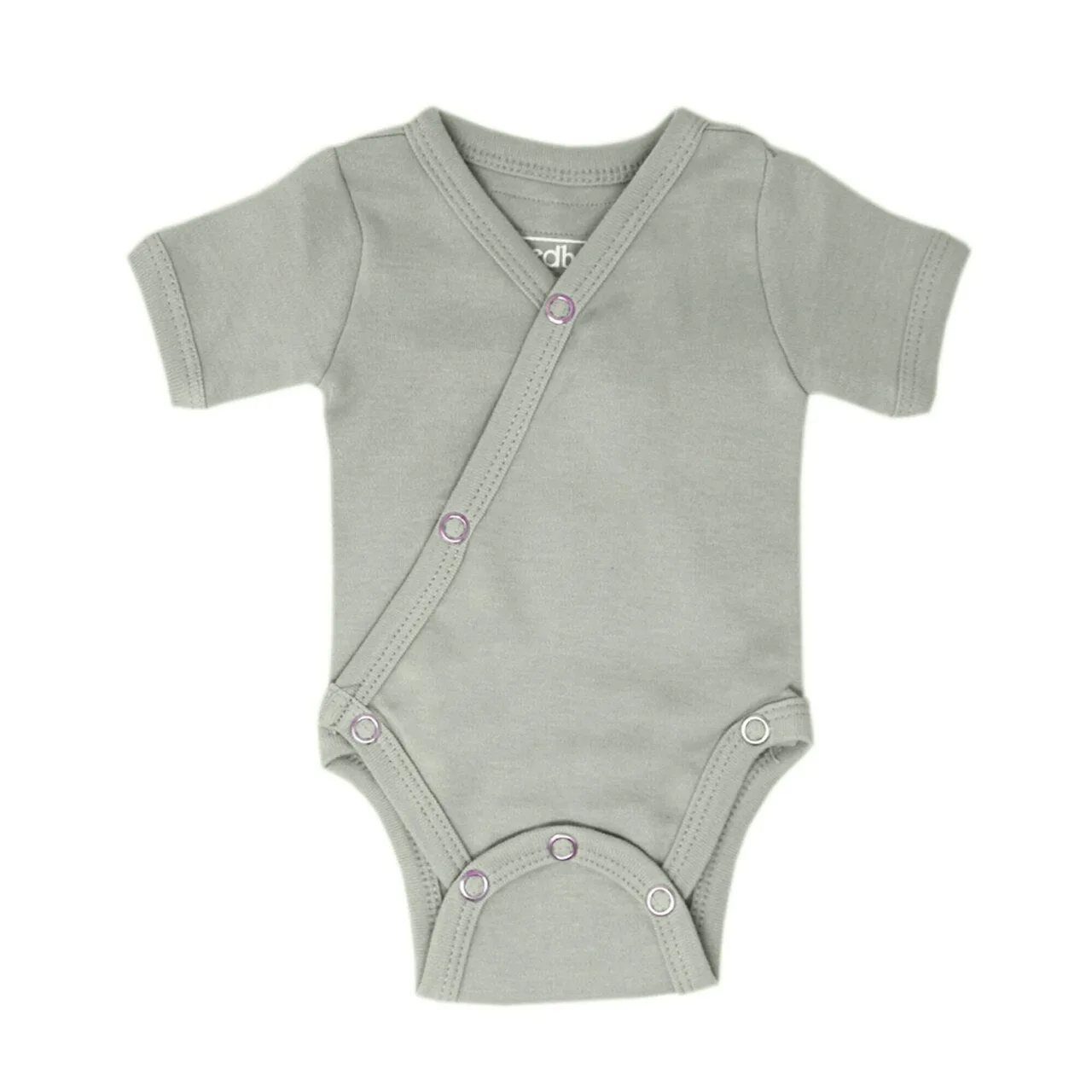
The L'ovedbaby kimono options are built around the wrap-around design: the Buttercream and Seafoam bodysuits both use a seamless torso and a fold-over front, and the Seafoam short-sleeve version pairs with leggings and uses chrome/lead/nickel-free snaps. The Moonstone long-sleeve pullover bodysuit takes the opposite approach with 2-snap closures at the back for easy dressing and a snug fit meant to layer under rompers. Both approaches use GOTS-certified 100% organic cotton, so the choice is about closure style and fit, not fabric quality.
One practical detail applies across these styles: L'ovedbaby cuts bodysuits a little long to account for shrinkage, and the care instructions are machine wash/dry. That means the fit you see out of the package will tighten slightly after the first few washes, so do not size up purely because a fresh bodysuit looks roomy.
How to Choose Without Overbuying
Start with two or three kimono bodysuits in newborn size for the cord-stump weeks, then add pullover bodysuits in the next size up for when dressing gets easier. If you are buying before birth, a small mix of both styles in size 0-3 months covers the transition without committing to a full drawer of one type.
Check the closure placement before you buy. Side snaps on a kimono style sit along the front panels, while the Moonstone long-sleeve pullover uses back snaps plus crotch snaps. Whichever you choose, confirm the snaps are chrome/lead/nickel-free and the tag is tagless, since those details reduce irritation against newborn skin.
Trade-Offs at a Glance
- Dressing speed at night: Kimono side snaps let you open and reclose the front without lifting the head; pullover styles require passing fabric over the face and arms. Choose kimono for the first month of night changes.
- Umbilical cord pressure: A wrap-front kimono can be adjusted so fabric sits away from the stump; a pullover bodysuit has a fixed neckline and chest fit. Kimono wins until the stump falls off and heals.
- Layering and daytime wear: Pullover bodysuits have fewer closure points and a stable neckline that sits flat under rompers and sleep bags. Switch to pullover for daytime once dressing is easy.
- Number of closures to manage: Kimono styles use side and crotch snaps; the Moonstone long-sleeve pullover uses back snaps plus crotch snaps. Count the snaps you will actually open during a diaper change.
- Shrinkage and sizing: L'ovedbaby cuts bodysuits a little long because machine washing and drying can shrink length. Do not size up just because a new bodysuit looks long.
Product Facts That Affect the Decision
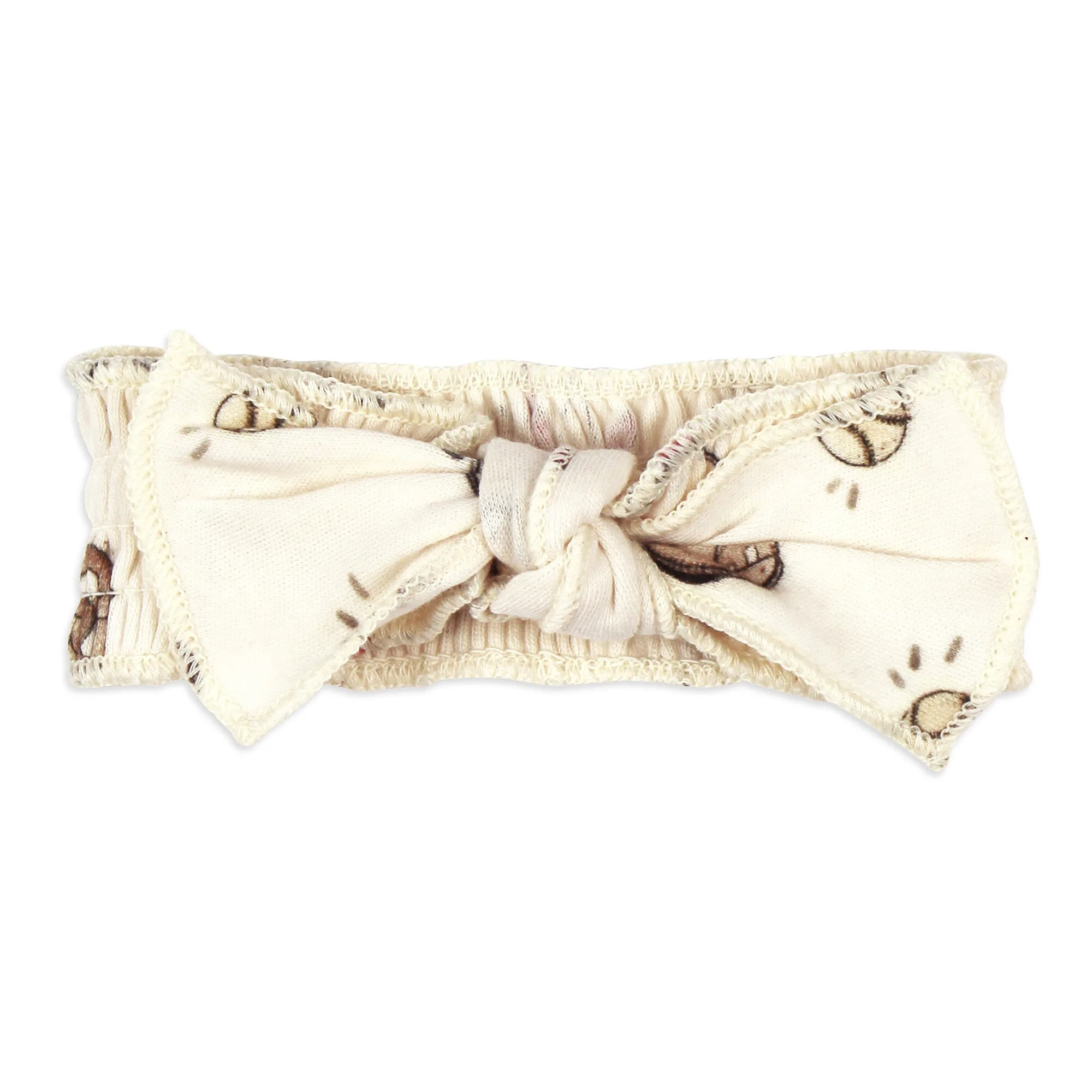
- Buttercream | Organic Kimono Bodysuit: GOTS certified 100% organic cotton kimono bodysuit with a seamless torso, designed to wrap around the body so nothing is pulled over baby's head, plus fold-over mitt-sleeves. The wrap front keeps fabric off the umbilical cord stump and avoids the over-the-head step, which is the main reason parents choose a kimono style for the first weeks.
- Seafoam | Organic Short-Sleeve Kimono Bodysuit: GOTS certified 100% organic cotton short-sleeve kimono bodysuit with a seamless torso, chrome/lead/nickel-free snaps, tagless neck, and a cut that runs a little long to account for shrinkage. Short sleeves suit warmer rooms and layered days, and the shrinkage allowance means the fit tightens after washing rather than starting too small.
- Moonstone | Organic L/Sleeve Bodysuit: GOTS-certified 100% organic cotton long-sleeve bodysuit with 2-snap closures at the back for easy dressing and chrome/lead/nickel-free crotch snaps. This is the pullover alternative: fewer front closures and a snug layer that works under rompers once the cord has healed and dressing is less delicate.
Which Should You Buy?
Best for
- Parents of newborns still healing from the umbilical cord stump
- Anyone who wants to avoid pulling fabric over a newborn's head
- Night changes where you want to keep baby drowsy
- Gift-givers buying for a baby in the first month
Not for
- Older babies who tolerate over-the-head dressing and need fewer closure steps
- Parents who prefer a snug, fixed neckline for layering under rompers
- Buying a full drawer in one style before you know your baby's fit