Why the Kintsugi Bud Vase Suits Fresh Flowers
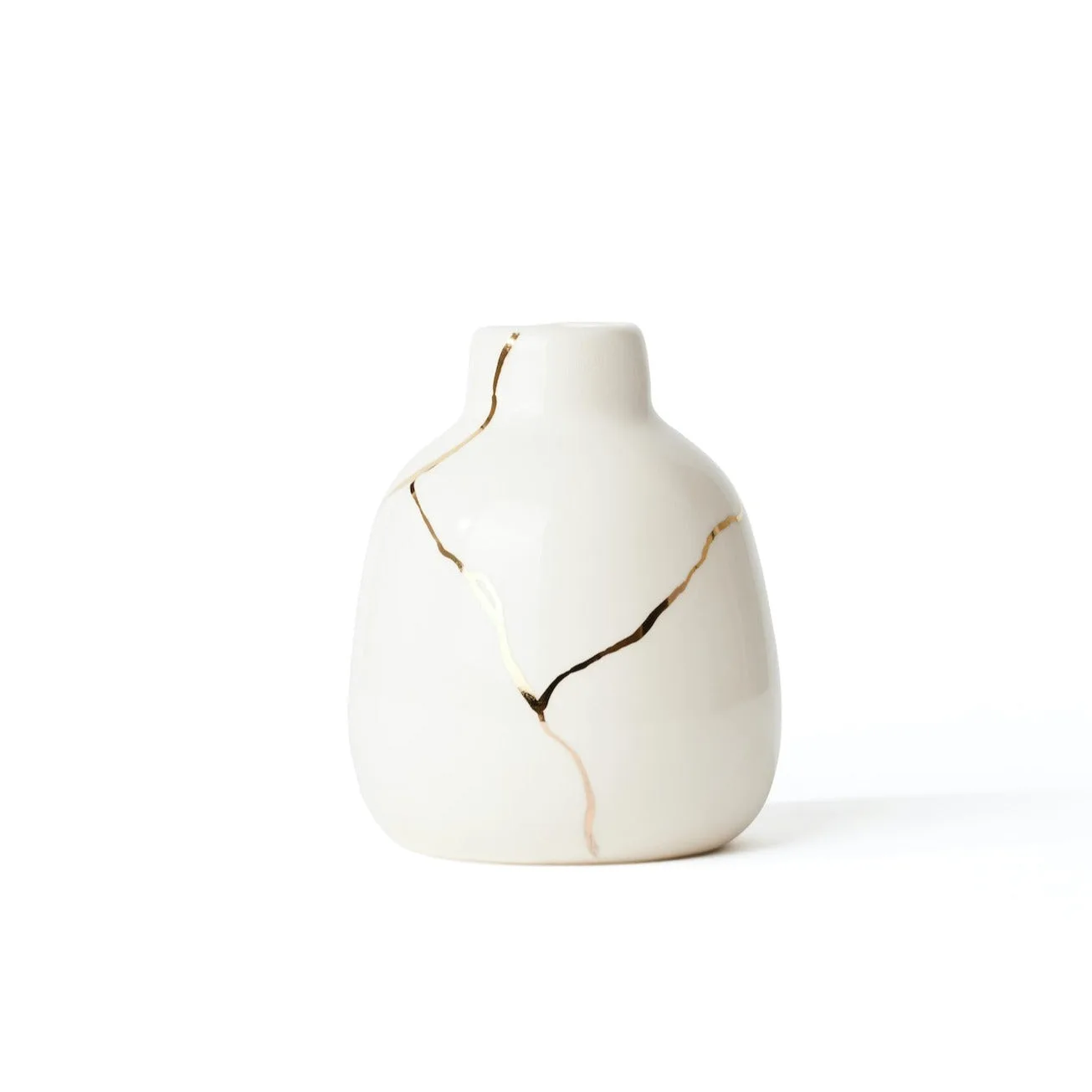
The Kintsugi Bud Vase is a small-scale vase designed for a few buds, making it an ideal choice for fresh flowers that you want to highlight individually. Its hand-painted gold detailing draws the eye, so a simple stem can become a focal point.
Because the vase is small, it encourages you to choose one or two blooms rather than a large bouquet. This approach works well for delicate flowers like a single rose, a sprig of lavender, or a small branch of cherry blossom.
What the Catalog Confirms About the Vase
-
Kintsugi Bud Vase: The vase measures 4"H x 3"W. This compact size tells you how much space you have for stems and where it will fit best, such as a windowsill, desk, or shelf.
Kintsugi Bud Vase
-
Kintsugi Bud Vase: It features hand-painted gold detailing inspired by kintsugi, the Japanese art of repairing pottery with gold. The gold detailing is delicate, so you'll want to handle the vase gently and avoid abrasive cleaning.
-
Kintsugi Bud Vase: The vase is handmade by Prodigal Pottery, which employs women fleeing homelessness, domestic abuse, and sex-trafficking. Knowing it's handmade adds a layer of care to how you handle and display it, and it also gives the vase a meaningful story.
How to Arrange Fresh Flowers in the Vase
Start with clean water and trim the stems at an angle before placing them in the vase. This helps the flowers take up water more easily.
Because the vase is small, choose flowers with shorter stems or trim them to match the vase's height. Follow the product instructions for recommended stem lengths to create a balanced proportion.
Place the vase in a spot with indirect light and away from direct heat sources to help the flowers last longer. Avoid placing it near ripening fruit, which can shorten flower life.
- Trim stems: Cut stems at an angle to maximize water uptake. Use sharp scissors or a knife.
- Fill with water: Use room-temperature water. Change it every couple of days to keep the flowers fresh.
- Arrange a few buds: Place one or two stems in the vase. The small scale means a single bloom can be the star.
- Position the vase: Set it on a stable surface where it won't be knocked over. Indirect light is best.
Caring for the Vase After Flowers
Once the flowers have finished, remove them and rinse the vase with warm water. The catalog notes that the vase is not dishwasher safe, so hand washing is the only confirmed cleaning method.
Avoid using harsh scrubbing pads or abrasive cleaners, as they could damage the hand-painted gold detailing. A soft cloth or sponge should be enough for most residue.
If you plan to reuse the vase, let it dry completely before storing it. This helps prevent water spots and keeps the gold detailing looking its best.
Choosing Flowers for the Kintsugi Bud Vase
The vase's small size means you'll want flowers that don't overwhelm it. Single stems with a strong shape—like a rose, a tulip, or a ranunculus—work well. You can also use a small cluster of filler flowers like baby's breath or a sprig of eucalyptus.
Consider the color of the gold detailing when selecting blooms. White, soft pink, or deep burgundy flowers tend to complement the gold without competing with it.
If you're unsure about which flowers to choose, start with a single stem that has meaning to you. The vase's kintsugi inspiration celebrates visible healing, so a flower that carries personal significance can make the display even more powerful.