Quick answer
The KitchenAid Go® Cordless Personal Blender includes a rechargeable battery designed for portability. To keep it performing well, charge it fully before first use, avoid extreme temperatures, and follow a simple monthly maintenance routine.
Why battery care matters for cordless blenders
Unlike a corded blender that you just plug in, a cordless blender relies entirely on its battery for power. The KitchenAid Go® Cordless Personal Blender uses a lithium-ion battery that holds a charge for multiple blending sessions, but how you treat it directly affects how long it lasts. Overcharging, deep discharging, or storing it in a hot car can shorten its useful life by months or even years.
The trade-off is simple: you get the freedom to blend anywhere—at the office, on a picnic, or in a dorm room—but you trade the unlimited runtime of a corded model for a finite battery. With the right habits, you can keep that battery healthy for hundreds of cycles.
Step-by-step battery care routine
- 1. Charge fully before first use: When you unbox the blender, plug it into the charging cable until the indicator light shows a full charge. Lithium-ion batteries ship at a partial charge for safety, so a full initial charge calibrates the battery management system. Don't start blending with a partially charged battery—it may shut off mid-blend and reduce long-term capacity.
- 2. Avoid deep discharges: Recharge the blender when the battery level drops to around 20-30%, not after it dies completely. Deep discharges stress lithium-ion cells and accelerate capacity loss. If the blender stops mid-use, charge it as soon as possible rather than letting it sit empty for days.
- 3. Store at moderate temperature: Keep the blender in a cool, dry place between 50°F and 80°F (10°C-27°C). Avoid leaving it in a hot car or freezing garage, as extreme heat or cold can permanently damage the battery. If you store it for more than a month, keep the battery at about 50% charge, not full or empty.
- 4. Clean the charging contacts monthly: Wipe the metal contacts on the blender and charging base with a dry cloth to remove dust or residue. Dirty contacts can prevent proper charging even when the battery is fine. If the blender doesn't charge after a long storage, cleaning the contacts is the first thing to try.
- 5. Use it regularly: Lithium-ion batteries stay healthiest when they cycle regularly. Try to blend at least once every two weeks. If you only use it occasionally, give it a partial charge every month to keep the cells active. A battery that sits unused for months may lose capacity permanently—regular use is the best maintenance.
Product facts
-
KitchenAid Go® Cordless Personal Blender - battery included: The KitchenAid Go® Cordless Personal Blender includes a battery for cordless operation and is part of the KitchenAid Go® system designed for portability. This means you can blend smoothies or shakes without hunting for an outlet, but the battery is the only power source, so keeping it charged and healthy is essential.
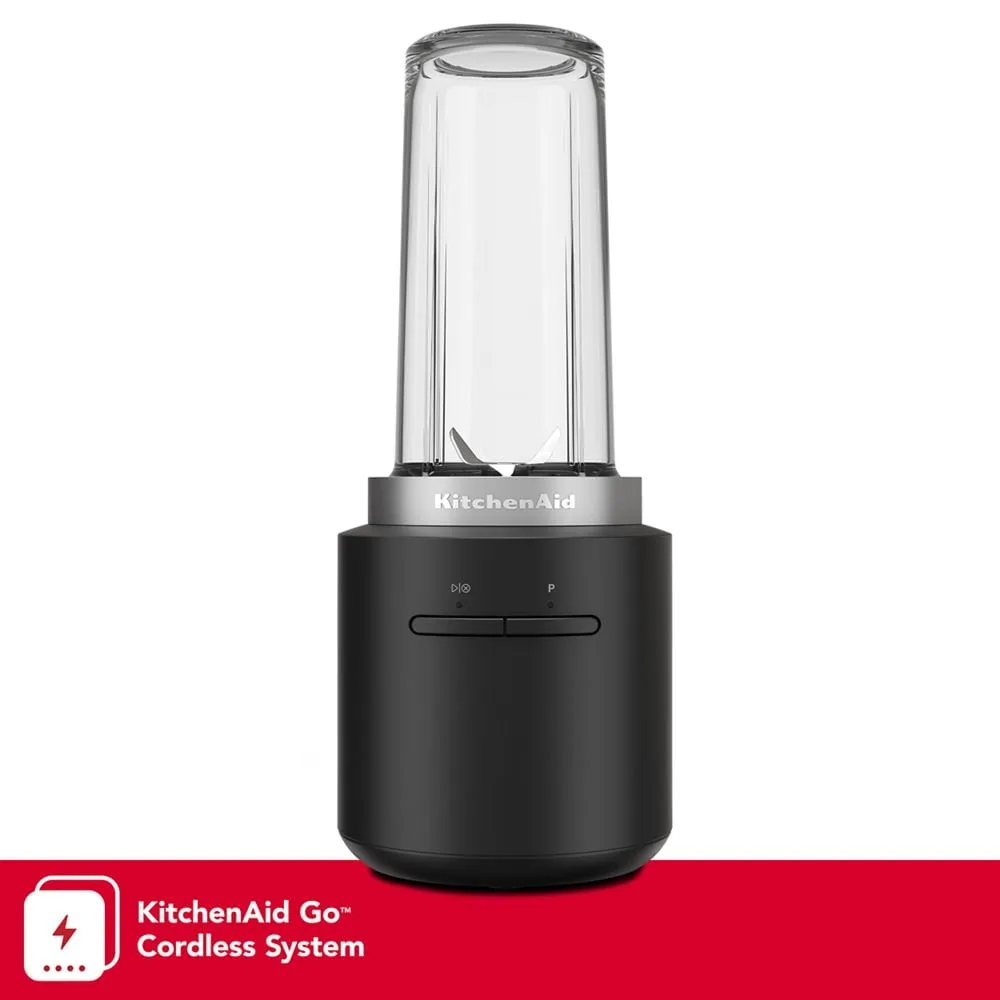
KitchenAid Go® Cordless Personal Blender - battery included