Quick Answer
Both wet and dry food can support healthy kitten growth, but each has trade-offs. Wet food provides moisture and higher protein density, while dry food offers convenience and dental benefits. The best kitten food often combines both, tailored to your kitten's age, weight, and eating habits.
Why Moisture Matters for Kittens
Kittens have a low thirst drive and are prone to dehydration, especially if they eat mostly dry food. Wet kitten food (canned or pouch) contains about 75–85% water, which helps maintain kidney function and urinary tract health. Dry food, by contrast, is only about 10% water. If you feed dry food, always provide fresh water and consider adding wet food or broth to increase fluid intake.
Protein and Calorie Density: What Growing Kittens Need
Kittens require more protein, fat, and certain amino acids (like taurine) per pound of body weight than adult cats. Wet food often delivers higher protein density per calorie, which supports rapid growth. Dry food is more calorie-dense per volume, so portion control is important to prevent overfeeding. Look for recipes that list a named meat or fish as the first ingredient and avoid fillers like corn, soy, or carrageenan.
Texture and Palatability: Encouraging Picky Eaters
Kittens can be finicky about texture. Wet food comes in pâté, minced, or shredded forms, which many kittens find more appealing. Dry kibble offers a crunchy texture that some kittens enjoy and can help with teething. If your kitten turns up its nose at one type, try mixing a small amount of wet food with dry kibble to increase palatability without completely changing the diet.
Decision Rules for Choosing Kitten Food
- Rule 1: Prioritize moisture for young kittens: Kittens under 6 months old have higher water needs relative to body weight. Choose wet food as the primary diet or add water/broth to dry food. Wet food is strongly recommended for kittens under 6 months.
- Rule 2: Balance convenience with nutrition: Dry food is easier to leave out for free-feeding and has a longer shelf life. Wet food requires refrigeration after opening and spoils faster. If your schedule demands dry food, supplement with wet meals twice a day. Use dry food for convenience, but don't skip wet meals entirely.
- Rule 3: Check for growth-specific nutrients: Look for AAFCO statements that confirm the food is formulated for growth (kittens). Avoid adult maintenance formulas until your kitten reaches 12 months. Key nutrients include DHA for brain development, taurine for heart health, and calcium for bones. Always verify the food is labeled for kitten growth.
Product Facts to Consider
- New Kitten Pack: This bundle is the perfect pairing for your new kitten, featuring our Kitten dry food recipe, freeze-dried raw morsels, and bone broth for added hydration. This bundle includes: 1x Kitten Grain-Free Dry Cat Food, 2 lb 1x Chicken & Salmon Freeze Dried Raw Cat Food, 3.5 oz 1x Homestead Turkey Bone Broth for Cats, 12 oz The New Kitten Pack gives you both dry food and hydration options (bone broth) in one bundle, making it easy to try a mixed feeding approach without buying separate items.
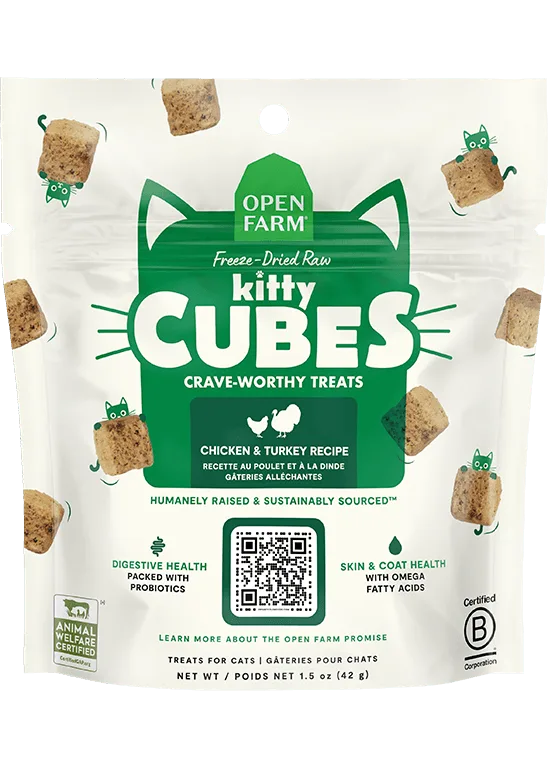
- Chicken & Turkey Kitty Cube Treats: These bite-sized treats for cats are freeze dried raw with humanely-raised chicken and turkey to preserve nutrition and crave-worthy flavor. Our first-ever cat treats, Kitty Cubes are enriched with omega fatty acids and probiotics to promote skin & coat health, and a healthy digestive system. Chicken & Turkey Kitty Cube Treats can be used as a high-value reward or topper to encourage a picky kitten to eat its regular wet or dry food, while adding beneficial omega fatty acids and probiotics.
Which Feeding Style Fits Your Kitten?
Best for
- Kittens that need extra hydration or have urinary tract concerns
- Busy owners who want a convenient dry food option for free-feeding
Not for
- Kittens with dental issues that struggle with crunchy kibble (choose wet food instead)
- Owners who cannot commit to refrigerating and using wet food within a few days