Quick answer
Choose floating koi pellets if you want to monitor feeding behavior and avoid waste; choose sinking pellets if you have bottom-feeding pond fish or shy koi that prefer to eat below the surface.
Why pellet size matters for mixed stocks
Few ponds hold fish of a single size, and a 6mm pellet simply defeats the smaller mouths in a mixed stock. At 3mm, a floating staple like the Koi Floating Staple Fish Food suits growing koi and general pond fish equally, and because it floats you can see precisely who is feeding and who is hanging back.
Floating vs sinking: key trade-offs
- Feeding observation: Floating pellets stay on the surface so you can see exactly which fish are eating and whether any are being excluded.
- Water quality impact: Uneaten floating pellets are easy to skim off, reducing the risk of decay and ammonia spikes. Sinking pellets that miss the fish can settle and foul the bottom.
- Fish behavior and species: Shy or bottom-feeding fish (like sturgeon or catfish) may never surface to eat. Sinking pellets reach them, but floating pellets work best for surface-feeding koi.
Product facts
-
Koi Floating Staple Fish Food - 3mm - 1190G & 2140G: AllPondSolutions Koi Staple Fish Food is a complete floating food mix for Koi carp and other pond fish, available in a 3L Bucket (1190g) and a 5.7L Bucket (2140g). The 3mm pellet size works for both small and large fish in a mixed pond, and the floating format lets you observe feeding activity.
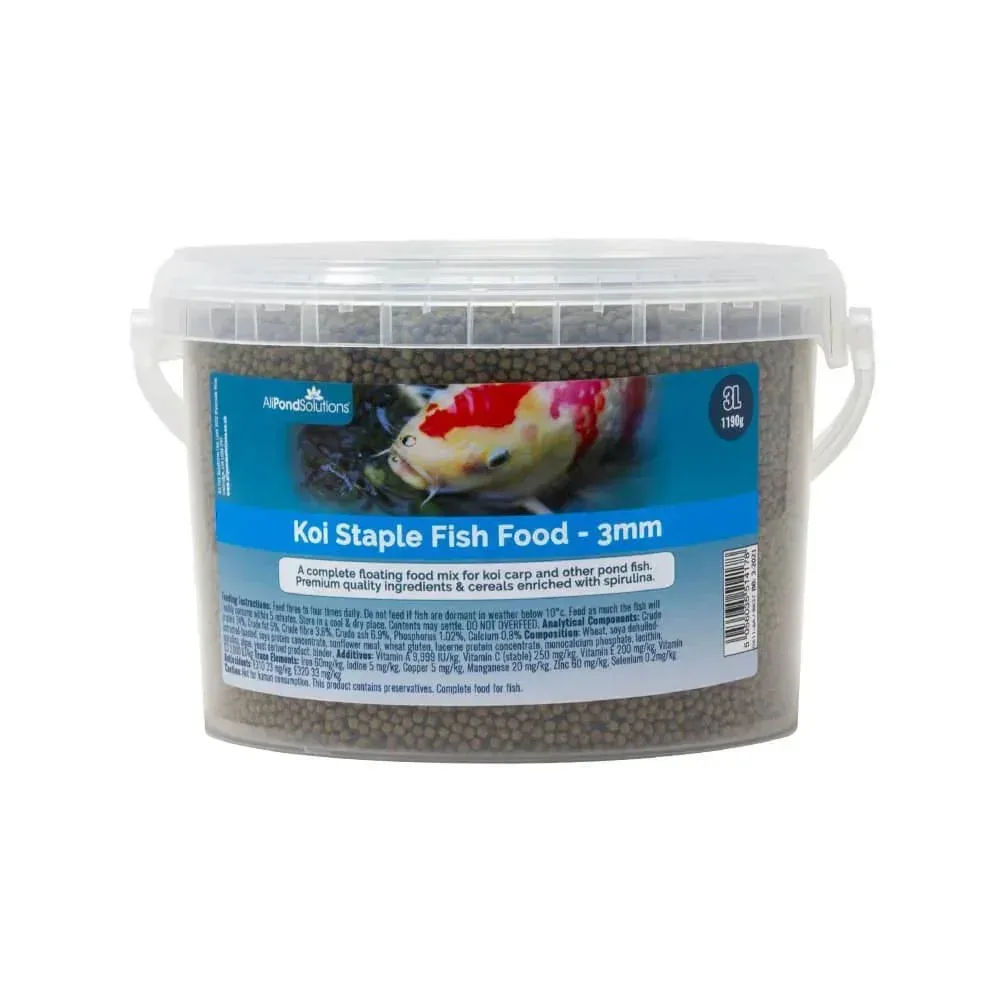
Koi Floating Staple Fish Food - 3mm - 1190G & 2140G
Which should you choose?
Best for
- Pond keepers who want to monitor feeding and remove uneaten food easily
- Mixed stocks with mostly surface-feeding koi and smaller pond fish
Not ideal for
- Ponds with bottom-feeding species that rarely come to the surface
- Keepers who prefer a more natural feeding experience with fish foraging below