Quick answer
To fit the KRUUSE Rehab Pro Knee Protector, measure your dog's leg circumference at the knee, choose the correct size, and decide whether to keep or remove the rigid side splints based on your vet's advice. For daily care, hand wash the protector with mild soap, air dry it completely, and check the skin underneath for redness or rubbing. Replace it if the splints bend or the fabric loses elasticity.
Before you fit: what to check on your dog
Start by examining the knee area for any open wounds, hot spots, or skin infections. The protector should not be placed over broken skin unless your veterinarian has approved it. If your dog has a chronic knee problem, note any swelling or stiffness that changes day to day so you can adjust the fit as needed. For post-surgery use, confirm with your vet whether the knee should be kept in a fixed position or allowed some movement.
Step-by-step fitting process
Follow these steps in order to get a secure, comfortable fit that stays in place during walks and rest.
How to care for the knee protector
Hand wash the protector in lukewarm water with a mild, pet-safe soap. Rinse thoroughly and squeeze out excess water without wringing or twisting. Air dry it flat, away from direct heat or sunlight, because high temperatures can warp the splints or shrink the fabric. Wash it every few days if your dog wears it continuously, or sooner if it becomes soiled. While the protector dries, check your dog's leg for any signs of irritation and let the skin breathe.
Fitting steps with checkpoints
- Measure the knee circumference: Use a soft measuring tape around the center of the knee joint, keeping it snug but not tight. Measure both legs if only one is affected, as slight differences are normal. Checkpoint: If the measurement falls between two sizes, choose the larger size to avoid pinching.
- Choose the correct size and leg: Select the size based on your measurement and the leg that needs support. The protector is available in different sizes and for left or right legs. Common mistake: ordering the wrong leg. Double-check which leg your vet recommended.
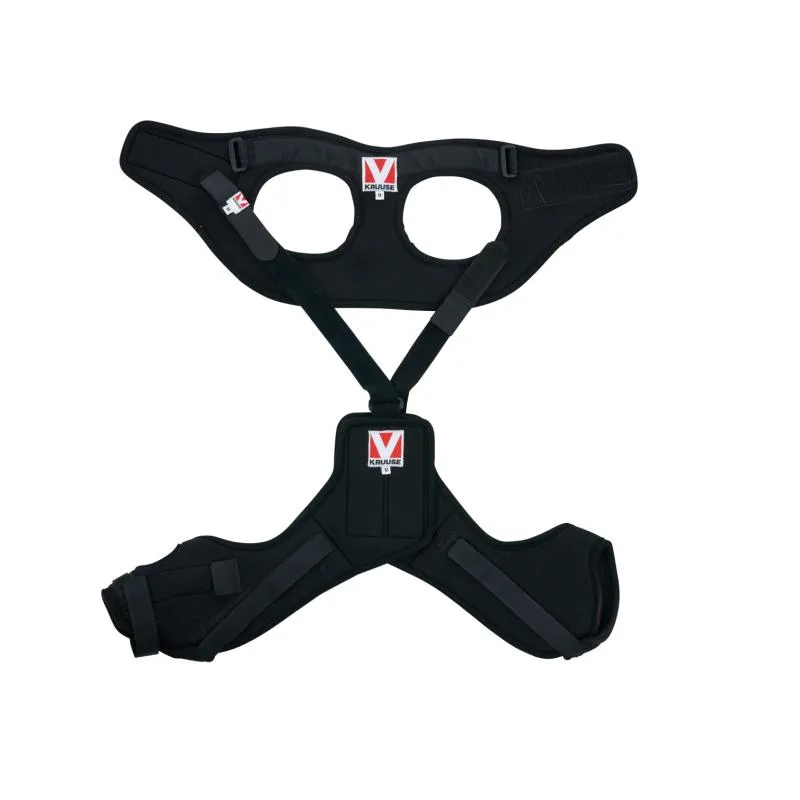
- Decide on splint use: The protector comes with rigid splints on both sides. Remove them for a softer feel if your dog only needs warmth and mild support, or keep them in for more rigid stabilization. Checkpoint: If you are unsure, ask your vet whether rigid support is appropriate for your dog's condition.
- Put the protector on: Slide the protector up the leg until the knee joint sits in the center of the padded area. Make sure the splints, if used, run along the sides of the joint and not across the front. Common mistake: twisting the protector so the splints press into the wrong spot. Adjust until it sits straight.
- Check the fit: You should be able to slide one finger under the top and bottom edges. The protector should not slide down when your dog walks, but it also should not leave deep marks or restrict circulation. Checkpoint: Recheck the fit after 10 minutes of wear. If it has shifted, adjust the straps or try a different size.
- Monitor and adjust: For the first few days, check the leg every few hours for redness, swelling, or rubbing. Remove the protector for short breaks if your vet allows, and gradually increase wear time. Common mistake: leaving it on too long without checking. Set a reminder to inspect the skin at least twice daily.
Product facts
- KRUUSE Rehab Pro Knee Protector: The KRUUSE Rehab Pro Knee Protector provides warmth and support for painful or functionally impaired knee joints, with rigid support splints on both sides that can be removed. Removable splints let you switch between soft support for chronic comfort and more rigid stabilization for pre-surgery or post-injury needs.
- KRUUSE Rehab Pro Knee Protector: It can be used for pre-surgery support in the case of knee injury or as support to improve well-being in the case of chronic knee problems. This makes it a versatile option if your dog's needs change over time, but always follow your vet's guidance on when to use rigid versus soft support.