Quick answer
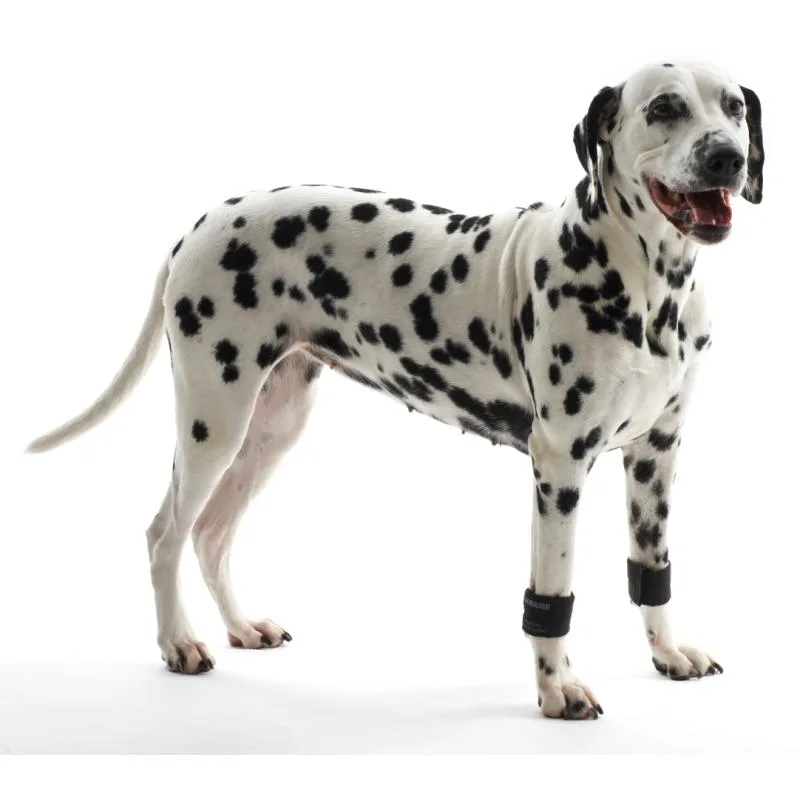
Start with roughly 1 g of weight per kg of your dog's body weight, fit each cuff snugly above the carpus or hock without twisting, and use them for short, controlled exercises rather than long walks. If your dog limps, drags the limb, or resists the cuff after two sessions, stop and ask your vet or rehab therapist to reassess before adding more weight.
Start with the right load, not the heaviest one
The most common error is treating weight cuffs like dumbbells: adding weight until the dog seems tired. For canine physiotherapy, the goal is controlled muscle activation, not fatigue. The catalog guidance for KRUUSE Rehab Weight Cuffs recommends starting at about 1 g per kg of body weight. For a 20 kg dog, that means roughly 20 g total, not 200 g. Increase only after a couple of weeks of consistent, comfortable sessions.
Use the cuffs one at a time or in pairs depending on the limb being targeted. A single cuff on one leg is for isolated strengthening; a pair is for symmetrical work such as sit-to-stand or controlled walking. If you are unsure which limb needs work, ask your vet or rehab therapist to mark it before you start.
Placement and fit decide whether the cuff helps or hurts
A cuff that slides down the leg or rotates will pull the limb out of alignment and make the dog compensate with the wrong muscles. Fit the cuff snugly above the carpus on the front leg or above the hock on the rear leg, with the weight sitting on the outer or front surface as intended by the design. Check that the strap is not pinching skin or restricting the joint's natural range.
If your dog has very thin or very thick legs, the supplied sizes may not give a secure fit. In that case, do not pad the cuff with household items; choose a different size or ask your therapist for an alternative tool. A loose cuff is worse than no cuff because it teaches a limp pattern.
Session timing and surface matter more than total steps
Weighted exercise should be short and frequent. Five to ten minutes of deliberate work, two or three times a day, is more useful for dog muscle building rehab than a single long walk. Use a non-slip surface indoors or short grass outdoors. Avoid stairs, slick tile, and uneven ground until your dog can complete the movement without the cuff first.
Stop the session while your dog is still moving normally. If you wait until the limb shakes or the dog slows down, you have already crossed into fatigue, which can set back recovery. After each session, remove the cuffs and check for rubbing, swelling, or heat around the joints.
When weight cuffs are the wrong tool
Weight cuffs are not a substitute for veterinary diagnosis, pain control, or surgery aftercare. If your dog has an unstable fracture, a recent cruciate repair without clearance, or a neurological condition affecting paw placement, cuffs can do harm. They are also a poor choice for dogs who cannot yet bear full weight on the limb, because adding load to a limb that is not ready simply reinforces the wrong gait.
If your dog needs to lose weight before rehab can progress, that is a separate problem. Calibra Cat Verve GF Indoor & Weight Chicken is a complete grain-free food for overweight cats, not dogs, so do not use it as a canine weight-loss solution. For dogs with gastrointestinal issues during recovery, Calibra VD Dog Crunchy Snack Gastrointestinal 120g is a complementary snack designed to support digestive function alongside a veterinary diet, not a rehab tool. Keep the rehab plan and the diet plan separate, and let your vet coordinate both.
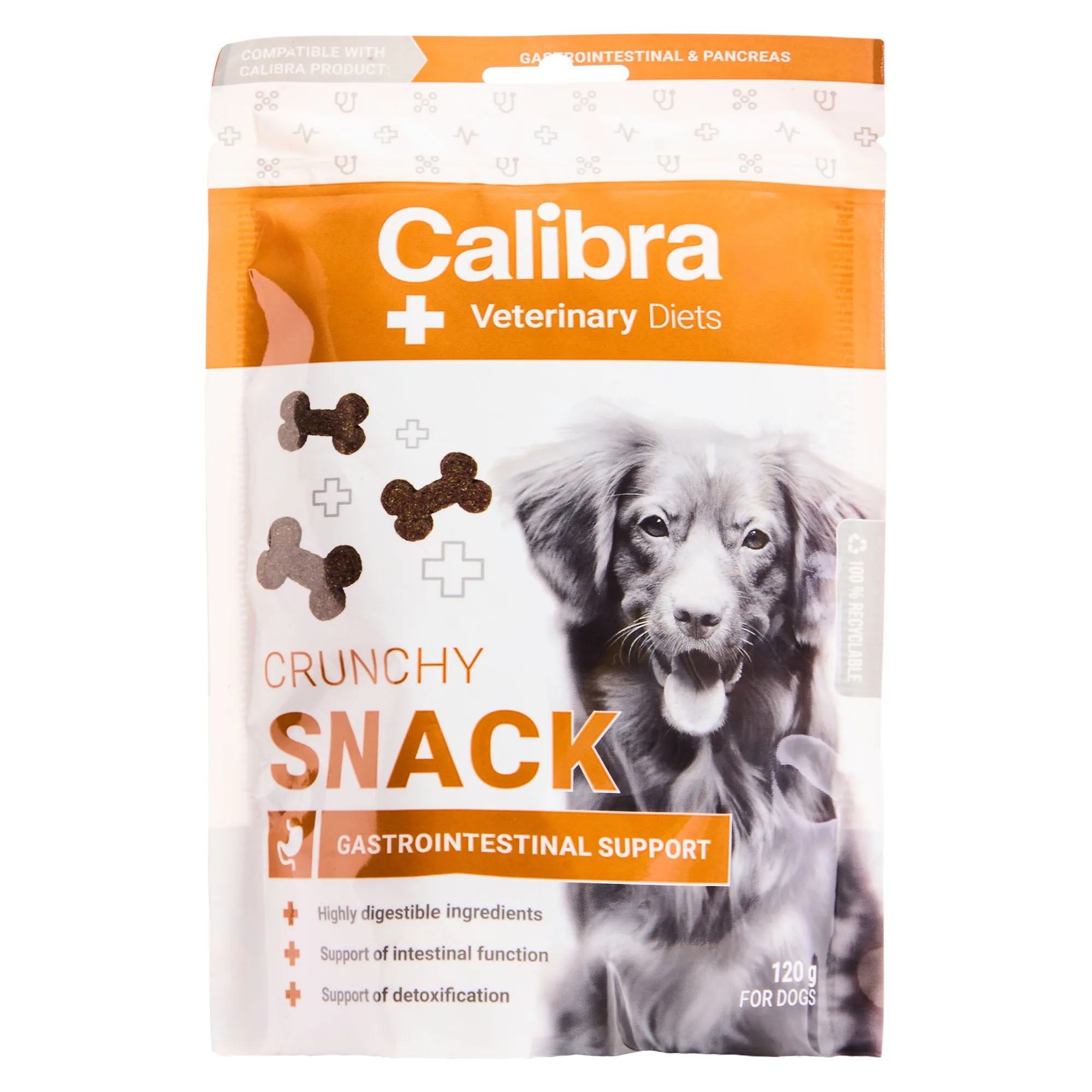
Calibra VD Dog Crunchy Snack Gastrointestinal 120g
Diagnose the problem before you change the weight
- Symptom: Dog limps or hops after a weighted session: Likely cause: the load is too heavy for the current stage, or the cuff shifted during movement. Corrective action: remove the cuffs, rest the dog, and repeat the same exercise without weight for two sessions. If the limp persists beyond a day, call your vet. Stop and reassess if limping appears during or right after a session.
- Symptom: Cuff slides down or rotates on the leg: Likely cause: wrong size or strap tension. Corrective action: check that the cuff sits above the carpus or hock and is snug but not pinching. If it still moves, try a different size rather than adding padding. A cuff that moves is not providing the intended resistance and can teach a compensatory gait.
- Symptom: Dog refuses to move or sits down when cuffed: Likely cause: the dog is not ready for weighted work, or the environment is too distracting or slippery. Corrective action: try one cuff only, on a non-slip surface, for two minutes with a treat. If refusal continues, stop and ask your rehab therapist whether a different tool is needed. Refusal is information, not stubbornness. Do not push through it.
- Symptom: No visible improvement after two weeks of consistent work: Likely cause: the load is too light, the exercise is not targeting the right limb, or the underlying condition needs veterinary review. Corrective action: review the plan with your vet or rehab therapist before increasing weight or changing exercises. Progression should be guided by a professional, not by guesswork.
Product facts that affect how you use the cuffs
- KRUUSE Rehab Weight Cuffs: KRUUSE Rehab Weight Cuffs are used to exercise the dog's muscles and can be used for both rehabilitation and wellness training programmes. The weight cuffs can be worn one by one or in pairs. Wearing one cuff isolates a single limb for targeted strengthening, while a pair supports symmetrical exercises like sit-to-stand. Choose based on the limb your vet or therapist has identified, not on convenience.
- KRUUSE Rehab Weight Cuffs: Exercising with weight cuffs will result in stronger muscles and better movements. The training should be adjusted from using light weights to heavier ones after a couple of weeks. A suitable weight to start with is 1 g per kg of body weight. This gives you a concrete starting load and a timeline for progression. It also explains why adding weight every session is a mistake: the catalog guidance is to wait a couple of weeks before increasing.