Two Espresso Machines, Two Different Worlds
The La Pavoni Cellini Mini 1 Group and the Rancilio Classe 5 USB Crono Tall 2 Group are both espresso machines from respected manufacturers, but they serve very different settings. The Cellini Mini is a compact single-group machine designed for home use where bench space is limited. The Classe 5 is a commercial two-group machine built for cafés and hospitality venues that need consistent high-volume service. This comparison focuses on their confirmed specifications to help you choose based on your actual needs.
Confirmed Specifications at a Glance
-
La Pavoni Cellini Mini 1 Group Black Espresso Machine - New: La Pavoni Cellini Mini 1 Group Black Espresso Machine - New: 2.9L water tank, 0.8L stainless steel single boiler, 10 amp power, dimensions 37.7cm H x 24cm W x 43cm L. These numbers tell you the Cellini Mini is a small, low-power machine suited for home countertops. The single boiler means it can brew and steam, but not simultaneously at high volume.
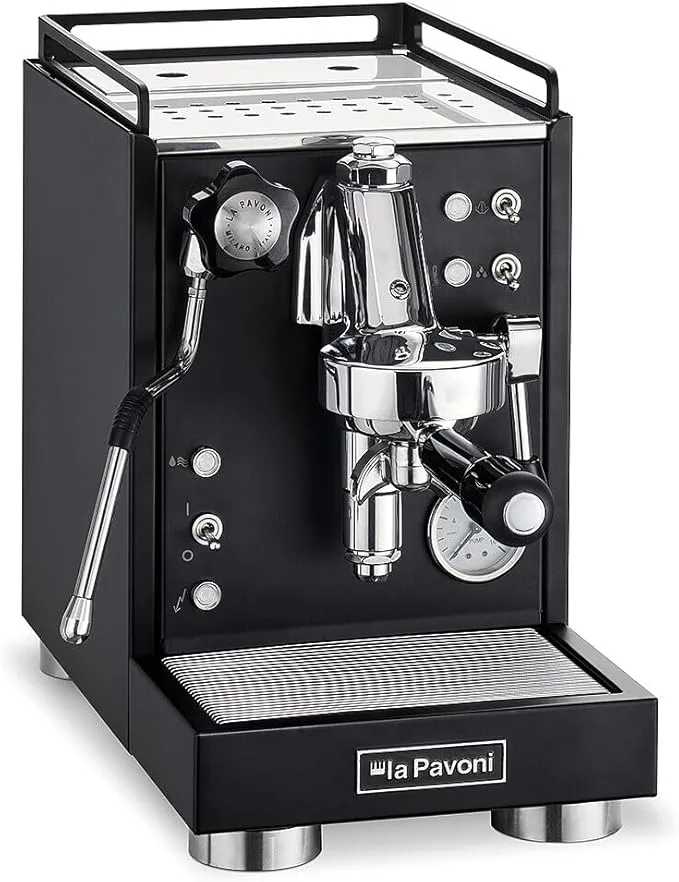
La Pavoni Cellini Mini 1 Group Black Espresso Machine - New
-
Rancilio Classe 5 USB Crono Tall 2 Group Coffee Machine Stone Grey - New: Rancilio Classe 5 USB Crono Tall 2 Group Coffee Machine Stone Grey - New: 11L single boiler with independent heat exchangers, 4750 Watts / 20 Amp / Single Phase, dimensions 77.1cm W x 53.9cm D x 52cm H, cup clearance up to 145mm. The Classe 5's larger boiler, higher wattage, and taller cup clearance are necessary for commercial throughput. It requires a dedicated 20A circuit and much more counter space.
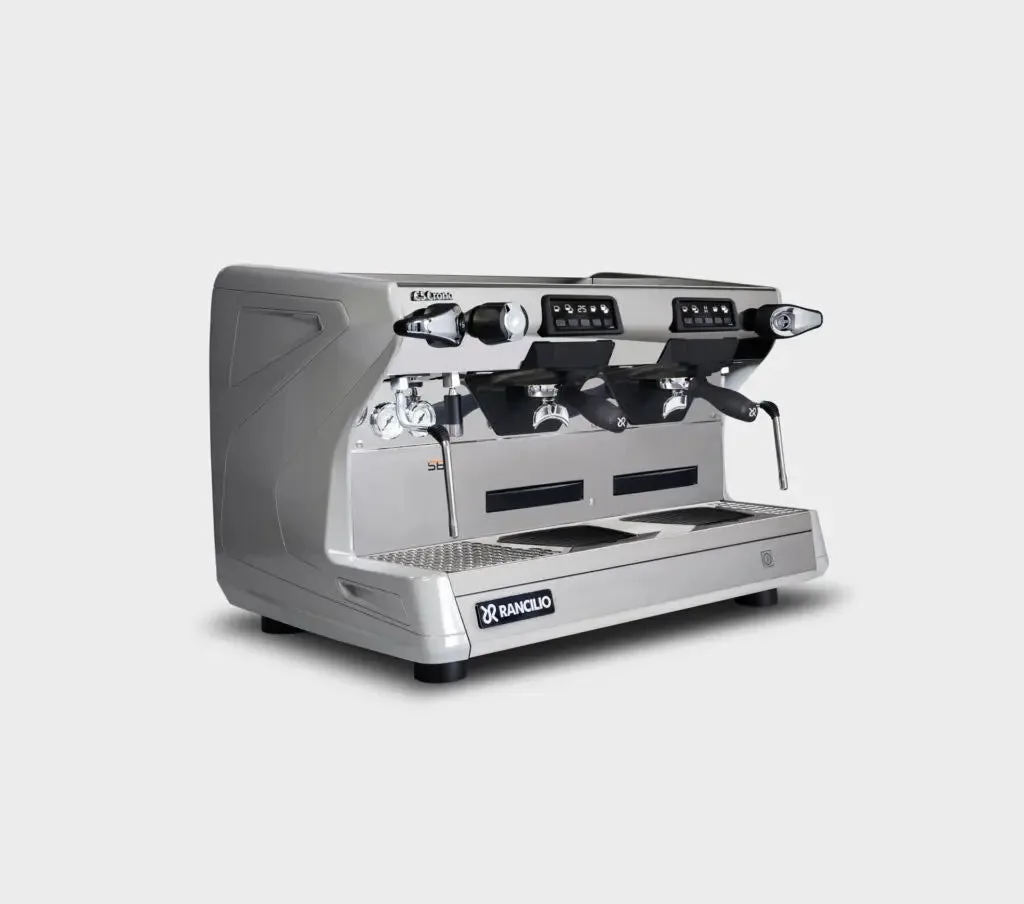
Rancilio Classe 5 USB Crono Tall 2 Group Coffee Machine Stone Grey - New
Key Differences: Power, Capacity, and Workflow
The most critical difference is power and boiler capacity. The Cellini Mini's 10A plug fits a standard household outlet, while the Classe 5 needs a 20A single-phase connection. The Classe 5's 11L boiler with heat exchangers supports continuous brewing and steaming for busy service, whereas the Cellini Mini's 0.8L single boiler is designed for a few drinks at a time.
Group count is another obvious distinction. The Cellini Mini has one group head with an E61 design and lever operation, giving the home barista hands-on control. The Classe 5 has two groups with programmable volumetric controls and digital Crono displays, aimed at consistency and speed in a cafe.
Steaming capacity also differs. The Cellini Mini has a single steam wand, adequate for home use. The Classe 5 has two commercial steam wands with C-Lever controls, built for high-volume milk service.
- Power and electrical requirements: Cellini Mini: 10A (standard outlet). Classe 5: 4750W / 20A (dedicated circuit needed).
- Brewing capacity and boiler: Cellini Mini: 0.8L single boiler. Classe 5: 11L main boiler with independent heat exchangers.
- Group heads and controls: Cellini Mini: 1 group, E61, lever-operated, pump pressure gauge. Classe 5: 2 groups, programmable volumetric, digital displays, USB connectivity.
- Steaming: Cellini Mini: 1 steam wand. Classe 5: 2 steam wands with C-Lever controls.
- Dimensions and footprint: Cellini Mini: 37.7cm H x 24cm W x 43cm L. Classe 5: 52cm H x 77.1cm W x 53.9cm D.
What the Supplied Information Does Not Settle
The catalog confirms that the Classe 5 has an automatic Easy Clean daily cleaning cycle, but does not specify the exact cleaning procedure or what products to use. Similarly, the Cellini Mini's operating instructions are not included in the supplied evidence, so details on its lever operation, temperature management, or routine maintenance are not available from this information. For any installation, plumbing, or specific cleaning steps, consult the manufacturer's full documentation.
Neither machine's shot quality, steam power, or reliability can be inferred from these specifications alone. The comparison here is based on confirmed features and dimensions to help you decide which machine fits your space, power, and volume requirements.