Two Proven Workhorses for Your Café
If you're shopping for a used 2 group espresso machine, the Wega Polaris and Nuova Simonelli Appia II are two reliable options that often come up in the same conversation. Both are built for busy commercial environments, but they approach the job with slightly different priorities. This guide compares their confirmed specifications and features to help you decide which one fits your workflow and budget.
Confirmed Specifications at a Glance
-
Wega Polaris 2 Group Baby Pink - Used: Wega Polaris 2 Group Baby Pink – Used: 4000W / 20 Amp power, dimensions 74 cm W x 57 cm D x 50 cm H. Features E61 group heads, programmable volumetric controls, dual steam wands, hot water tap, large cup storage area, low cup configuration. The E61 group head is prized for its pre-infusion and temperature stability. The low cup configuration and large surface area make it practical for high-volume service.
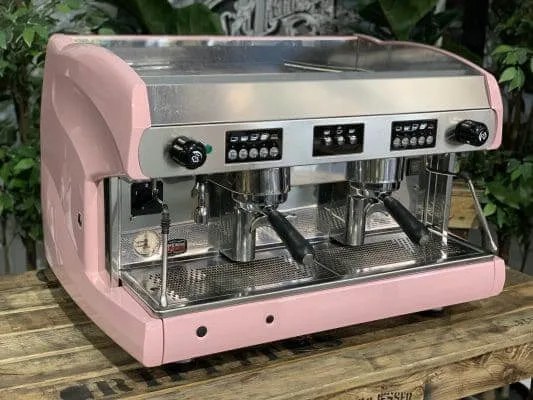
Wega Polaris 2 Group Baby Pink - Used
-
Nuova Simonelli Appia II 2 Group Black Espresso Coffee Machine - Used: Nuova Simonelli Appia II 2 Group Black – Used: 4650 Watts / 20 amp single phase, dimensions 78 cm W x 55 cm D x 53 cm H. Features 11L steam boiler, push/pull steam levers, stainless steel steam wands, programmable volumetric controls (4 doses per group), Soft Infusion System (SIS), automatic cleaning function, high cup design, built-in pump, standard cup warmer, steam & brew pressure gauge. Higher power and a dedicated 11L steam boiler mean faster heat-up and consistent steaming. The Soft Infusion System reduces channeling for better extraction, and the high cup design easily accommodates takeaway cups.
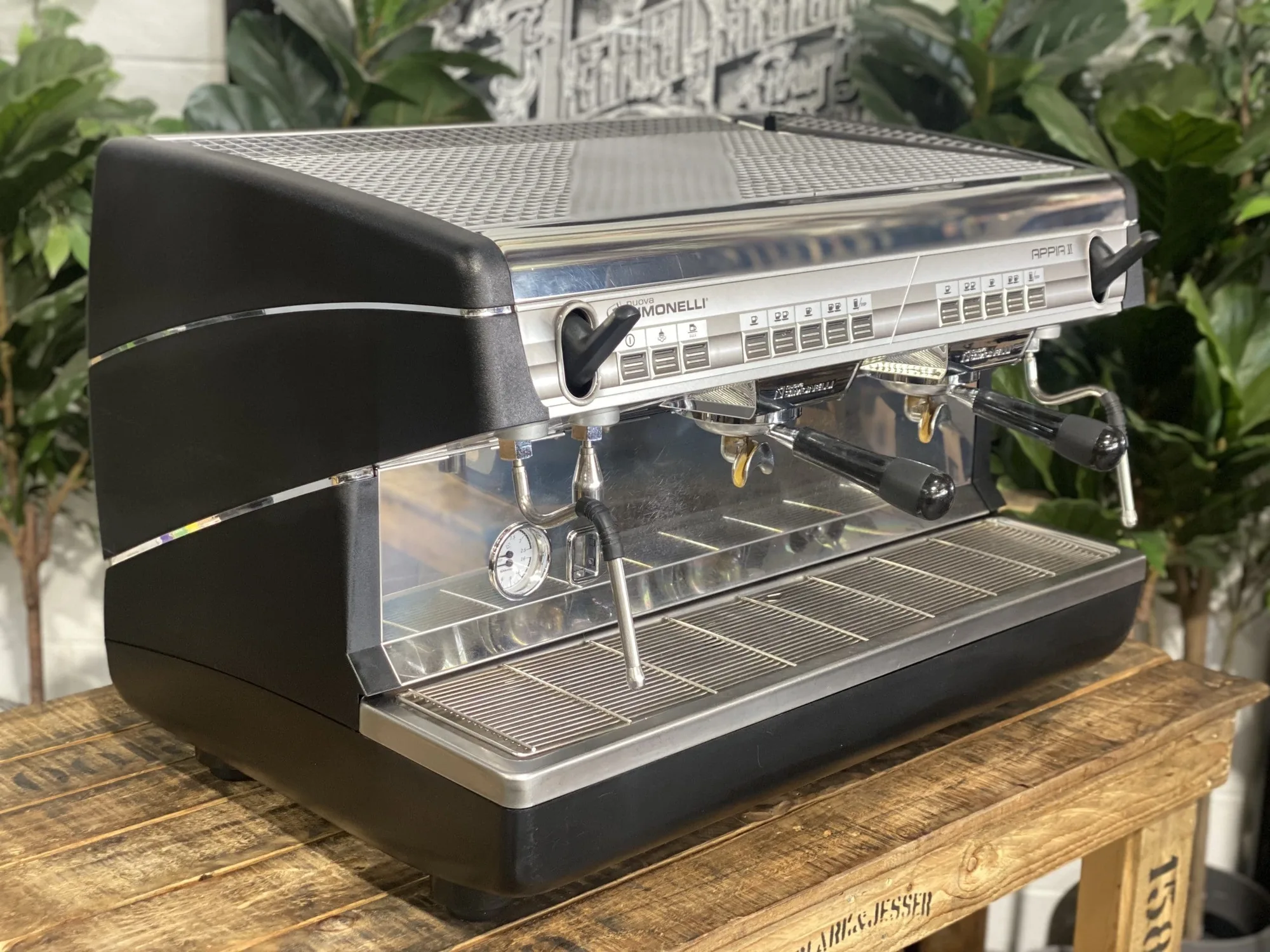
Nuova Simonelli Appia II 2 Group Black Espresso Coffee Machine - Used
Key Differences: Workflow and Features
- Steam system: The Appia II has an 11L steam boiler with push/pull steam levers and stainless steel wands – ergonomic and efficient for milk-based drinks. The Polaris uses dual steam wands with a traditional E61 design; steam power depends on the machine's heat exchanger system.
- Group head technology: The Polaris uses the classic E61 group head, known for its pre-infusion and thermal stability. The Appia II uses Nuova Simonelli's Soft Infusion System (SIS), which gradually ramps up pressure to reduce channeling – a modern alternative.
- Programmable controls: Both machines offer programmable volumetric controls. The Appia II provides 4 programmable doses per group, while the Polaris also has programmable buttons – exact dose options are not specified in the listing.
- Cup clearance: The Appia II features a high cup design that easily fits takeaway cups. The Polaris has a low cup configuration, which may require lifting larger cups or using a drip tray spacer.
- Maintenance: The Appia II includes an automatic cleaning function (autoclean program) to simplify daily upkeep. The Polaris listing does not mention a dedicated cleaning program; routine E61 backflushing would be needed.
What the Listings Don't Settle
Neither listing includes preparation or operating instructions, so you'll need to rely on manufacturer manuals or your technician for setup details. The age and service history of each used machine are not specified beyond the general statement that the Appia II has been recently serviced and bench tested. Both come with a 3-month parts warranty from Coffee Machine Warehouse, which adds some peace of mind. For either machine, factor in professional installation and calibration to ensure it performs as expected.
Which One Should You Choose?
Choose the Wega Polaris if you value the traditional E61 group head for its pre-infusion character, prefer a compact footprint (74 cm wide), and want a hot water tap for tea or Americanos. Its low cup configuration works best if you mainly serve in ceramic cups.
Choose the Nuova Simonelli Appia II if you need higher power (4650W), a dedicated steam boiler for consistent milk texturing, and the convenience of an automatic cleaning cycle. The high cup design is a practical advantage if you serve many takeaway orders. The Soft Infusion System also helps baristas pull more forgiving shots, especially with varied coffee roasts.
Both machines are proven in busy cafés. Your decision comes down to whether the E61 tradition or the modern steam and cleaning features matter more for your daily workflow.