Quick answer
A lactation massager uses targeted vibration and gentle heat to stimulate milk flow and encourage a faster, more consistent letdown reflex during pumping.
Why vibration and heat help with letdown
The letdown reflex is triggered when nerves in the breast send a signal to release oxytocin, which causes milk to flow. Gentle vibration can help stimulate those nerves, while mild warmth relaxes the breast tissue and improves blood flow. Together they can reduce the time it takes to trigger a letdown and keep milk flowing more steadily.
When a massager is most useful
A lactation massager is especially helpful if you have slow or unpredictable letdowns, experience clogged ducts, or feel that your pump isn't fully emptying the breast. It can also make pumping more comfortable by softening firm areas before or during a session. The trade-off is that it adds one more item to your pumping routine, and the extra stimulation may feel distracting at first.
How to use a lactation massager for better milk flow
- Step 1: Position the massager before pumping: Place the massager inside your bra or pumping bra, centered over the breast tissue where you feel fullness or where letdown is slow. Adjust it so it sits flat and stays in place without pressing too hard. A common mistake is placing it too high or too close to the nipple, which can be uncomfortable and less effective.
- Step 2: Start with a lower vibration setting: Turn on the massager and choose a gentle vibration mode. Let it run for 30–60 seconds before you start the pump. This pre-stimulation can help trigger the letdown reflex more quickly. Starting on the highest setting can overstimulate the breast and cause the nipple to retract or the letdown to stall.
- Step 3: Use heat and vibration during pumping: Once pumping begins, switch on the gentle heat (if available) and keep the massager in place. Continue using vibration on a low or medium setting throughout the session, especially if flow slows down. If you feel the breast becoming too warm, turn off the heat and rely on vibration alone — overheating can cause discomfort.
- Step 4: Move the massager to target firm spots: If you feel a firm area or a potential clog, gently move the massager to that spot and use a slightly higher vibration for 1–2 minutes. Keep pumping while massaging to help dislodge the blockage. Avoid pressing hard into the breast — gentle pressure and vibration are more effective and less likely to cause tissue irritation.
- Step 5: Clean the massager after each use: Wipe the massager with a damp cloth and mild soap, or follow the manufacturer's cleaning instructions. Do not submerge it unless it is labeled waterproof. Buildup of milk residue can reduce vibration effectiveness and create a hygiene issue, so clean it right after each session.
Product facts
-
Lactation Massager: The BabyBuddha Lactation Massager offers customizable vibration modes and gentle, soothing heat, and is shaped to fit comfortably in-bra alongside a primary or wearable breast pump. You can adjust the intensity to match your comfort level, and the in-bra design means you can use it hands-free while pumping.
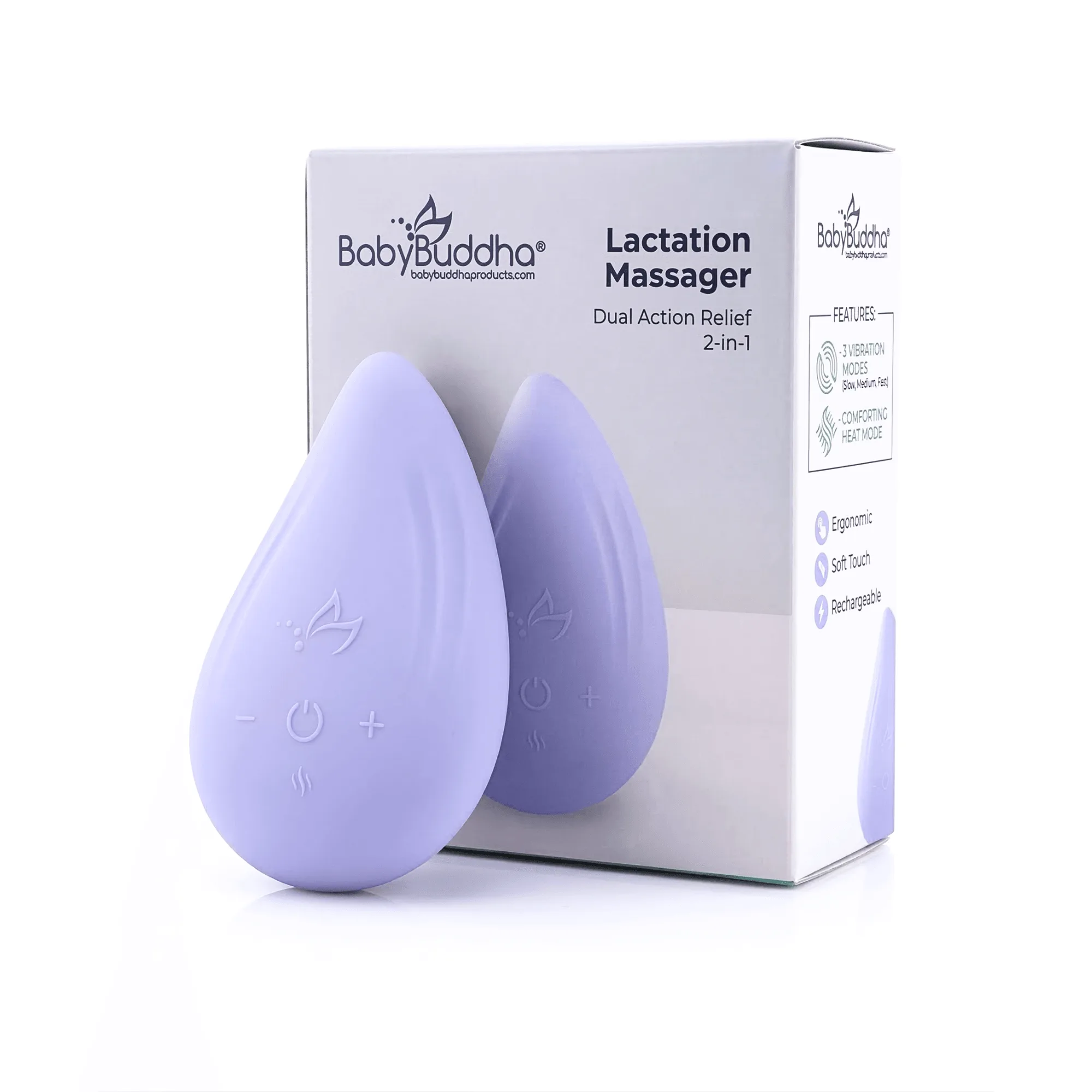
Lactation Massager