Quick answer
Start with Acid (wash) two or three evenings a week and adjust from there; most people can build toward more frequent use, but sensitive skin should stay at the lower end and watch for tightness or stinging. Use it as your brightening step, not as a scrub you reach for every single wash.
Why a foaming lactic acid wash behaves differently from a leave-on exfoliant
Acid (wash) is a water-based foaming cleanser that carries lactic acid to help slough off dead skin cells and unclog pores, but it is rinsed away rather than left on the skin. That short contact time is why it can be easier to slot into a routine than a serum or peel, and also why you should not expect the same intensity.
The trade-off is frequency: because the formula is designed to be gentle and hydrating, the main risk is not one dramatic reaction but cumulative overuse. If your skin starts feeling tight, looks flushed after rinsing, or stings when you apply your next product, that is your signal to cut back rather than push through.
Where sensitive skin needs to slow down
Sensitive skin can often tolerate a rinse-off lactic acid cleanser, but the margin for error is smaller. Keep the rest of the routine boring and stable while you test Acid (wash): a plain moisturizer, a gentle non-exfoliating cleanser on off nights, and daily sunscreen. Do not add a new retinol, scrub, or vitamin C serum in the same week.
If you already use prescription retinoids or another exfoliant, treat Acid (wash) as a substitute for that step on the nights you use it, not an addition. The catalog does not list a percentage or pH for this formula, so the honest approach is to judge by how your skin responds rather than by a number.
Acid (wash) questions, answered
How often should I use a lactic acid cleanser?
Begin with two or three evenings a week. If your skin stays comfortable after two weeks, add a night. Stop increasing at the point where skin feels calm but still looks brighter; more frequent use is not automatically better. Keep a simple note of which nights you used it so you can spot a pattern before irritation builds.
Can I use Acid (wash) every day?
Some skin types can, but build up gradually rather than starting daily. On off nights, use a gentle cleanser without exfoliating acids so your skin has recovery time.
Is it suitable for sensitive skin?
It can be, because it is rinsed off and the formula includes calming lavender flower water. Patch test on the jawline first, and avoid pairing it with other exfoliants or retinoids on the same night. If your skin stings when you apply moisturizer afterward, skip the next scheduled use.
Morning or night?
Evening is the safer default, since exfoliation can make skin more sun-sensitive and you will apply sunscreen the next morning. If you prefer mornings, follow with broad-spectrum SPF every time.
Will it remove makeup?
Treat Acid (wash) as your exfoliating cleanse, not your makeup remover. Remove makeup and sunscreen first with a separate cleanser or balm, then use Acid (wash) on dry or damp skin as directed.
How long until I see brightening?
Rinse-off acids work gradually. Judge results over several weeks of consistent, comfortable use rather than after a single wash, and stop if you see persistent redness or flaking.
Product facts behind these answers
-
Acid (wash) Lactic Acid Skin Brightening Cleanser: Acid (wash) is a water-based foaming cleanser with lactic acid, described as powerful yet gentle, and includes lavender flower water to calm the complexion. The rinse-off foam format and calming botanical make it a reasonable first exfoliating cleanser for people who find scrubs or leave-on acids too much.
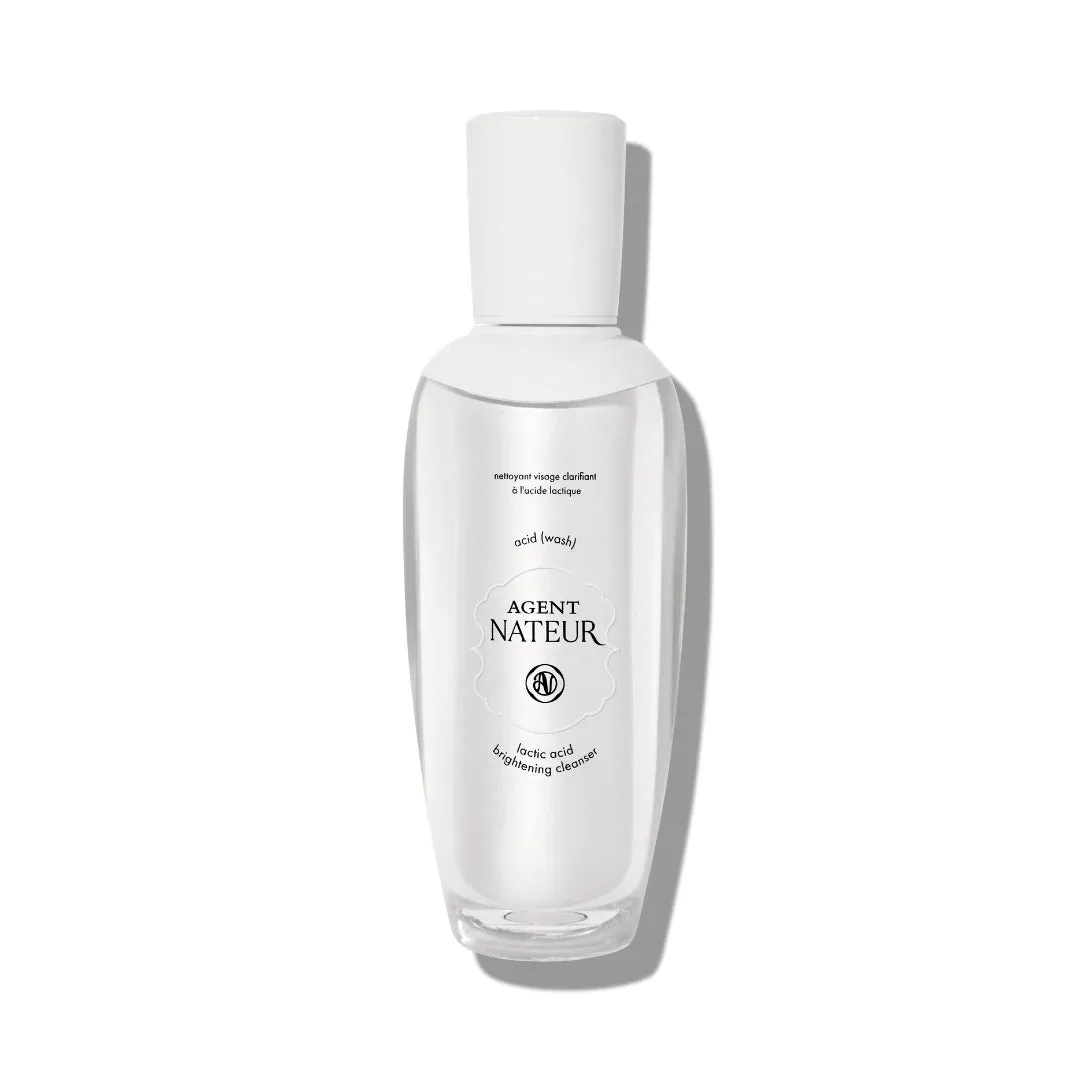
Acid (wash) Lactic Acid Skin Brightening Cleanser