Quick answer
Lamb and vegetable dog food can be an excellent option for dogs with food sensitivities, those who need a novel protein source, or picky eaters who enjoy a savory, vegetable-rich recipe. It provides a balanced diet with quality protein, fats, vitamins, and minerals.
Why choose lamb over chicken or beef?
Lamb is considered a novel protein for many dogs, meaning they haven't been exposed to it as often as chicken or beef. This makes it a common choice for elimination diets or for dogs with suspected food allergies. Switching to a lamb-based formula can help reduce itching, digestive upset, and ear infections linked to common protein sources.
What about the vegetables?
Vegetables in dog food provide natural sources of fiber, vitamins, and antioxidants without relying on artificial additives. They support healthy digestion, immune function, and can help maintain a healthy weight. Look for recognizable vegetables like carrots, peas, or sweet potatoes in the ingredient list.
Is lamb and vegetable food suitable for all life stages?
Not all lamb and vegetable formulas are complete and balanced for every life stage. Always check the label to confirm the food meets AAFCO standards for your dog's age—whether that's adult maintenance, growth, or all life stages. Puppies and seniors may have different nutritional needs.
Frequently asked questions about lamb and vegetable dog food
Can lamb and vegetable dog food help with allergies?
Yes, because lamb is a novel protein for many dogs, it's less likely to trigger an allergic reaction compared to chicken or beef. Combined with simple vegetable ingredients, it mimics a limited-ingredient diet that can help identify and manage food sensitivities.
How do I transition my dog to a lamb and vegetable formula?
Gradually mix increasing amounts of the new food with the old food over 7–10 days. Start with 25% new / 75% old, then 50/50, then 75/25, and finally 100% new. This helps prevent digestive upset. A slow transition is key—rushing can cause loose stools or refusal to eat.
Is lamb and vegetable dog food higher in fat?
Lamb can be slightly higher in fat than chicken or turkey, but the overall fat content depends on the specific recipe. Check the guaranteed analysis on the bag; if your dog needs a low-fat diet, compare percentages across formulas. Always read the label—don't assume all lamb recipes are high in fat.
What should I look for in a quality lamb and vegetable dog food?
Look for a named protein source (e.g., lamb meal or deboned lamb) as the first ingredient, recognizable vegetables, and a statement that the food meets AAFCO nutritional standards. Avoid vague terms like "meat meal" or artificial colors and preservatives.
Product spotlight
-
Grandma Z's Lamb and Vegetable Adult Dog Food 5 LB: Grandma Z's Lamb and Vegetable Adult Dog Food is crafted with Zamzows' 90 years of expertise, providing a wholesome blend of ingredients for balanced nutrition with optimal protein, fat, vitamins, and minerals. This means you're feeding a recipe developed by a trusted local brand, not a generic formula, which can give peace of mind when managing your dog's diet.
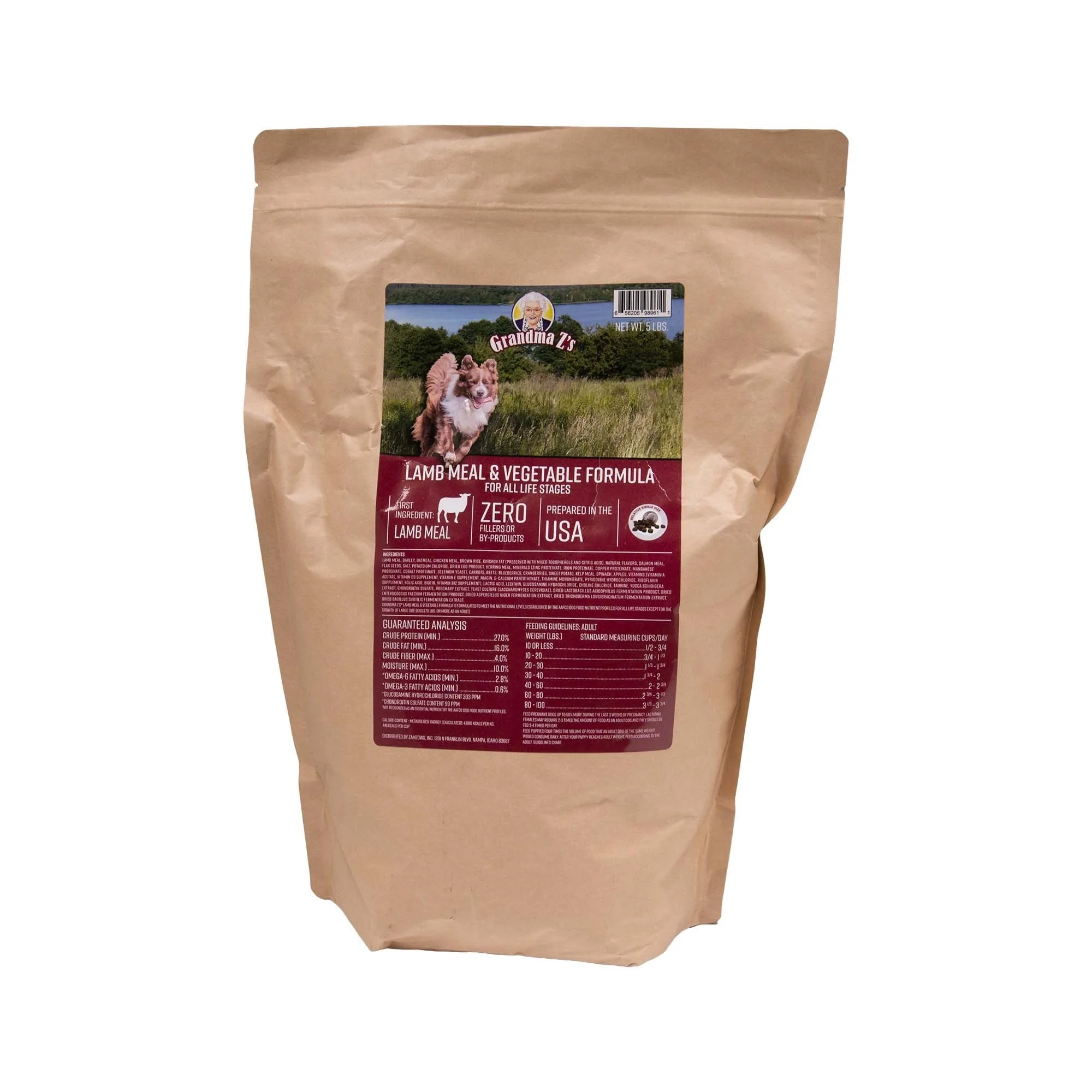
Grandma Z's Lamb and Vegetable Adult Dog Food 5 LB