Quick Answer
If you have space for a larger footprint and want a toy that encourages cooperative pretend play, a large play kitchen with lights and sounds is a solid choice. Focus on the features that match your child's interests and your room's layout.
Why Size and Features Matter
A large play kitchen offers more room for multiple children to play together, which supports social skills like sharing and turn-taking. The realistic lights and sounds add an extra layer of engagement, making pretend meals feel more authentic.
However, bigger isn't always better. The larger footprint means you need dedicated floor space, and the interactive features may require batteries or occasional troubleshooting. Think about whether the extra size and features will be used often or if they might become a source of clutter.
Consider the Material and Maintenance
Many large play kitchens are made of wood, which is durable and easy to clean. A white finish can brighten a playroom but may show scuffs more easily. Regular wiping with a damp cloth usually keeps it looking fresh, but check the manufacturer's care instructions for specific guidance.
If you have multiple children, a sturdy wooden construction can withstand years of play. But if you plan to move the kitchen frequently, a lighter material might be easier to handle.
Balance Features with Practicality
Lights and sounds are engaging, but they can also be distracting or annoying for adults. Some kitchens have volume controls or off switches, which are worth looking for if you're sensitive to noise. Also, consider battery life and whether the sounds are adjustable.
The realistic knobs and doors are great for fine motor skill development, but they also mean more parts that could break. Check the quality of hinges and knobs before you buy, and be prepared to do minor repairs if needed.
Decision Rules for Buying a Large Play Kitchen
- Space check: Measure your play area. A large kitchen needs at least 3 feet of width and 2 feet of depth, plus room for children to move around. If you can't spare that space, consider a smaller model. Use painter's tape to outline the footprint on the floor before buying.
- Feature priority: List which features matter most: lights and sounds, working doors, realistic knobs, or storage. If your child loves realistic play, choose a model with multiple interactive elements. If they prefer building or sorting, a simpler kitchen might be better. Involve your child in the decision by asking what they'd like to cook or do in their kitchen.
- Material and durability: Wooden kitchens are more durable and easier to repair than plastic ones. If you expect heavy use or multiple children, invest in a well-constructed wooden model. For occasional use or tight budgets, plastic may suffice. Check the weight and assembly requirements; heavier usually means sturdier but harder to move.
- Battery and noise management: If lights and sounds are important, check whether the model has volume control or an off switch. Also note the battery type and how many are needed. Some kitchens have a demo mode that can drain batteries quickly. Keep spare batteries on hand and consider rechargeable options to save money.
- Age and safety: Check the manufacturer's recommended age range. For toddlers under 3, avoid small parts and ensure stability. For older kids, look for realistic features that match their interests. Anchor the kitchen to the wall if you have active climbers.
Product Facts
-
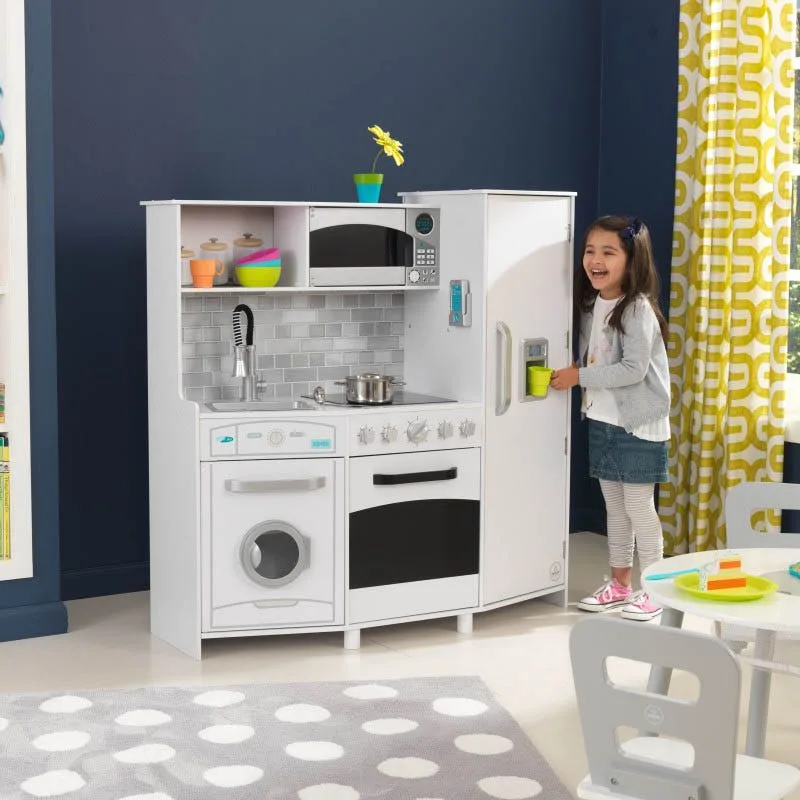
Large Play Kitchen with Lights & Sounds - White: The KidKraft Play Kitchen with Lights & Sounds features turning knobs, working appliance doors, and an ice maker that comes to life with lights and sounds. These realistic elements make pretend play more immersive and help children develop fine motor skills as they turn knobs and open doors.
Large Play Kitchen with Lights & Sounds - White
-
Large Play Kitchen with Lights & Sounds - White: The kitchen is large enough for children to play together, which helps build social and sharing skills. If you have siblings or playdates, this size encourages cooperative play rather than solo activity.
Who This Is Best For
Best for
- Families with multiple children who will play together
- Kids who love imaginative role-play and realistic features like lights and sounds
Not for
- Families with very limited floor space
- Parents who prefer quiet, battery-free toys