Quick answer
Pack a large suitcase by weight first, then by space. Weigh your bag empty, decide on a target packed weight below your airline's limit, lay out everything you plan to take, and cut about a fifth of it before the first item goes in. Build from the wheels up in layers, keep heavy items over the wheelbase, and check the closed case on a scale before you leave home.
A large suitcase is the easiest bag to overpack because it never tells you when to stop. The case keeps swallowing clothes until it is suddenly too heavy to lift, and the problem only shows up at the check-in desk. This large suitcase packing guide walks through a repeatable process so you fill the space you paid for without paying an overweight fee.
The steps below work for any large hardside or softside case, and they matter most on trips of two to three weeks where you are packing for real weather and real laundry gaps. Each step includes the mistake that usually undoes it.
Start with the weight limit, not the packing list
Before you fold a single shirt, find your airline's checked baggage allowance for your fare class and route, and write that number down. Then weigh the empty suitcase. That empty figure is your real starting point, because a large case can already consume several kilos of your allowance before anything goes inside. Subtract the empty weight from the limit to get the weight you can actually spend on contents.
This is also where the case itself becomes a decision. A large hardside built from polypropylene is designed to protect belongings while staying light and easy to handle, which leaves more of your allowance for clothes. If your case is heavy when empty, either pack lighter or accept that you will travel with fewer items.
- Common mistake: assuming the airline limit is the same as the weight you can pack. The case counts too.
- Checkpoint: empty weight plus packed contents must stay under the limit with a small buffer for souvenirs.
Lay everything out and cut before you pack
Spread every item you intend to bring on the bed or floor so you can see the full volume at once. This is the only moment you can judge overpacking honestly, because once clothes are compressed inside a large case the excess becomes invisible. Count days, count laundry opportunities, and match the two.
A practical rule for a two to three week trip is to pack roughly a week of clothing and plan to wash. If you cannot describe when you will do laundry, you are probably packing for the whole trip in one go, which is how large luggage turns into an overweight bag.
- Common mistake: packing directly into the suitcase and discovering the overflow only when the lid will not close.
- Checkpoint: remove about a fifth of what you laid out, starting with duplicates and single-use items.
Build the case from the wheels up
Pack the heaviest items first, directly over the wheelbase at the bottom of the case, so the bag rolls instead of tipping. Shoes, toiletries, and dense folded items belong there. Then add medium-weight clothing in the middle, and finish with light layers near the top where the lid closes.
Fill the deep half of the case with folded or rolled clothing packed tightly enough that nothing shifts, then use the shallow lid half for flat items such as jackets, underwear, and anything you want to reach first. Compression straps should be tightened across the middle of the load, not just at the top, so the contents stay put in transit.
- Common mistake: putting shoes on top, which makes the case top-heavy and awkward to wheel.
- Checkpoint: the case should stand and roll without leaning when you push it.
Use the gaps instead of adding another bag
Once the main load is in, the leftover space is usually in corners, along the hinge, and around the telescopic handle housing. Packing cubes and pouches let you fill those gaps with small items instead of leaving them empty, which is how you get more usable capacity out of the same case without adding weight to your shoulders.
Keep one pouch for cables and chargers and one for laundry so dirty items do not mix back into clean clothing. If you are traveling with a second bag, resist the urge to move overflow into it just to avoid editing the main case. That simply relocates the overpacking.
- Common mistake: treating packing cubes as extra storage rather than as a way to compress and organize what you already decided to bring.
- Checkpoint: every cube should have a purpose you can name before it goes in.
Close, weigh, and adjust before you leave
Zip the case, stand it upright, and weigh it on a luggage scale or a bathroom scale you have zeroed with your own weight. Do this at home, not at the airport, because it is the only chance you have to move items into a carry-on or leave something behind. If you are over, remove the heaviest low-value items first, usually shoes and toiletries.
Weigh again after any repacking, and write the final number somewhere you will see it. On the return leg, leave room for purchases by packing a foldable duffel or leaving one outfit's worth of space empty. A large case that leaves home at 90 percent of its weight limit has nowhere to go once you buy something.
- Common mistake: weighing the bag once and assuming it will stay the same after you add last-minute items.
- Checkpoint: final packed weight is under the airline limit with a buffer for the return trip.
Packing steps at a glance
- Check the allowance and weigh the empty case: Write down the airline limit for your route and fare, then weigh the suitcase with nothing in it. Subtract to find your usable packing weight. Checkpoint: you know your real weight budget before packing begins.
- Lay out everything and cut a fifth: Spread all items out, match them to days and laundry opportunities, then remove duplicates and single-use items before anything enters the case. Checkpoint: the remaining pile fits your trip length, not your entire wardrobe.
- Pack heavy over the wheels: Place shoes, toiletries, and dense items at the bottom over the wheelbase, medium clothing in the middle, and light layers near the lid. Checkpoint: the case rolls without tipping.
- Fill gaps with cubes and pouches: Use corners and the space around the handle housing for organized small items, keeping laundry and cables separate from clean clothing. Checkpoint: each cube has a named purpose.
- Weigh the closed case and adjust: Weigh at home, move the heaviest low-value items out if you are over, and leave a buffer for the return trip. Checkpoint: final weight sits under the limit with room to spare.
Cases that make large-trip packing easier
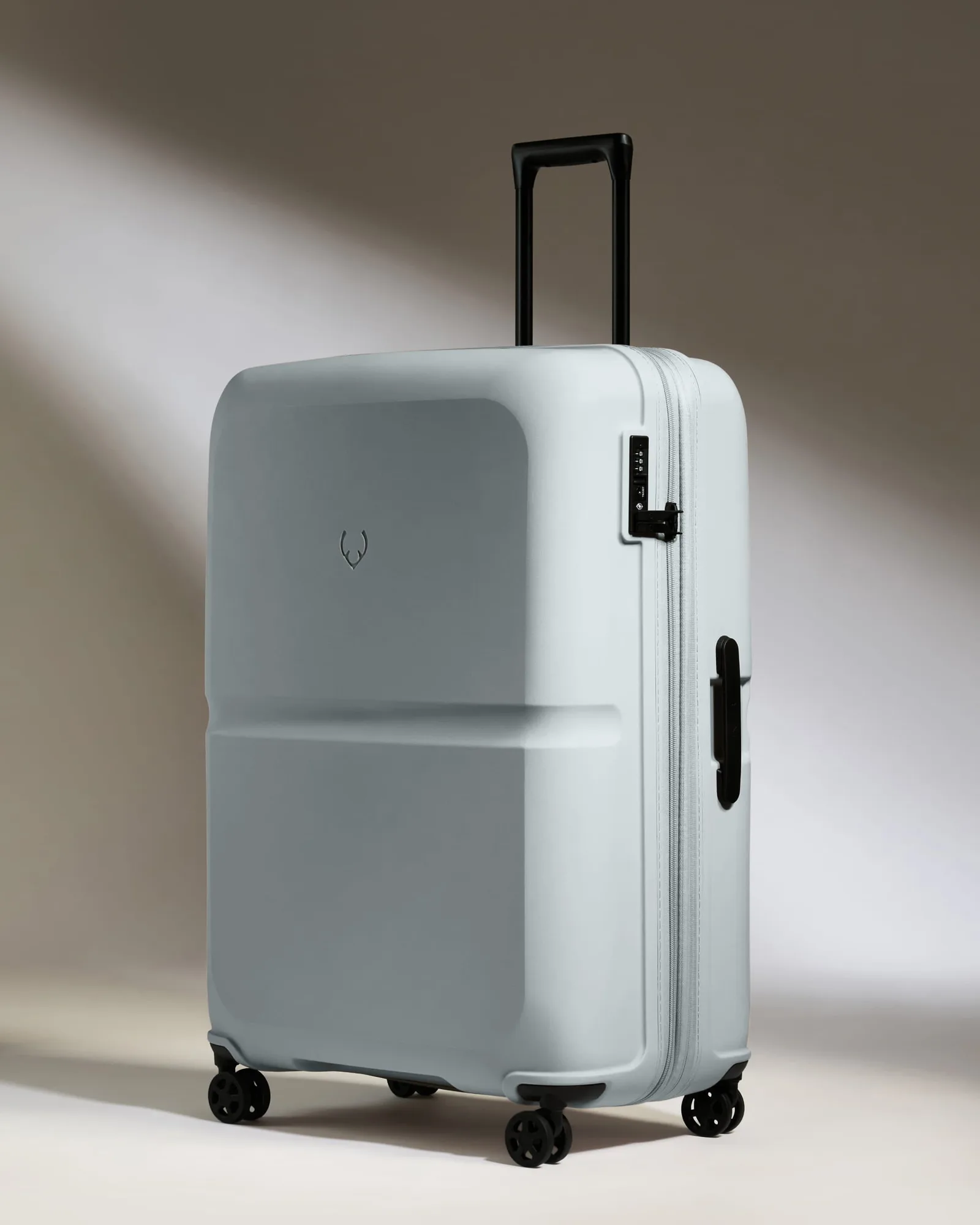
- Large Luggage in Salt Blue - Single Stripe: Designed for extended trips and long-haul adventures, this hardside case is made with a durable polypropylene shell that protects your belongings while staying light and easy to handle. A lighter empty case leaves more of your airline weight allowance for actual contents, which is the single biggest lever against overpacking.
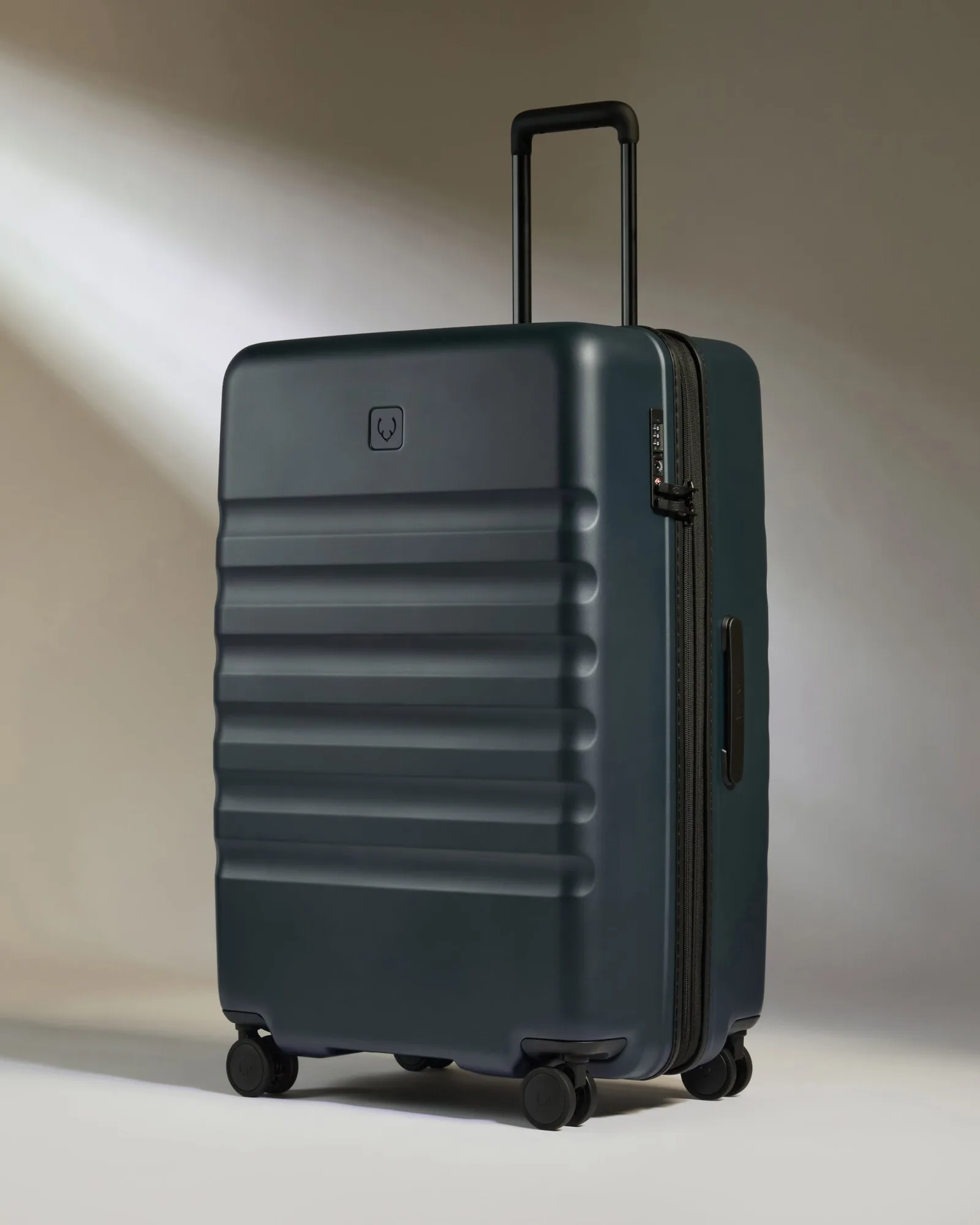
- Large Luggage in Indigo Blue - Icon Stripe: Built from recycled polycarbonate, the Icon Stripe Large is designed to accommodate extended adventures of 2-3 weeks with maximum packing volume. If your trip length matches that window, this is the size class to plan around, and the hardwearing shell protects contents when the case is checked in or stowed.
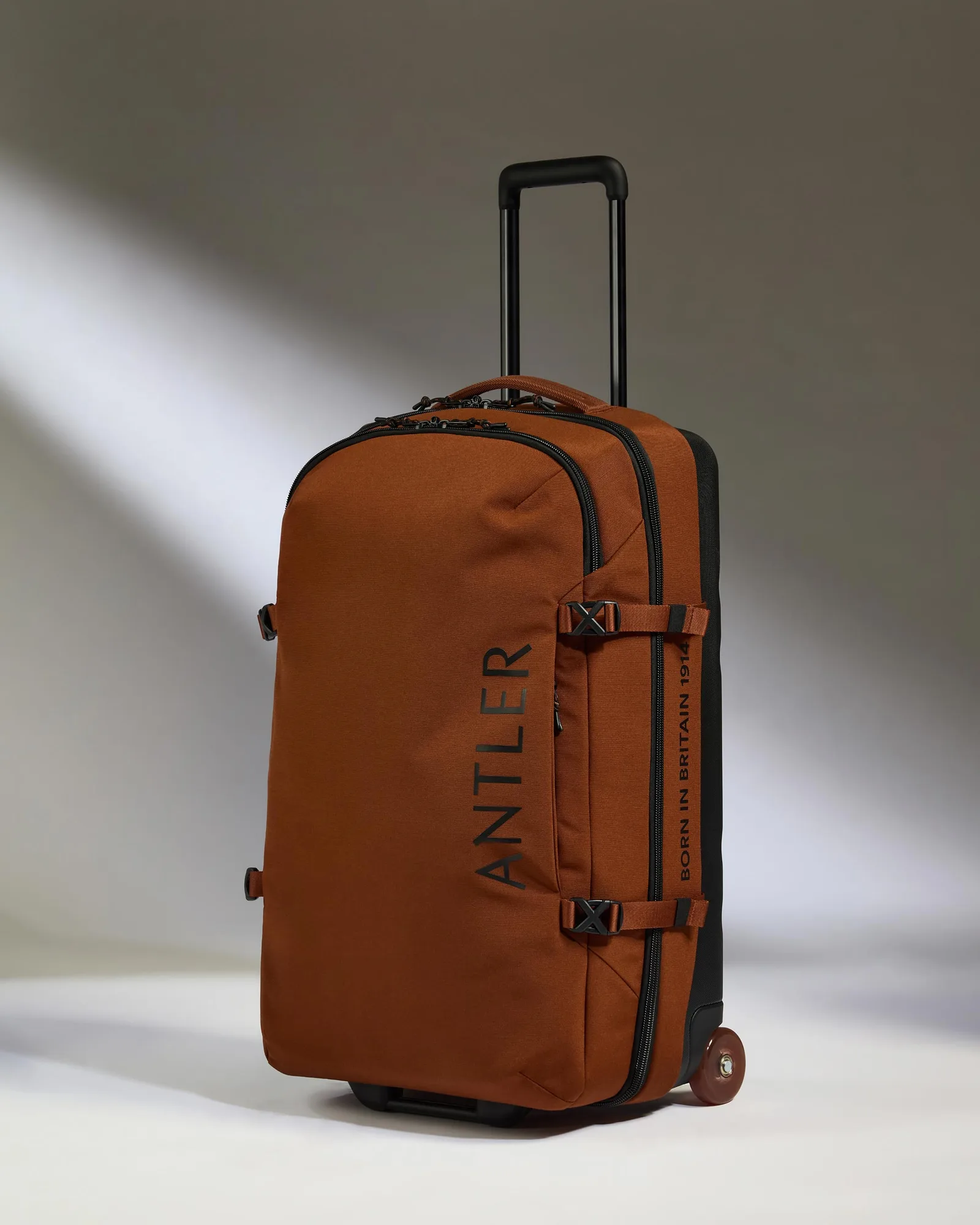
- Discovery Wheeled Duffel in Clay Brown: A hybrid holdall with a durable hard shell back and a water-repellent recycled fabric front, plus compression straps and adjustable buckles. Compression straps let you tighten a partial load so items do not shift, which is useful on the return leg when the case is no longer full.
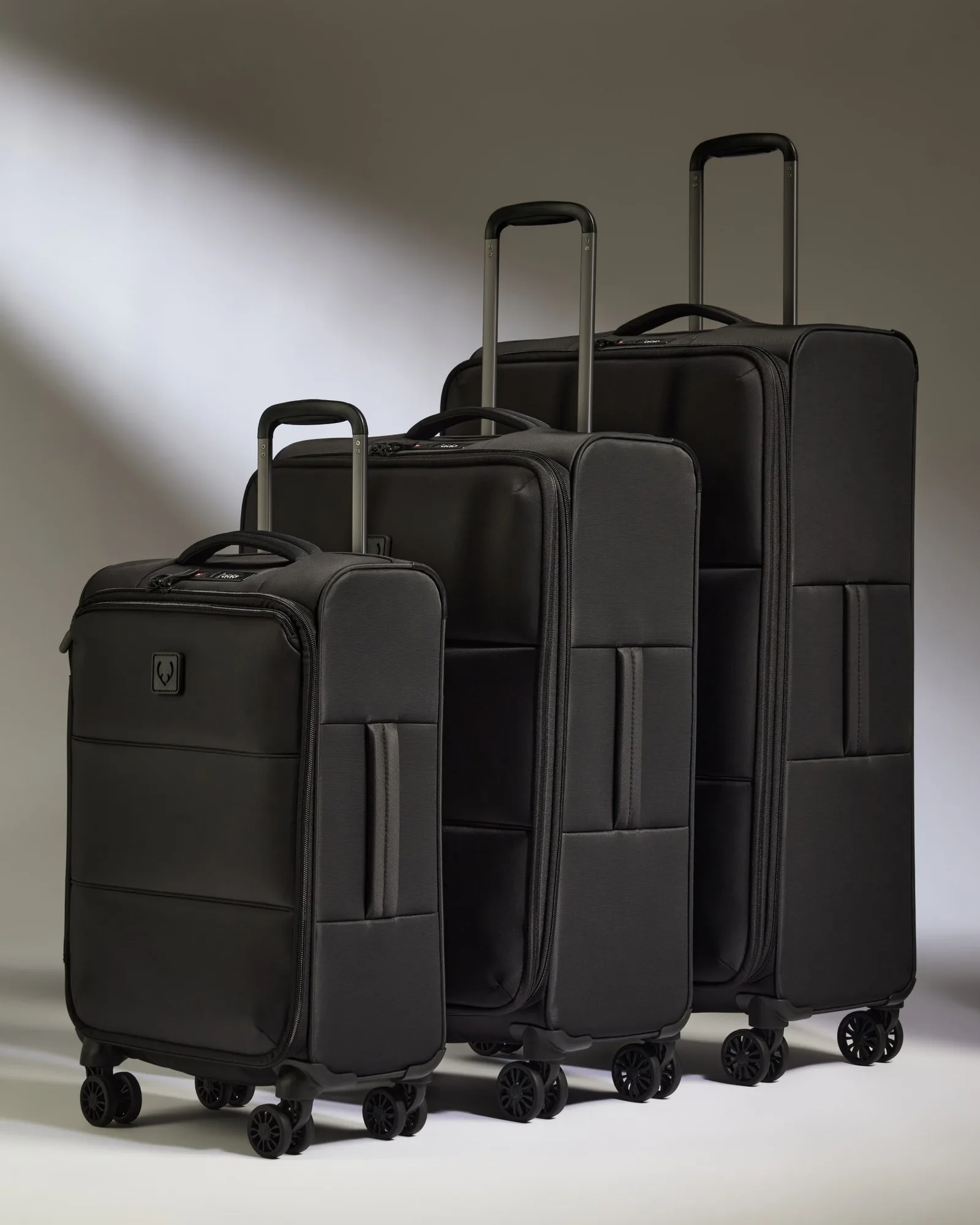
- Lightest Expandable Carry-on Luggage Set in Black - Soft Stripe 2.0: Made from 100% recycled polyester inside and out, with an ultra-light construction balanced for strength and durability. A light carry-on set gives you a place to move overflow if the large case weighs in over the limit at home.
A large suitcase rewards planning more than any other bag. Set your weight budget first, edit your pile before it goes in, build from the wheels up, and weigh the closed case at home. Do those four things and the extra capacity works for you instead of against you.