Quick answer
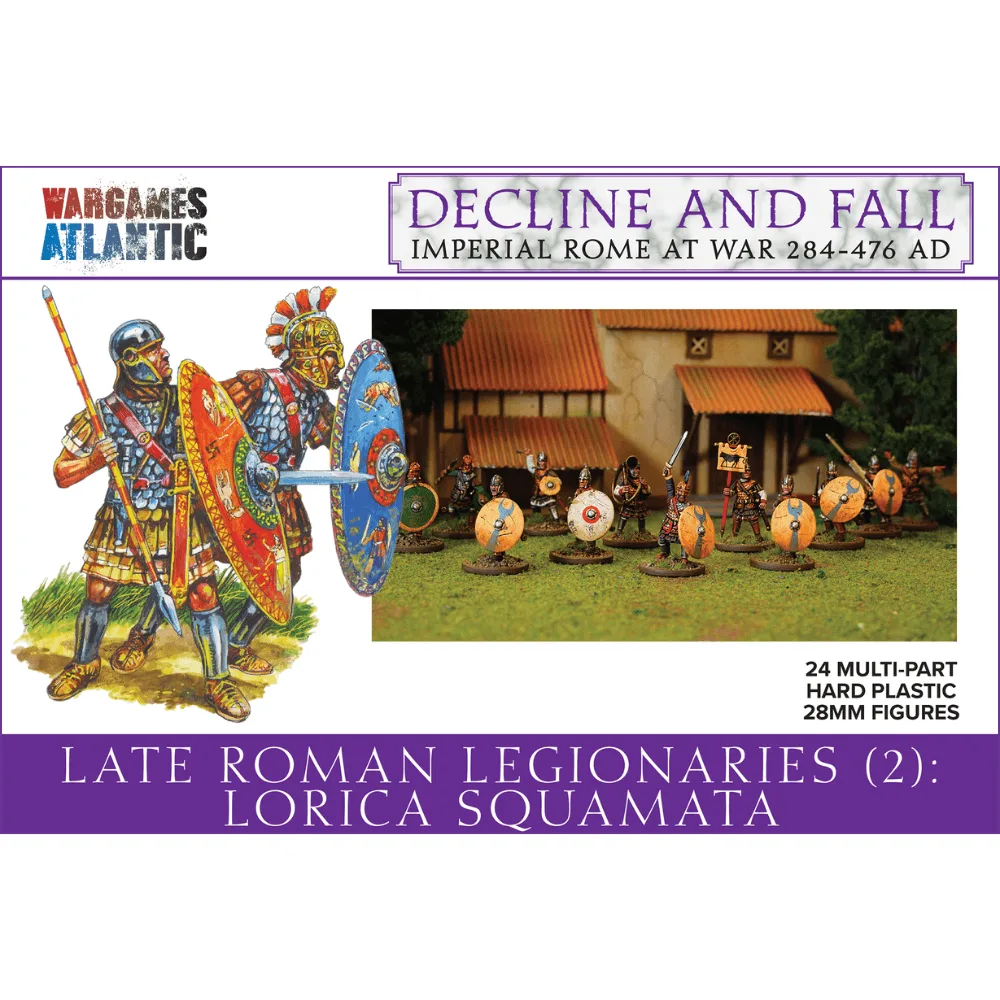
Buy the Late Roman Legionaries (2): Lorica Squamata box if you are building a 28mm late Roman force for the period from Diocletian and Constantine's reforms to the late 6th century, and you want armoured infantry that can stand in the battle line. Skip it if you need early Imperial legionaries, unarmoured skirmishers, or a single one-piece character model. The box is a unit-building purchase, not a complete army.
What this box actually represents on the table
The Late Roman Legionaries (2): Lorica Squamata set covers legionaries after the Diocletian and Constantine reforms, a period when the legions changed significantly and by the late 6th century looked almost unrecognizable compared with earlier Imperial troops. The 'Lorica Squamata' label points to scale armour, which gives you a visual hook for fielding armoured late Roman infantry rather than bare-chested or mail-clad versions.
In practice, this is a core infantry unit for late Roman army wargames. It is not a skirmish-only pack and not a command group. Use it to fill the main battle line, then add separate light troops, archers and cavalry to complete a legal force.
Scale, basing and army size before you buy
Wargames Atlantic's plastic kits are designed for 28mm wargaming, so check your rule set's base sizes before assembly. Late Roman infantry are commonly based in close-order groups, but the exact frontage depends on whether you play a mass-battle system or a skirmish game. If your group uses multi-basing, plan how many figures sit on each base before you glue anything down.
Because the box is a unit rather than a whole army, estimate how many boxes you need from your intended points value. A typical late Roman force needs several infantry units, plus supporting archers, cavalry and command. Buying one box first lets you test your paint scheme and basing before committing to a full army.
Opponents and period match
The late Roman period offers unusually varied opposition. Legionaries of this era fought across the whole Roman world: against Pict and Irish raiders in Britannia, Vandals in North Africa, Sassanid Persians in Mesopotamia, and the never-ending onslaught of other enemies. That variety is a real advantage for late Roman army wargames because one infantry unit can serve in several different campaign settings.
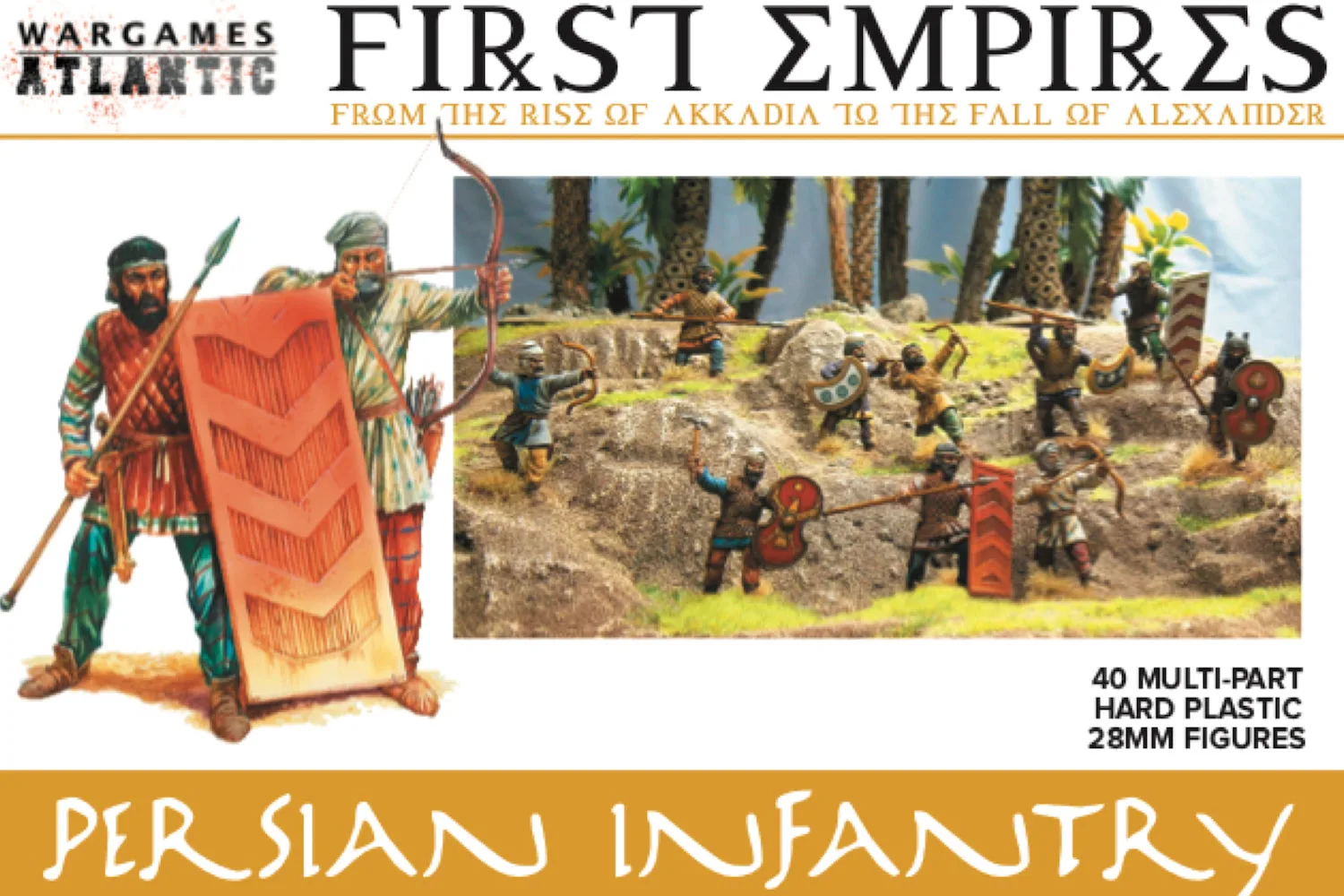
If you want a historical opponent for the eastern frontier, the Persian Infantry box gives you Achaemenid-era Persian troops led by the elite Immortals, built from the many kingdoms and tribes conquered by the Achaemenids, including the Median, Lydian and Babylonian empires. Note the period gap: those Persians are centuries earlier than the late Roman legionaries, so they are a good match only if your group is comfortable with an earlier Persian force or you are running a themed campaign.
Painting and assembly realities
Plastic multi-part infantry rewards planning. Decide on shield designs and unit identity before assembly, because late Roman shields carry a lot of the visual character. Lorica squamata miniatures also benefit from a deliberate approach to the scale armour: painting individual scales is slow, so a base coat, wash and light drybrush usually reads better at table distance than a full scale-by-scale job.
If you are new to plastic kits, clean mould lines before assembly and test-fit arms and weapons. Keep your first batch small so you can adjust your scheme before painting a full unit.
Decision rules for buying this box
- Buy it if your army list is late Roman: The box is built around legionaries after the Diocletian and Constantine reforms, so it fits lists set in that era and later. Check your rule set's army list date before adding it to a cart.
- Buy one box first, then scale up: A single box gives you a test unit for basing, shield design and paint scheme before you commit to a full army. Confirm your unit size and frontage before buying multiple boxes.
- Do not buy it for early Imperial Rome: The set represents the reformed late legions, not the classic first-century legionary look. If your project is early Imperial, choose a different infantry set.
- Match opponents to the same century: Late Roman legionaries fought Picts, Irish raiders, Vandals and Sassanid Persians, while the Persian Infantry box is Achaemenid and earlier. Decide whether you want strict historical pairing or a themed campaign.
Product facts that affect your decision
- Late Roman Legionaries (2): Lorica Squamata: Late Roman Legionaries (2): Lorica Squamata covers legionaries after the Diocletian and Constantine reforms, with the legions changing significantly and becoming almost unrecognizable by the late 6th century. This is the correct box for late Roman armies, not for early Imperial Rome, so match it to your chosen period before buying.
- Late Roman Legionaries (2): Lorica Squamata: These legionaries fought across the whole Roman world against Pict and Irish raiders in Britannia, Vandals in North Africa, Sassanid Persians in Mesopotamia, and a never-ending onslaught of other enemies. One unit can serve in several campaign settings, which makes it efficient if you play multiple late Roman scenarios.
- Persian Infantry: Persian Infantry represents the armies forged by Cyrus the Great, Darius and Xerxes, led by the elite Immortals and built from kingdoms and tribes conquered by the Achaemenids, including the Median, Lydian and Babylonian empires. Useful as an eastern opponent, but its Achaemenid period is earlier than the late Roman era, so treat it as a themed match rather than a strict historical pairing.
Who should buy this box
Best for
- 28mm late Roman army builders who need armoured legionary infantry for the main battle line
- Wargamers running campaigns from the Diocletian and Constantine reforms through to the late 6th century
- Players who want one infantry unit usable against Picts, Irish raiders, Vandals or Sassanid Persians
Not for
- Early Imperial Roman projects that need classic first-century legionaries
- Skirmish players who want a handful of character models rather than a unit
- Anyone building a complete army from a single purchase, since supporting troops are sold separately