Quick answer
Start leash training a puppy indoors with short, reward-based sessions before ever stepping outside. Fit a no-pull harness snugly, let your puppy wear it around the house, then practice loose-leash walking in a low-distraction area. Keep first walks to 5–10 minutes and stop the moment pulling starts. A well-fitted no-pull harness for puppies gives you control without pressure on the neck, making those first walks safer and calmer.
Why a no-pull harness beats a collar for puppy first walks
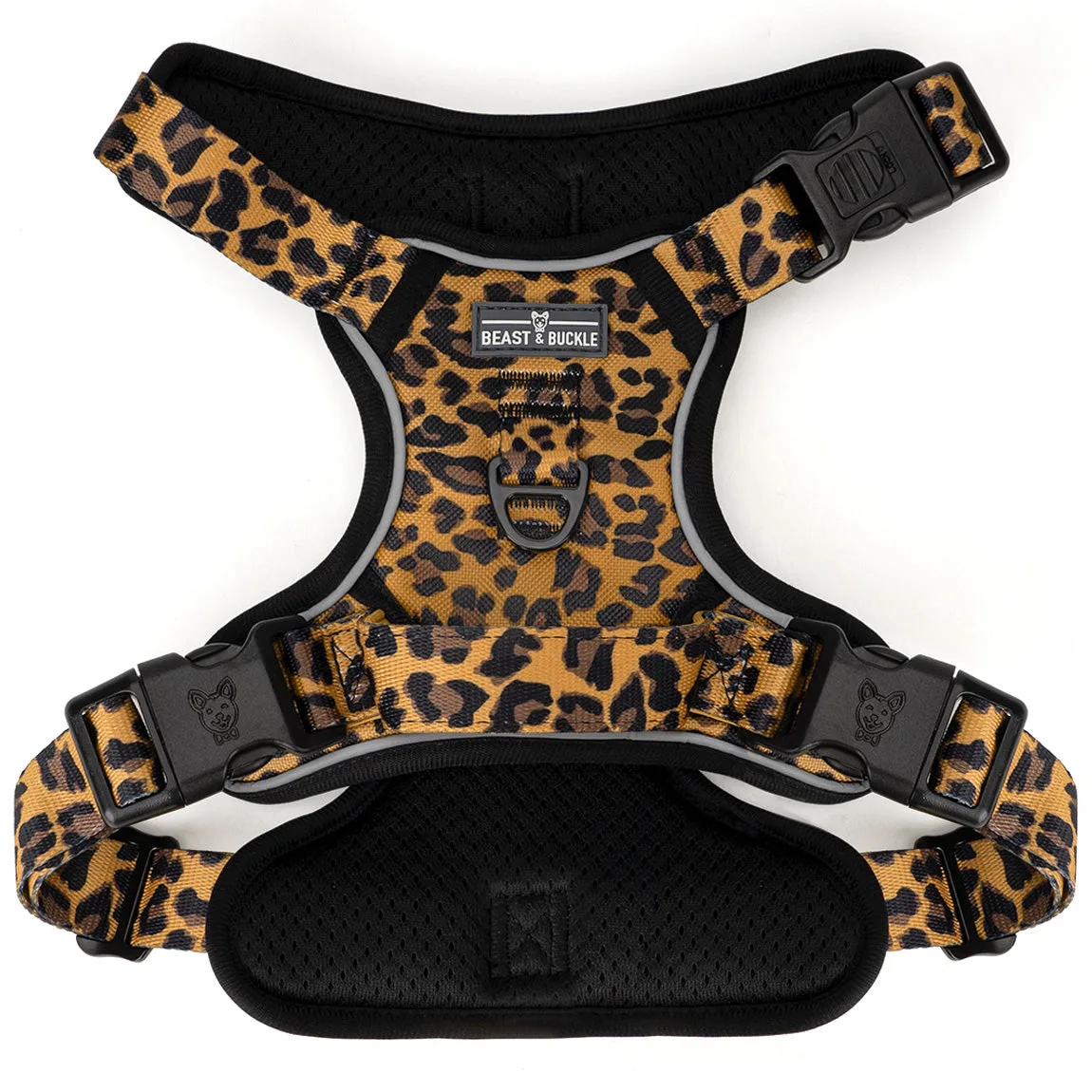
Puppies have soft, developing tracheas and a habit of lunging toward everything new. A flat collar puts pressure right on that delicate area when they hit the end of the leash. A no-pull harness redirects that force across the chest and shoulders instead. The Beast & Buckle No Pull Harness, for example, uses D-rings on both sides and a safety handle on the back for emergencies, plus a highly adjustable fit for a wide variety of dog bodies. That adjustability matters for puppies, who can change shape quickly during growth spurts.
How to fit a no-pull harness on a growing puppy
A loose harness lets a puppy slip out or chafe; a too-tight one restricts movement and creates resistance to wearing it. Aim for a snug fit that lets you slide two fingers under each strap but not a whole hand. Check the chest strap first, then the shoulder straps, and re-check after every walk for the first few weeks. If the harness has a back handle, it should sit flat against the spine, not flop to one side. Because puppies grow fast, plan to re-measure every two to three weeks. If the harness only comes in standard sizes and your puppy is between sizes, size up only if the smaller size cannot be adjusted snug enough; otherwise stick with the smaller size and check the fit often.
Common mistakes that slow down leash training
The biggest mistake is rushing outside before your puppy is comfortable wearing the harness indoors. Another is letting the puppy pull you toward a distraction because you want to keep moving. That teaches pulling works. A third is using a retractable leash during training; it rewards tension with more freedom. Finally, don't expect a young puppy to walk perfectly on a loose leash for a full mile. Short, frequent sessions beat long, frustrating ones.
How to introduce the harness without a struggle
Pair the harness with high-value treats before it ever touches your puppy. Let them sniff it, then reward. Touch it to their back, reward. Drape it over their head or step them into it, reward and immediately remove it. Repeat this three to five times in one session, then end. Next session, buckle it loosely and feed treats for 10 seconds, then take it off. By the third or fourth session, most puppies will stand calmly while you buckle. If your puppy freezes, back up a step and go slower. Never chase a puppy around the room with a harness; that builds a negative association that can take weeks to undo.
Step-by-step: your puppy's first walks with a no-pull harness
- 1. Fit the harness indoors: Adjust all straps so the harness sits snug but not tight: two fingers under each strap. Check that the chest piece is centered and the back handle lies flat. Common mistake: leaving it too loose because your puppy will 'grow into it' — that lets them back out. Checkpoint: you can slide two fingers under every strap, but not a fist.
- 2. Let your puppy wear it around the house: Put the harness on for 5–10 minutes at a time while you play or feed meals. Don't attach a leash yet. If your puppy scratches or freezes, distract with a toy or treat and keep the session short. Common mistake: leaving it on for hours on day one. Checkpoint: your puppy moves normally, eats, and doesn't paw at the harness.
- 3. Clip on a lightweight leash indoors: Attach a lightweight leash to the back D-ring and let your puppy drag it around a puppy-proofed room for a few minutes while you supervise. Reward them for moving with you. Common mistake: using a heavy retractable leash that startles them when it retracts. Checkpoint: your puppy walks a few steps with the leash without panicking.
- 4. Practice loose-leash walking in a low-distraction space: In a hallway or backyard, hold the leash with slack and reward your puppy for staying near your side. Take three steps, reward, stop. If they pull, stop moving until the leash slackens, then reward and continue. Common mistake: yanking back — that teaches nothing except that the leash hurts. Checkpoint: your puppy can take five steps with a loose leash before pulling.
- 5. Take the first outdoor walk — short and calm: Choose a quiet time and a familiar route with few dogs or people. Keep the walk to 5–10 minutes. Use the front D-ring if your puppy pulls hard, or the back D-ring if they're calm. Reward every few steps for staying near you. Common mistake: heading to a busy park on the first outing. Checkpoint: your puppy stays under threshold (no frantic pulling, no freezing) for most of the walk.
- 6. End on a good note and repeat tomorrow: Stop the walk while your puppy is still succeeding, even if that's after three minutes. Take the harness off indoors and reward calmly. Repeat daily, gradually adding distance and distractions. Common mistake: pushing through a meltdown because you planned a longer walk. Checkpoint: your puppy is eager to put the harness on next time.
Product facts
- Leopard No Pull Dog Harness: The Beast & Buckle No Pull Harness provides the strength, structure and security needed to handle strong pulling, with D-rings on both sides and a safety handle on the back for emergencies. Two leash attachment points let you switch between a front-clip for training and a back-clip for casual walks, while the handle gives you instant control if your puppy bolts.
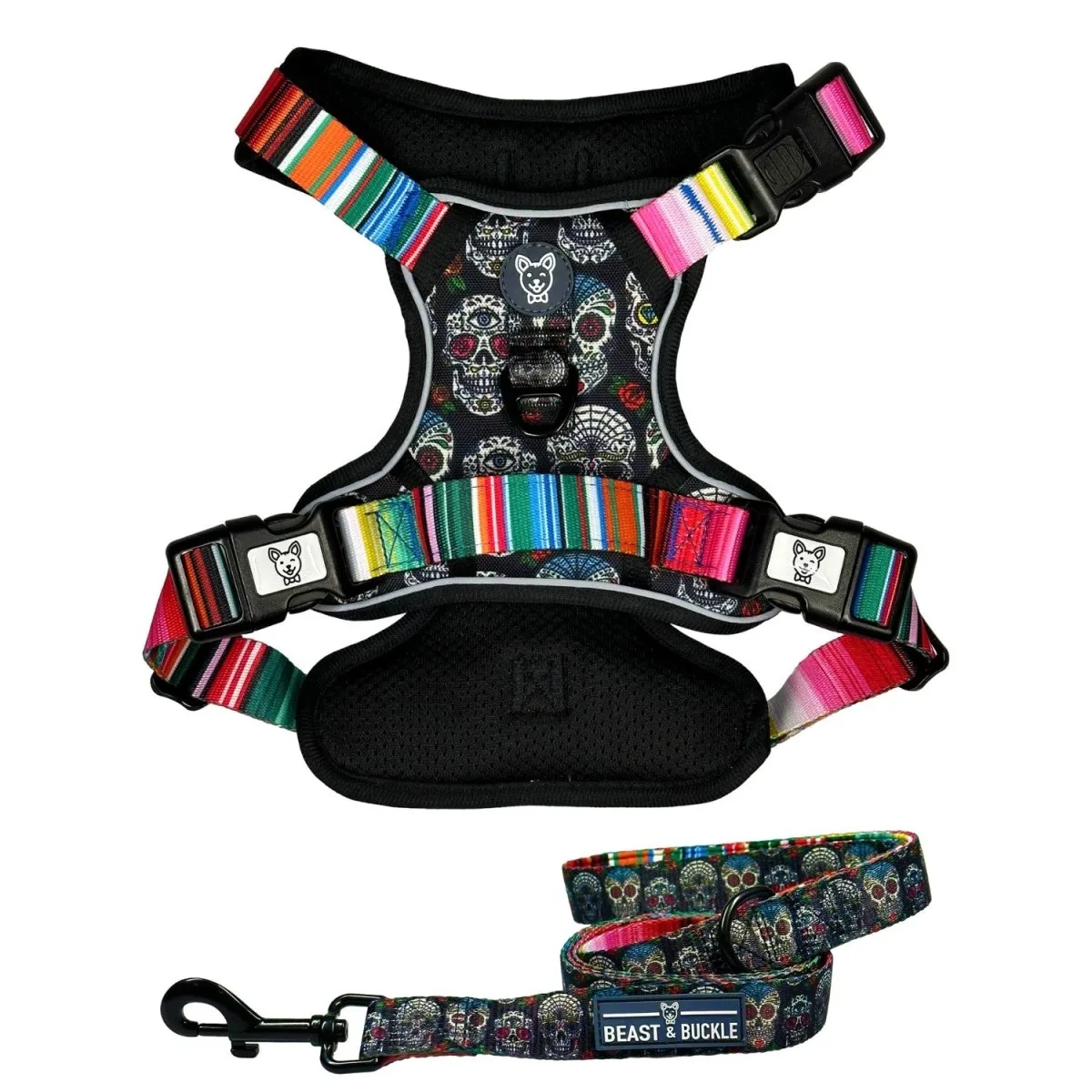
- Sugar Skulls No Pull Harness & Leash Bundle - CLEARANCE: The Sugar Skulls No Pull Harness & Leash Bundle includes a matching no-pull harness and leash set, with harness size and leash version options. A matched set removes the guesswork of finding a compatible leash, and buying as a bundle saves money compared to buying separately.