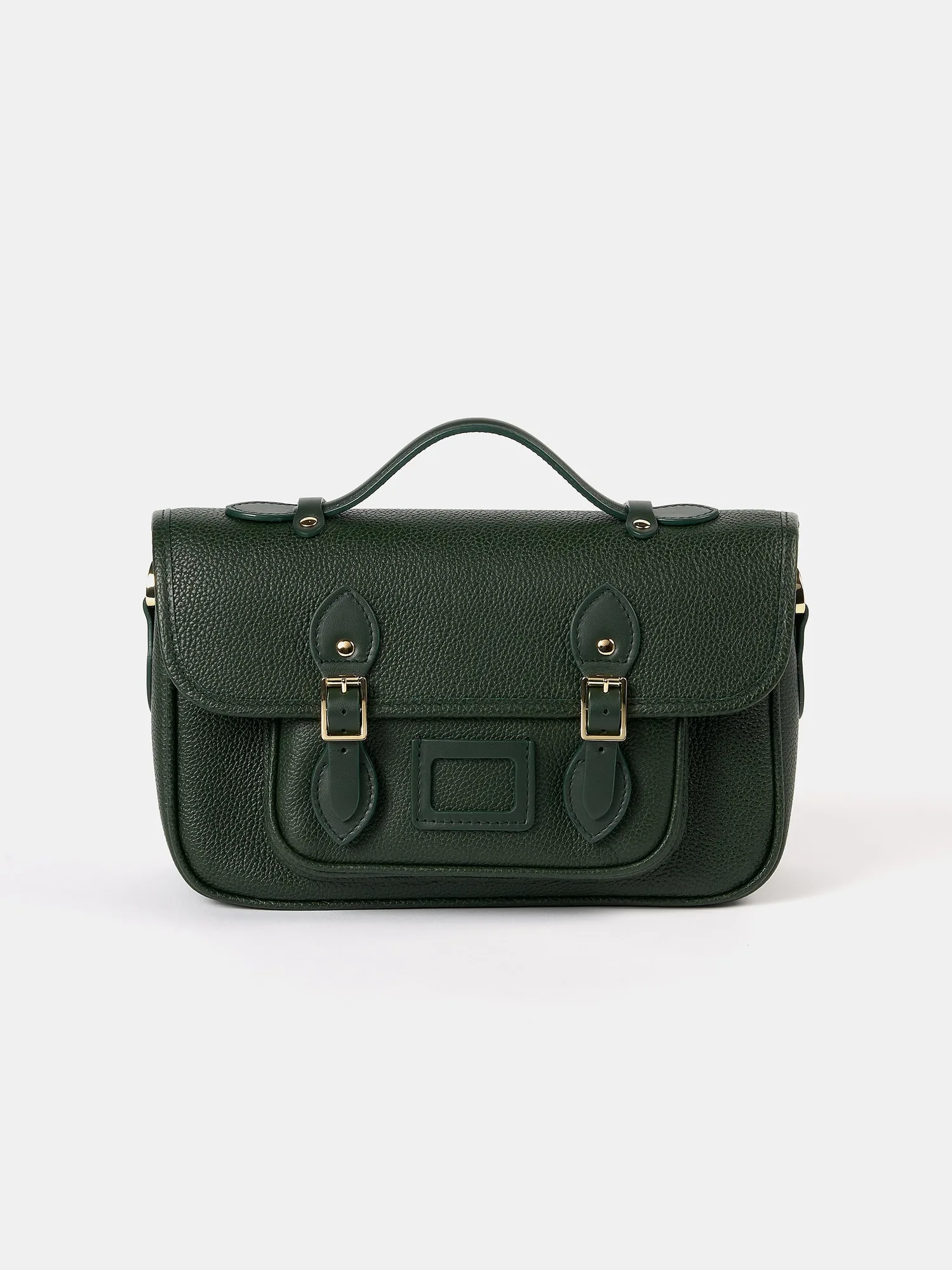
Quick answer
Repair makes sense when the damage is surface-level or mechanical and the leather body is still sound: scratches, loose stitching, worn straps, broken hardware, or a torn lining. Replace the bag when the leather itself is cracked through, heavily mildewed, or stretched out of shape, because those problems cannot be reversed. For most quality bags, one professional repair costs far less than a new bag, so fix first unless the leather structure is failing.
A damaged bag rarely announces whether it is worth saving. You notice a scratch, a strap that has started to fray, or a lining that has pulled away from the seam, and the decision feels bigger than the problem. The good news is that most leather bag problems fall into a few predictable categories, and each one has a clear repair-or-replace threshold.
This guide walks through the most common issues, what likely caused them, what you can realistically do, and the point where you should stop and consider a different bag. It applies to any well-made leather handbag, including Cambridge Satchel styles that are handcrafted in England and built to be maintained rather than discarded.
Start with a three-point diagnosis
Before you spend anything, assess three things: the leather body, the structure, and the hardware. Run your fingers over the damage. If the surface feels smooth and the scratch does not catch, it is likely in the finish and can often be improved with conditioning. If the leather feels dry, cracked, or split, the fibers are damaged and repair becomes cosmetic at best.
Next, check the shape. A bag that has stretched, sagged, or lost its silhouette usually cannot be restored because the leather has already relaxed. Finally, test the hardware. A stiff or broken pushlock, a snapped buckle, or a zipper that no longer closes is a mechanical fault, and these are among the most repairable issues on a leather bag.
- Surface scratch that does not catch a fingernail: treat with leather conditioner, not a repair service.
- Crack that opens when you flex the leather: structural, replacement is usually the better call.
- Hardware that sticks or snaps: repairable by a specialist in most cases.
Scratches, scuffs, and color loss
Light scratches are the most common complaint and the least serious. Most are marks in the top finish, not cuts in the hide, and they often fade with a small amount of conditioner and gentle buffing. Color loss along corners and edges is also normal wear, and a matching cream or edge dressing can blend it back in.
Deep scratches that lift the surface or expose a lighter layer underneath are harder to fix invisibly. A professional can fill and recolor them, but the result is a repair, not a restoration, and it may still be visible up close. If the scratch is on a high-visibility panel and the bag is otherwise in good shape, professional recoloring is worth it. If the leather is already thin and cracking around the scratch, stop and put the money toward a replacement.
- Condition before you panic: many scuffs disappear once the leather is hydrated.
- Do not use harsh solvents or nail polish remover, which strip the finish and make it worse.
- Ask a repairer for a photo assessment before shipping the bag.
Straps, stitching, and seams
A failing strap or seam is a mechanical problem, and mechanical problems are usually fixable. If stitching has come loose but the leather around it is intact, a leatherworker can restitch the seam. If a strap has worn thin or a buckle has torn free, the strap can often be replaced or reinforced. This is common on bags that are carried daily and loaded heavily.
The threshold for replacement is when the leather itself is tearing, not just the thread. If the strap anchor points are ripping through the body of the bag, the repair becomes structural and may not hold. In that case, a lighter-load bag or a style with a more robust strap attachment is a better long-term choice than repeatedly repairing the same failure point.
- Loose stitching with sound leather: repair.
- Strap torn from the body at the anchor: get a quote, but expect a weaker result.
- Repeated strap failure on the same bag: the design may not match how you carry it.
Linings, zippers, and interior wear
Interior problems are often the most cost-effective repairs because they do not affect how the bag looks from the outside. A lining that has separated at the seam can be reattached. A zipper that has lost teeth or a pull can be replaced. An internal pocket that has torn can be patched or rebuilt.
Replacement becomes reasonable when the interior damage is widespread, such as a lining that is disintegrating throughout or a zipper that has failed because the surrounding leather has torn. At that point you are rebuilding the bag's interior, and the cost can approach the value of a new bag. If the exterior leather is still beautiful, a partial interior repair may still be worthwhile, but get a clear quote first.
- Ask whether the repairer replaces the whole lining or just the damaged section.
- A zipper replacement is usually straightforward; a full lining replacement is not.
- If the quote exceeds half the price of a comparable new bag, compare carefully.
Mildew, water damage, and stretching
These three problems are the strongest signals to replace rather than repair. Mildew that has penetrated the leather leaves a smell and permanent staining that cleaning cannot fully remove, and it often returns in humid conditions. Water damage that has caused the leather to stiffen, darken unevenly, or delaminate is similarly difficult to reverse.
Stretching is the quiet one. A bag that has lost its shape because it was regularly overloaded will not return to its original silhouette, no matter how well it is conditioned. If the bag still functions and you like the relaxed look, keep using it. If the shape was the reason you bought it, replacement is the honest answer.
- Mildew smell that persists after cleaning: replace.
- Leather that has gone stiff and brittle after getting wet: replacement is usually smarter.
- A bag that no longer holds its shape: use it as a relaxed bag or replace it.
How to decide with a simple cost test
Get a quote before you decide. A professional leather repairer can usually assess from photos, and many will give a range. Then compare that number to the cost of a comparable new bag. As a rule of thumb, if the repair is under a third of the replacement price and the leather body is sound, repair is the better value. If it is over half, replacement deserves serious thought.
Also weigh the sentimental and practical value. A bag you carry every day and love is worth more repair budget than one that sits in a closet. And if the repair fixes a symptom but not the cause, such as a strap that keeps failing because you overload it, the same problem will return. Fix the cause or change the bag.
- Repair under one-third of replacement cost: usually worth it.
- Repair over half of replacement cost: compare a new bag carefully.
- If the same fault keeps returning, change how you use the bag or replace it.
Repair-or-replace diagnosis
- Symptom: light scratches and corner scuffs: Likely cause: surface finish wear from normal handling. Corrective action: condition the leather and buff gently; use edge dressing on corners if needed. Repair yourself. Do not pay a professional for surface scuffs until conditioning has been tried.
- Symptom: loose stitching or a worn strap: Likely cause: mechanical stress from daily carrying or overloading. Corrective action: have the seam restitched or the strap replaced by a leatherworker. Repair if the surrounding leather is intact. Stop if the leather itself is tearing at the anchor point.
- Symptom: cracked, stiff, or mildewed leather: Likely cause: structural damage from water, heat, or long-term moisture exposure. Corrective action: none that restores the leather reliably. Replace. This is the point where repair money is better spent on a new bag.
What well-made bags give you in return
- The Mini - Navy, Brilliant White & Bay: Compact Satchel design with a top handle and detachable, adjustable shoulder strap, magnetic closures, a front pocket, and a protective dust bag included; handcrafted in England. A detachable strap is a genuine repair advantage: if the strap wears out, it can be replaced without touching the bag body, which extends the bag's working life.
- The Soft Satchel - Ivy Calf Grain: Top handle and adjustable crossbody strap, magnetic closures, lined interior with an internal zipped pocket and reverse slip pocket. A lined interior with a zipped pocket protects the inside from the kind of wear that leads to lining repairs, and the adjustable strap spreads load so the attachment points last longer.
- The Hello Kitty Face Tote - Black: Rounded tote with two long handles, two hidden magnetic closures, and a discreet interior slip pocket, handcrafted to replicate Hello Kitty's iconic face. Two long handles distribute weight across more attachment points than a single strap, which reduces the strain that causes the most common repairable failure: a torn strap anchor.
Most leather bag problems are fixable, and fixing them is usually the smarter financial and environmental choice. Draw the line at structural leather damage, persistent mildew, and any repair that costs more than half a comparable new bag. When you do replace, look for features that make future repairs easier, such as detachable straps and a lined interior, so the next bag lasts longer before this decision comes up again.