Quick answer
Most leather bag smells come from trapped moisture, poor ventilation, or residue left in the lining. Empty the bag, wipe the interior with a dry cloth, and let it air out in a shaded, breezy spot for 24 to 48 hours. If the smell returns or smells chemical rather than musty, stop and seek professional advice instead of layering on more products.
A leather bag that smells off is frustrating, especially when the bag itself looks fine. The good news is that most odors are surface or storage problems, not permanent damage. The key is to work out what kind of smell you have before you try to fix it.
This guide separates the common causes, the safe corrective steps, and the point where you should stop rather than risk drying out or staining the leather. It applies to any leather handbag, including structured styles like a Cambridge Satchel.
Start by identifying the smell
Before you do anything, smell the bag in three places: the exterior leather, the interior lining, and the strap or hardware area. A musty, damp smell usually points to moisture trapped in the lining or storage. A sharp, chemical smell often comes from tanning agents or dyes and tends to fade with ventilation. A sour or food-like smell usually means something spilled inside and was never fully cleaned.
Write down what you notice. This matters because the fix for a musty leather bag is different from the fix for a chemical one. If you treat a chemical smell with moisture, you can make it worse. If you treat a musty bag with heat, you can crack the leather.
- Musty or damp: likely moisture or storage
- Sharp or chemical: likely tannery or dye residue
- Sour or stale: likely old spills or food crumbs
- Smoky: likely absorbed from the environment
Empty, clean, and air the bag properly
Remove everything from the bag, including the dust bag if it was stored inside one. Turn the lining inside out if you can, and shake out crumbs. Wipe the interior with a dry, lint-free cloth. Do not soak the lining. If there is visible residue, use a barely damp cloth with a tiny amount of mild soap, then wipe again with a dry cloth.
For leather bag ventilation, place the bag in a shaded, breezy spot with the flap or zip open. Airflow matters more than time. A closed wardrobe will not help. Keep it out of direct sun and away from radiators, because heat dries leather and can cause cracking. Most mild smells fade within 24 to 48 hours of proper airing.
- Never seal a damp bag in a dust bag or plastic
- Avoid direct sun, hair dryers, and radiators
- Stuff the bag lightly with acid-free tissue to hold its shape while it airs
Absorb odors without wetting the leather
If airing alone does not work, use a dry absorbent. Place a small bowl of baking soda or unscented charcoal inside the bag, close the bag loosely, and leave it for 24 hours. You can also use silica gel packets in a breathable cloth. These absorb odor molecules without adding moisture to the leather.
Do not sprinkle baking soda directly onto the leather or lining. Powders are hard to remove from seams and can leave a chalky residue. If the smell is strong, repeat the absorbent step once. If it is still there after two rounds, the cause is likely deeper than surface odor.
- Use unscented absorbents, not perfumed ones
- Never spray perfume or air freshener inside a leather bag
- Avoid vinegar on leather unless a professional advises it
When to stop and choose another option
Stop if the smell is chemical and has not faded after a week of ventilation. That usually means the odor is in the leather itself, and further home treatment can dry or discolor it. Stop if you see mold, white powdery bloom, or dark spots. Mold needs professional treatment because it can spread to the lining and stitching.
Stop if the leather feels sticky, tacky, or unusually stiff. That suggests a finish or conditioning problem, not an odor problem. In these cases, a leather specialist or the brand's repair service is the safer route. For a Cambridge Satchel, contact the brand directly rather than experimenting with household products.
- Chemical smell over one week: professional advice
- Visible mold or bloom: professional cleaning
- Sticky or stiff leather: stop home treatment
Diagnosis: match the smell to the fix
- Musty or damp smell: Usually trapped moisture from storage or rain. Empty the bag, wipe the lining dry, and air it in a shaded breezy spot for 24 to 48 hours. If it returns within a week, your storage spot is too humid.
- Sharp or chemical smell: Often from tanning agents or dyes. Air the bag away from heat and sun for several days. Do not wet it. If it has not faded in a week, stop and seek professional advice.
- Sour or food-like smell: Likely an old spill or crumbs in the lining or front pocket. Shake out debris, wipe with a barely damp cloth, then air fully. If the lining is stained, a professional clean is safer than scrubbing.
- Mold, bloom, or sticky leather: These are not simple odor problems. Mold can spread, and sticky or stiff leather signals a finish issue. Stop home treatment and contact a leather specialist or the brand.
How construction affects odor and care
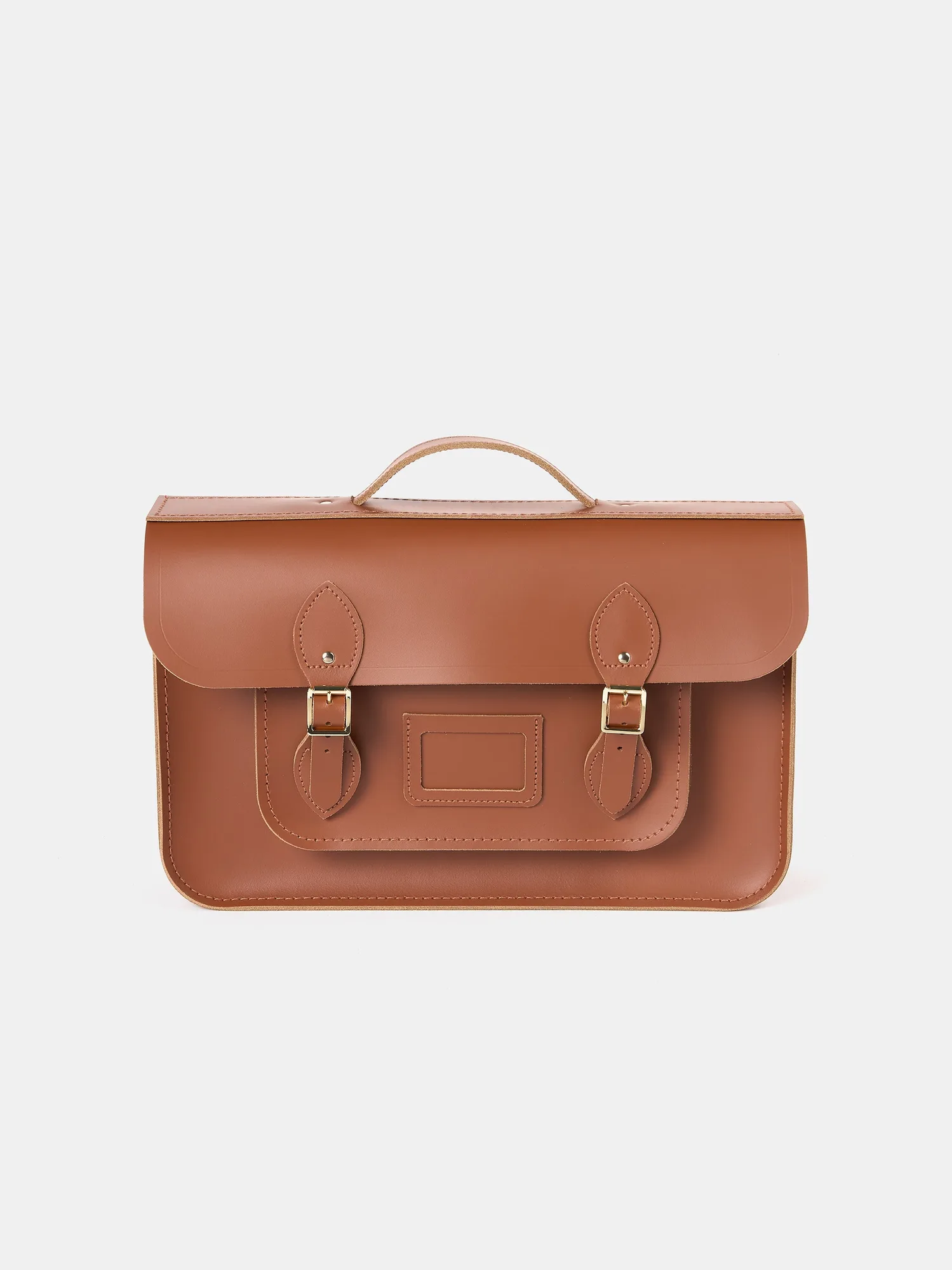
- The 15 Inch Batchel - Bay: Features magnetic buckle closures, a front pocket for organisation, and fits most laptops and A4 documents. A larger bag with a front pocket traps crumbs and paper dust more easily, so empty and wipe the pocket during routine airing.
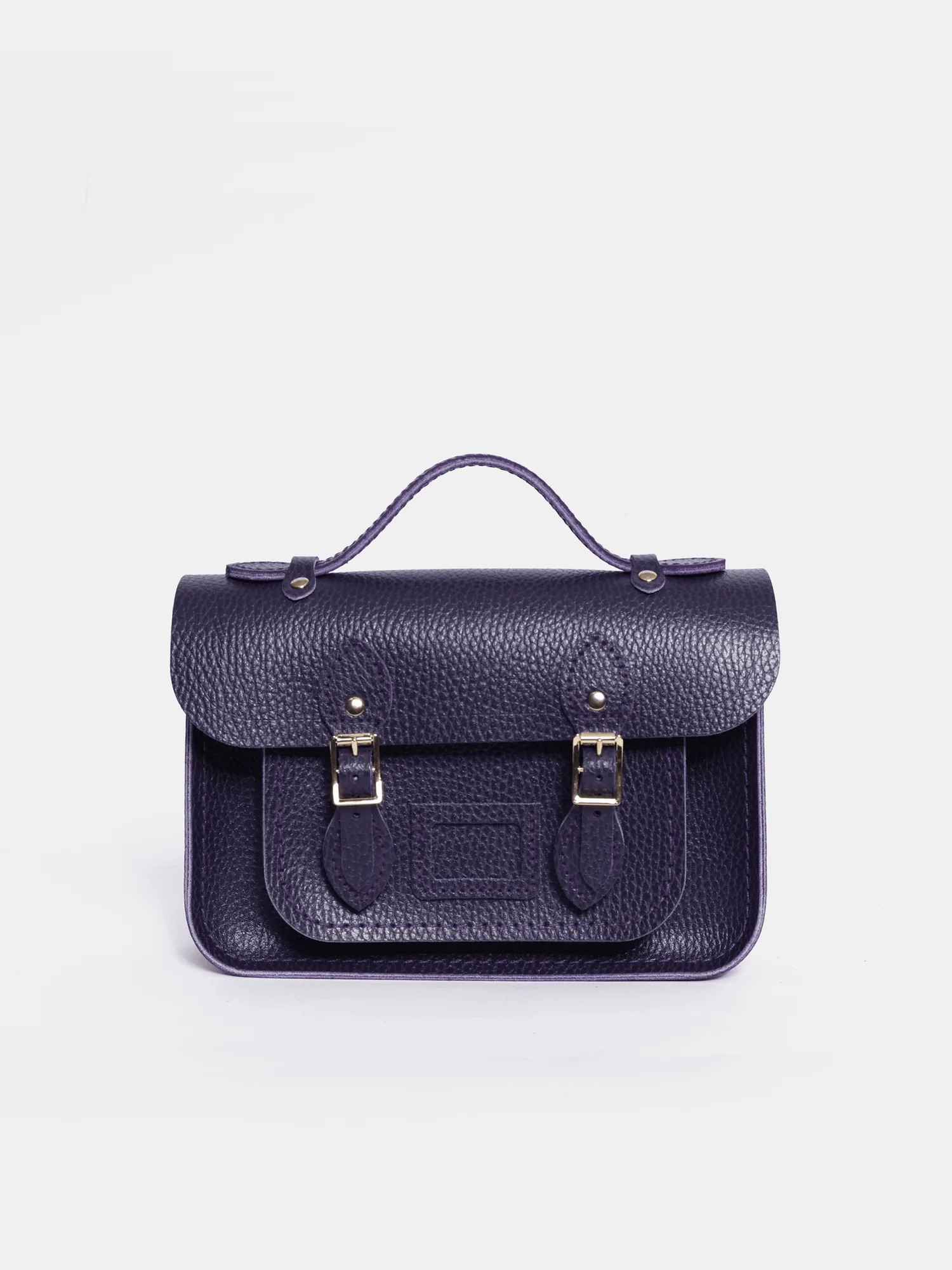
- The Mini - Deep Purple Celtic: Compact Satchel design with magnetic closures, a front pocket for quick access, and a protective dust bag included. Smaller bags concentrate odors faster, so air this one fully before returning it to its dust bag.
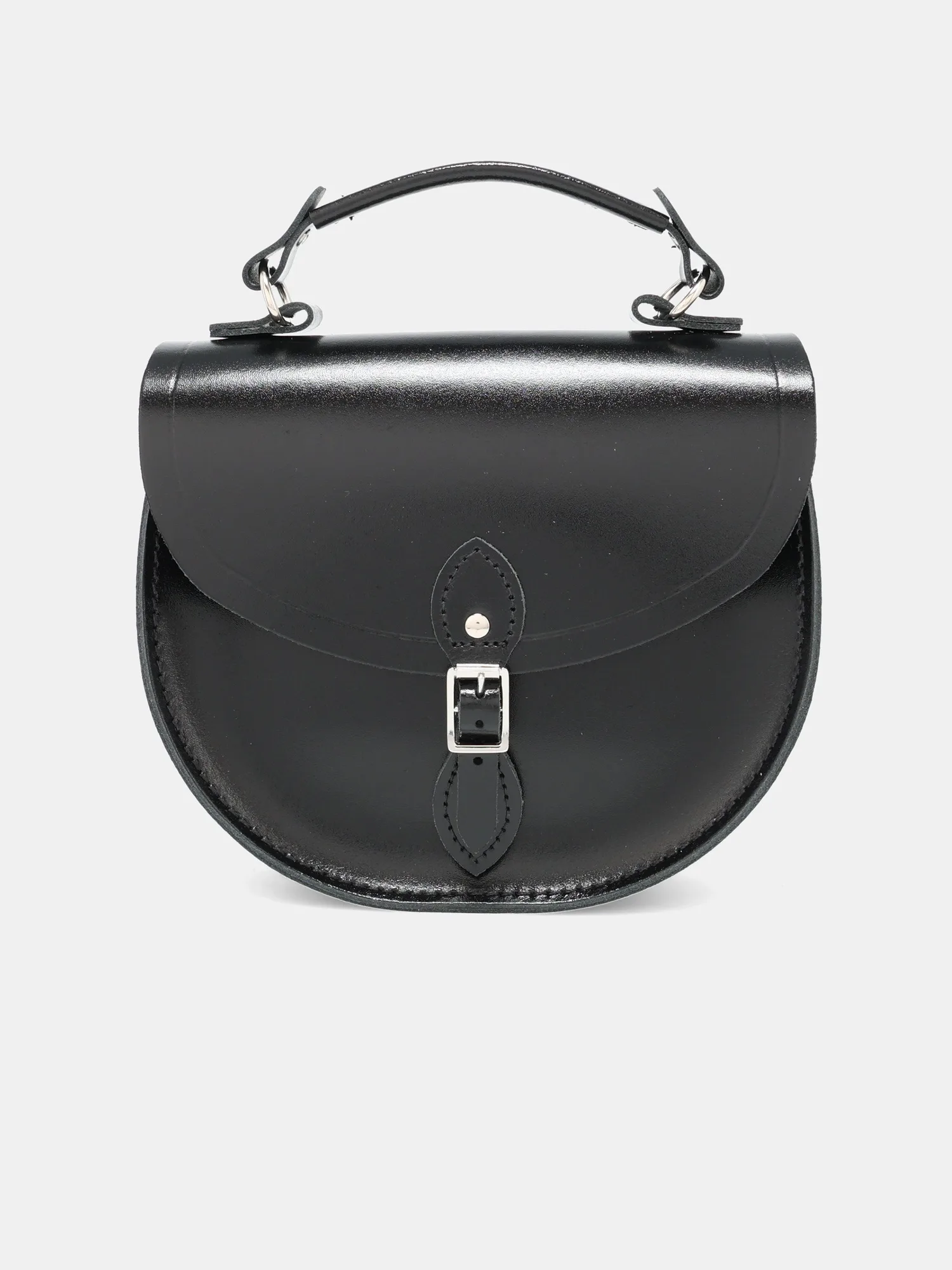
- The Isla - Shiny Black: Unique circular silhouette, lightweight and travel-friendly, with a magnetic closure disguised as a buckle and a protective dust bag included. Travel-friendly bags pick up environmental smells, so air it after trips rather than storing it straight away.
Most leather bag smells are fixable with emptying, drying, and real airflow. Work through the diagnosis first, act gently, and stop before you risk the leather. If the smell persists or looks like mold, professional help is the smarter choice.