Quick answer
Wipe your belt with a dry cloth after each wear, clean it with a damp cloth and mild soap every few months, then apply a thin layer of leather conditioner. Store it rolled or hanging flat, away from direct sun and heat. Avoid soaking the leather, using harsh chemicals, or storing it folded, which can crack the finish.
A leather belt takes more daily abuse than almost anything else you own. It bends, stretches, rubs against buckles and belt loops, and absorbs whatever the day throws at it. Without a little attention, that daily wear turns into cracks, fading, and a stiff, brittle feel that no amount of polishing can fix.
The good news: leather belt care is not complicated. A few minutes every few months, plus smart storage, will keep a quality belt looking new for years. This guide walks through a simple five-step routine you can do at home with items you probably already have.
Why leather belts age faster than other accessories
Belts live in a tough spot. They flex every time you sit, stand, or bend, and they rub against metal buckles and rough denim. That constant movement wears down the natural oils in the leather, leaving it dry and prone to cracking. Unlike a wallet that sits in a pocket, a belt is exposed to sweat, body heat, and friction all day.
Most belt damage is not from age; it is from neglect. Dirt acts like sandpaper inside the leather fibers, and dryness turns small creases into deep cracks. The fix is a routine that removes grit and replaces lost oils before the leather has a chance to break down.
- Rotate between two belts if you wear one daily, giving each time to dry and rest.
- Avoid wearing the same belt with heavy work pants every day if you want it to stay dressy.
What you need for basic leather belt care
You do not need a specialty kit. A soft dry cloth, a slightly damp cloth, a mild pH-balanced soap (like saddle soap or a gentle dish soap), and a quality leather conditioner will handle almost everything. For deeper cleaning, a soft-bristled brush helps lift dirt from tooling or stitching.
Skip alcohol, vinegar, bleach, and all-purpose household cleaners. They strip the finish and dry out the leather. If your belt has a delicate finish or exotic skin, test any product on the back side first.
- Use a microfiber cloth for wiping and a separate one for conditioning.
- Keep a small horsehair brush for textured or tooled leather.
Step-by-step leather belt care routine
This five-step process works for most smooth and textured leather belts. Do it every three to six months, or more often if you wear the belt daily in hot or humid conditions. Each step includes a common mistake to avoid so you do not accidentally shorten the life of your belt.
If your belt has a needlepoint or fabric overlay, like the Rattlesnake Pattern Belt, treat it more gently. Spot-clean the leather portions and avoid soaking the decorative panel. The same goes for belts with glued layers or delicate finishes.
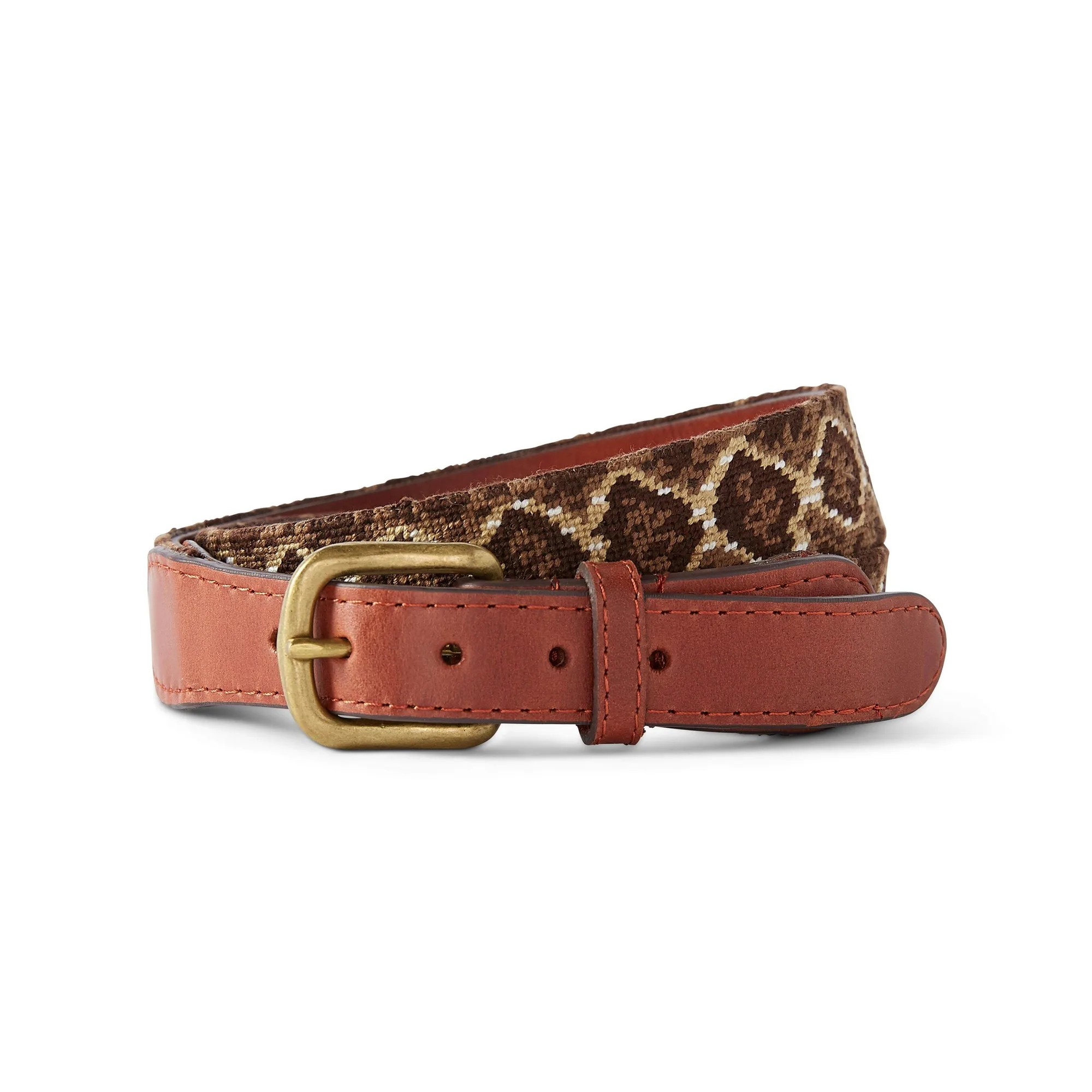
Rattlesnake Pattern Belt
- Always unbuckle and lay the belt flat before cleaning.
- Work in a well-lit area so you can see dirt and cracks.
How to store a leather belt so it keeps its shape
Storage matters as much as cleaning. Hang belts from a smooth, rounded hook or roll them loosely in a drawer. Avoid folding a belt sharply or hanging it by the buckle for long periods, which can leave permanent creases and stretch the leather. Keep them out of direct sunlight and away from radiators or heating vents.
If you live in a dry climate, a light conditioning before storage helps. In humid areas, let the belt air out completely before putting it away. A breathable cotton bag is better than a sealed plastic container, which can trap moisture and encourage mold.
- Store belts separately from heavy items that could scratch the leather.
- Check stored belts once a season for dryness or mold.
When to condition and when to replace
Condition when the leather feels dry or stiff, looks dull, or shows fine surface lines. A little conditioner goes a long way; over-conditioning can make leather greasy and weak. If the belt has deep cracks, stretched-out holes, or a broken buckle, replacement is usually the better call.
For everyday wear, a well-cared-for belt can last many years. The key is consistency: a quick wipe after wear and a proper clean-and-condition a few times a year. That small effort keeps the leather supple and the finish intact.
- Condition after cleaning, not before, so the product absorbs evenly.
- If the belt cracks when you bend it, it is too dry or too far gone.
Five-step leather belt care routine
- Wipe after every wear: Use a dry, soft cloth to remove sweat, dust, and body oils. Pay attention to the area around the buckle and the holes. Checkpoint: if the cloth comes away dirty, keep wiping until it stays clean.
- Clean with mild soap and a damp cloth: Mix a few drops of mild soap in lukewarm water. Wring the cloth until barely damp, then wipe the leather in small circles. Do not soak the belt or scrub hard. Mistake to avoid: using too much water, which can darken and stiffen the leather.
- Dry naturally, away from heat: Lay the belt flat or hang it in a shaded, airy spot. Let it dry completely before conditioning. Never use a hair dryer or direct sunlight. Checkpoint: the leather should feel dry to the touch but still slightly flexible.
- Apply a thin layer of conditioner: Put a small amount of leather conditioner on a soft cloth and rub it into the leather in circles. Let it sit for a few minutes, then buff off any excess. Mistake to avoid: over-conditioning, which leaves a greasy film and can weaken the leather over time.
- Store rolled or hanging flat: Hang the belt from a rounded hook or roll it loosely in a drawer. Keep it out of direct sun and away from heat sources. If storing long-term, use a breathable cotton bag. Checkpoint: the belt should hold its shape without sharp folds or creases.
Ranch-inspired belts and care-friendly accessories
- Rattlesnake Pattern Belt: Drawing from the diamondback rattlesnake native to King Ranch, this design reflects the character of the land in a bold needlepoint pattern. Hand-stitched in cotton, with brown leather trim and a brass buckle. The needlepoint panel needs gentler care than smooth leather. Spot-clean the cotton and leather trim separately, and avoid soaking the belt.
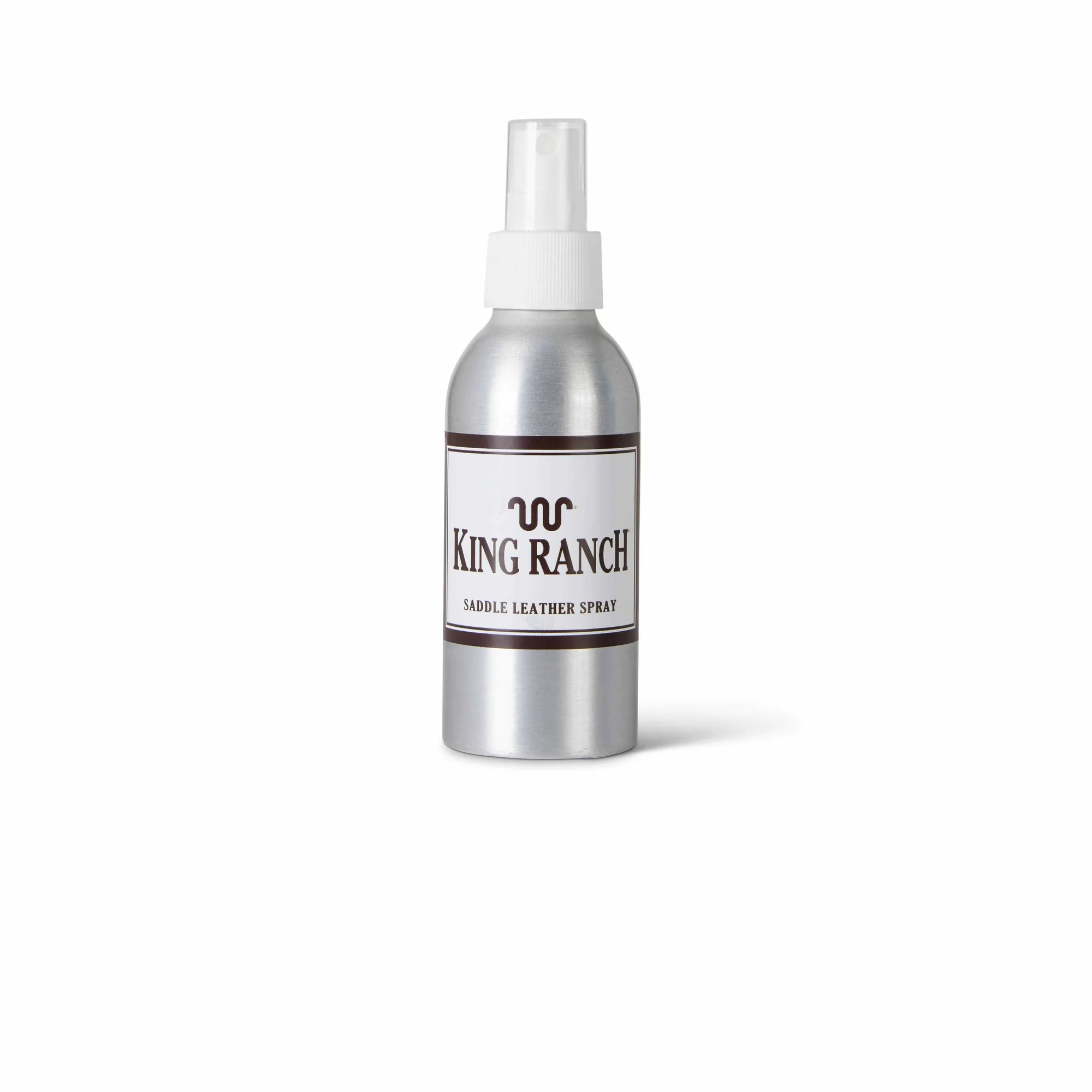
- Saddle Leather Room Mist: A room spray reminiscent of our original Saddle Shop in Kingsville, TX. Take the Shop home. 4 oz. A leather-safe room mist can refresh the space where you store your belts, but never spray it directly on leather.
Leather belt care comes down to a few good habits: wipe it down, clean it gently, condition sparingly, and store it with a little care. Do that, and your belt will stay comfortable, look sharp, and last far longer than you might expect.