Quick answer
Buy a leather hood mask for fit first, then lining, then leather weight. Measure your head circumference, face length and neck circumference, and choose a hood with an adjustable closure and a soft lining if you plan to wear it longer than a few minutes. If you want a single dependable starting point, a lined, adjustable leather hood in a mid-weight hide will be more comfortable than a rigid, unlined hood at the same price.
Start with measurements, not the size label
Sizing labels vary between makers, so treat them as a starting point rather than a guarantee. Measure the widest part of your head just above the ears, the distance from your hairline to your chin, and the circumference of your neck at the base. Write those three numbers down and compare them with the maker's stated range before you order.
A hood that is too small creates pressure at the temples, jaw and throat, which is where discomfort shows up first. A hood that is too large shifts during wear, blocks your field of view unevenly and puts load on the neck instead of the head. If your measurements fall between two sizes, choose the larger size when the hood has an adjustable closure, and the size that matches your head circumference most closely when it does not.
- Measure head circumference, hairline-to-chin length and neck circumference.
- Check whether the maker lists measurements or only S/M/L labels.
- Prefer an adjustable closure if you are between sizes.
- Re-measure if you plan to wear a hood over a balaclava or a second layer.
Lining decides how long you can actually wear it
Lining is the single biggest comfort factor after fit. An unlined leather hood puts the raw underside of the hide against your skin, which can feel tacky, catch on hair and become uncomfortable as you warm up. A soft suede or fabric lining reduces friction, spreads pressure and makes the hood easier to take on and off.
If you want a hood for short sessions and prefer the feel of bare leather, an unlined hood is a reasonable choice. If you want longer wear, a lined hood is worth the extra cost. Check that the lining is stitched, not glued, because glued linings can shift or lift with heat and moisture. Also look at whether the lining covers the full interior or only the front panel, since partial lining still leaves bare leather at the back of the head and neck.
- Lined hoods reduce friction and pressure points for longer wear.
- Stitched linings hold up better than glued linings.
- Full-interior lining is more comfortable than a front-panel-only lining.
- Unlined hoods suit short sessions and buyers who prefer direct leather contact.
Leather type, weight and hardware
Cowhide is the common choice for hoods because it is durable and holds shape. Suede gives a softer surface feel, while smooth full-grain leather is more resistant to surface wear but less forgiving against skin if it is unlined. Heavier hides hold a rigid shape, which can look striking but transfers more pressure to the jaw and brow. Lighter hides conform more and feel easier for longer wear.
Hardware matters as much as the hide. Look for buckles, laces or straps that adjust in small increments rather than one large step, because a half-inch of adjustment can be the difference between secure and painful. Check that any metal sits on the outside of the hood or is covered on the inside, and that laces run through reinforced eyelets rather than punched holes that can tear with repeated tension.
- Cowhide is durable and holds shape; suede feels softer against skin.
- Heavier leather gives a rigid look but more pressure on the jaw and brow.
- Choose closures with fine adjustment, not one large step.
- Check that interior hardware is covered or absent.
Comfort checks before and during wear
Before you commit to a full session, put the hood on for two or three minutes in a safe, seated position. Check that you can breathe normally through the nose and mouth openings, that your vision is not obstructed in a way you did not expect, and that no single point is pressing harder than the rest. If you feel pressure at the throat, stop and adjust the neck closure first, because throat pressure is the most common cause of early removal.
Comfort also depends on temperature. Leather does not breathe like fabric, so a lined hood in a warm room will feel warmer than the same hood in a cool one. If you run hot, choose a lighter hide and a thinner lining, and plan shorter wear periods. If you run cold, a heavier hide with a full lining will feel more comfortable.
- Do a short trial wear before a long session.
- Adjust the neck closure first if you feel throat pressure.
- Lighter hide and thinner lining suit warm rooms and hot-running wearers.
- Heavier hide and full lining suit cool rooms and cold-running wearers.
Decision rules for choosing a leather hood mask
- If you are between sizes: Choose the larger size only when the hood has an adjustable closure that tightens in small increments. If the closure is fixed, choose the size that matches your head circumference most closely. Adjustability is what makes a slightly larger hood wearable.
- If you want wear longer than 15 minutes: Prioritize a stitched, full-interior lining over leather weight or finish. Lining reduces friction and pressure far more than a lighter hide does. Lining first, weight second.
- If you want a rigid, structured look: Choose a heavier hide and accept that jaw and brow pressure will be higher. Plan shorter wear periods and check the neck closure often. Rigidity and long-wear comfort trade off against each other.
- If you run hot: Choose a lighter hide with a thin lining and avoid fully enclosed designs that trap heat. Leather does not breathe like fabric, so plan shorter sessions. Match the hood to your room temperature, not just your measurements.
Product facts
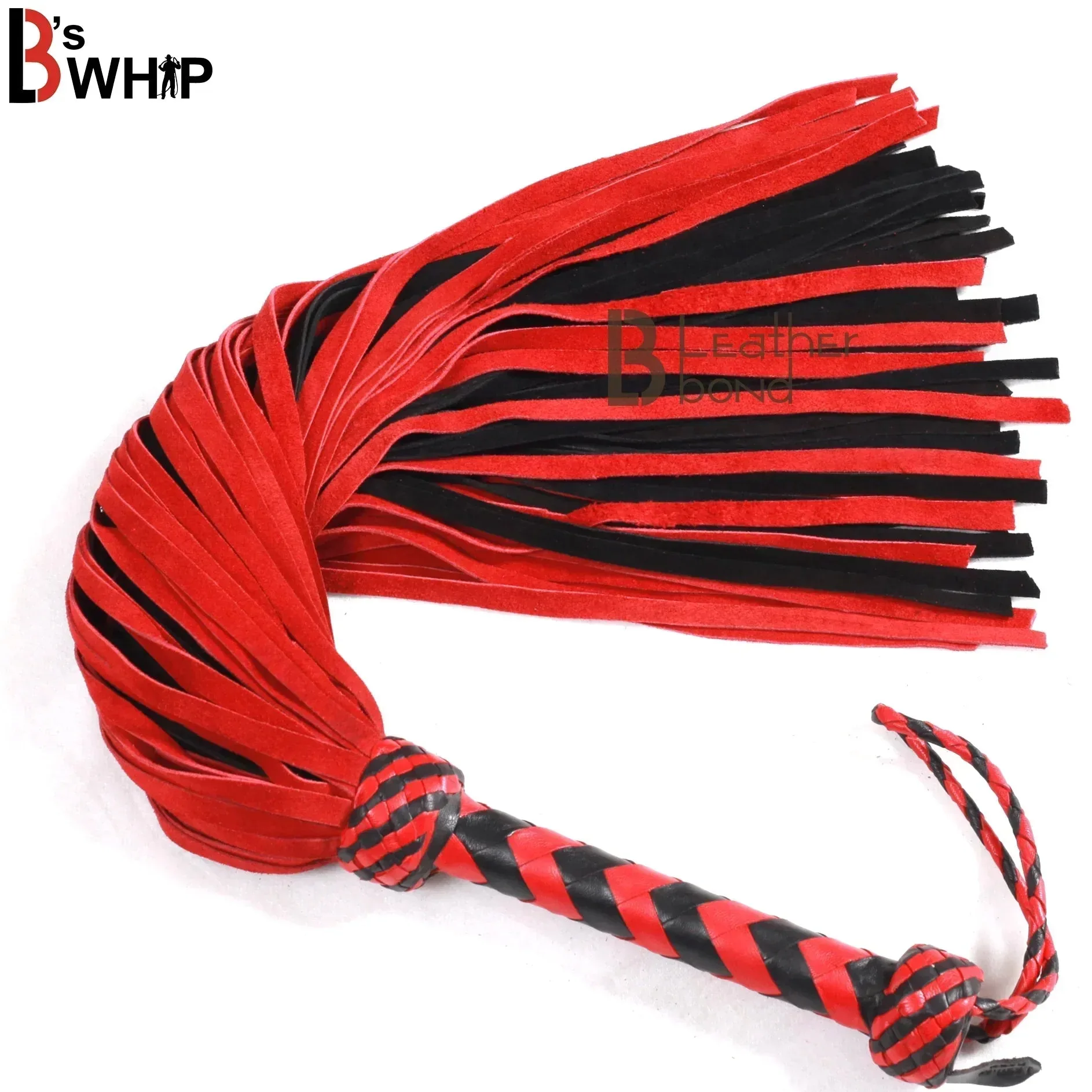
- ❤️🖤 Real Genuine Cowhide Suede Leather Flogger 75 Falls Red & Black Heavy Duty Thuddy Whip: Real genuine cowhide suede leather flogger with 75 wide, soft tails in red and black, described as heavy duty and thuddy. If you already prefer suede against skin, this confirms the same material family is used in the store's impact line, so a suede-lined hood will feel consistent with gear you may already own.
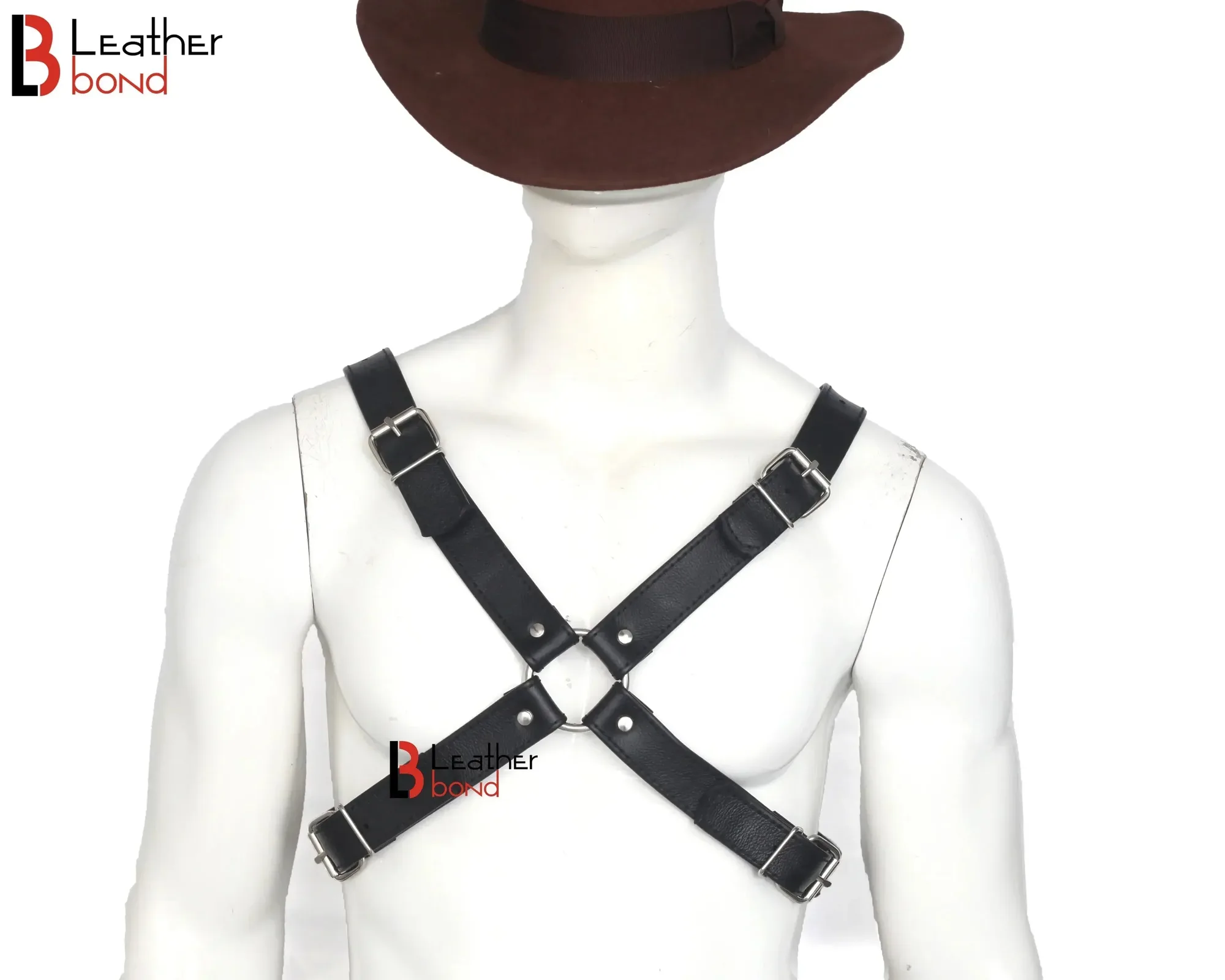
- Double Folded Real Cowhide Leather Harness for Men Cross Shape Chest & Shoulder Harness: Double folded real cowhide leather harness for men in a cross shape, made from double-folded genuine full-grain cowhide. Shows the store works with double-folded full-grain cowhide, the same construction approach that gives a hood structure without adding unnecessary bulk.
Who this guidance fits
Best for
- Buyers who want a lined, adjustable leather hood for sessions longer than a few minutes
- Buyers who already own suede or full-grain leather gear and want a consistent material feel
- Buyers who are willing to measure their head and neck before ordering
Not for
- Buyers who want a rigid, unlined hood for short display or photo use only
- Buyers who cannot measure themselves and need a one-size-fits-all option
- Buyers who run very hot and need a breathable fabric hood instead of leather