Quick answer
Most leather luggage wear is surface-level and fixable at home with a soft cloth, leather conditioner, and a little patience. Clean and condition scuffs and corner wear early, tighten or replace strap hardware before it tears the leather, and treat zipper pulls gently. Stop and call a leather repair professional once you see a cut through the grain, a torn seam, or a strap anchor pulling away from the body.
Leather luggage ages well, but it does not age invisibly. Scuffs on the corners, a strap that has stretched, a zipper pull that feels loose, and dark rub marks from baggage belts are normal signs that a bag is being used, not signs that it has failed.
The trick is knowing which problems you can correct at home and which ones get worse the moment you touch them. This guide separates the symptom from the likely cause, gives you a corrective action, and tells you when to stop and hand the piece to a professional.
Start with a diagnosis, not a product
Before you reach for conditioner, look at the damage in good light. Surface scuffs that sit on top of the finish usually buff out. Corner wear that has lightened the color but not broken the surface is a conditioning job. A cut, a split seam, or a strap anchor that moves when you tug it is structural, and no amount of conditioner will fix it.
Run your fingernail lightly across the mark. If it catches, the grain is broken and the repair is cosmetic at best. If your nail glides over it, you are dealing with a surface scuff. That single test decides whether you proceed or stop.
- Photograph the damage before you start so you can compare later.
- Work in daylight; indoor bulbs hide color changes on leather.
Leather suitcase scuffs and corner wear
Scuffs usually come from contact with pavement, car trunks, and baggage belts. Corner wear is the same process concentrated on the edges, where the leather takes the first impact every time the bag is set down. Both are cosmetic until the surface actually breaks.
Clean the area with a barely damp cloth and let it dry completely. Apply a small amount of leather conditioner with your fingertips, working it into the scuff rather than piling it on top. Buff with a soft cloth. Darkened scuffs often blend back into the surrounding leather, and lighter corner wear regains some depth. Repeat after a day if needed, but do not over-condition; leather that stays greasy attracts dirt.
- Condition corners before a trip, not after the damage is deep.
- Avoid colored polishes unless you have tested them on a hidden area.
How to fix a leather bag strap that is loosening
A strap rarely fails all at once. It stretches, the stitching at the anchor loosens, or a rivet begins to back out. If the leather itself is intact and only the hardware or stitching is loose, a shoe repair shop or leather worker can usually re-stitch or re-rivet it quickly and inexpensively.
If the strap has torn away from the body and taken leather with it, that is a structural repair. Do not glue it and do not keep carrying the bag by that strap, because the load will tear the opening wider. Set the bag down by the body until a professional can look at it.
- Tug each strap anchor gently before you travel; a small movement now is a big tear later.
- Never lift a loaded bag by a single strap if the anchor already feels soft.
Repair a leather zipper pull without forcing it
Zipper problems are usually three different things: the pull tab has separated, the slider is stiff, or the teeth are misaligned. A separated pull tab is the easiest fix. If the tab is leather and still intact, a small split ring or a short leather cord threaded through the slider restores grip without stressing the original piece.
A stiff slider is often dirt, not damage. Brush the teeth with a soft toothbrush, then run a zipper lubricant or a touch of beeswax along the teeth and work the slider back and forth. Never yank a stuck zipper; you will bend the slider and turn a five-minute fix into a replacement.
- If the slider itself is bent or the teeth are missing, stop and replace the zipper.
- Keep the zipper closed when the bag is stored to protect the teeth.
Leather travel bag maintenance between trips
Most repairs start as maintenance failures. Wipe the bag down after each trip, condition it once or twice a year depending on climate, and store it stuffed and upright in a dust bag rather than folded in a closet. Humidity and heat are harder on leather than any airport conveyor belt.
Pay attention to how the bag is packed. Overloading stretches handles, strains zippers, and pushes corners outward where they scuff first. If a bag feels like it is working hard to close, it is already telling you something.
- Store leather luggage empty of anything damp, including swimwear or towels.
- Rotate bags if you travel often; constant use on one piece accelerates wear.
Symptom, cause, action, and when to stop
- Light scuff or color rub on the surface: Caused by friction against pavement, trunks, or belts. Clean with a damp cloth, let dry, then work in a small amount of leather conditioner and buff. If your fingernail does not catch, this is a home fix.
- Corner wear that has lightened but not broken: The finish has worn thin from repeated contact. Condition the corners and consider a protective treatment before your next trip. If the corner feels soft or spongy, stop and get it assessed.
- Loose strap anchor or stretched handle: Stitching or rivets have loosened under load. Stop carrying the bag by that strap and have a leather worker re-stitch or re-rivet it. If leather tore away with the strap, this is a professional repair.
- Stiff or gritty zipper: Dirt in the teeth or a dry slider. Brush the teeth, apply zipper lubricant or beeswax, and work the slider gently. If the slider is bent or teeth are missing, replace the zipper.
- Cut through the grain or split seam: The leather structure is compromised and cannot be conditioned back together. Do not glue it or keep loading the bag. This is the point to choose a professional repair or replacement.
What well-made leather luggage gives you to work with
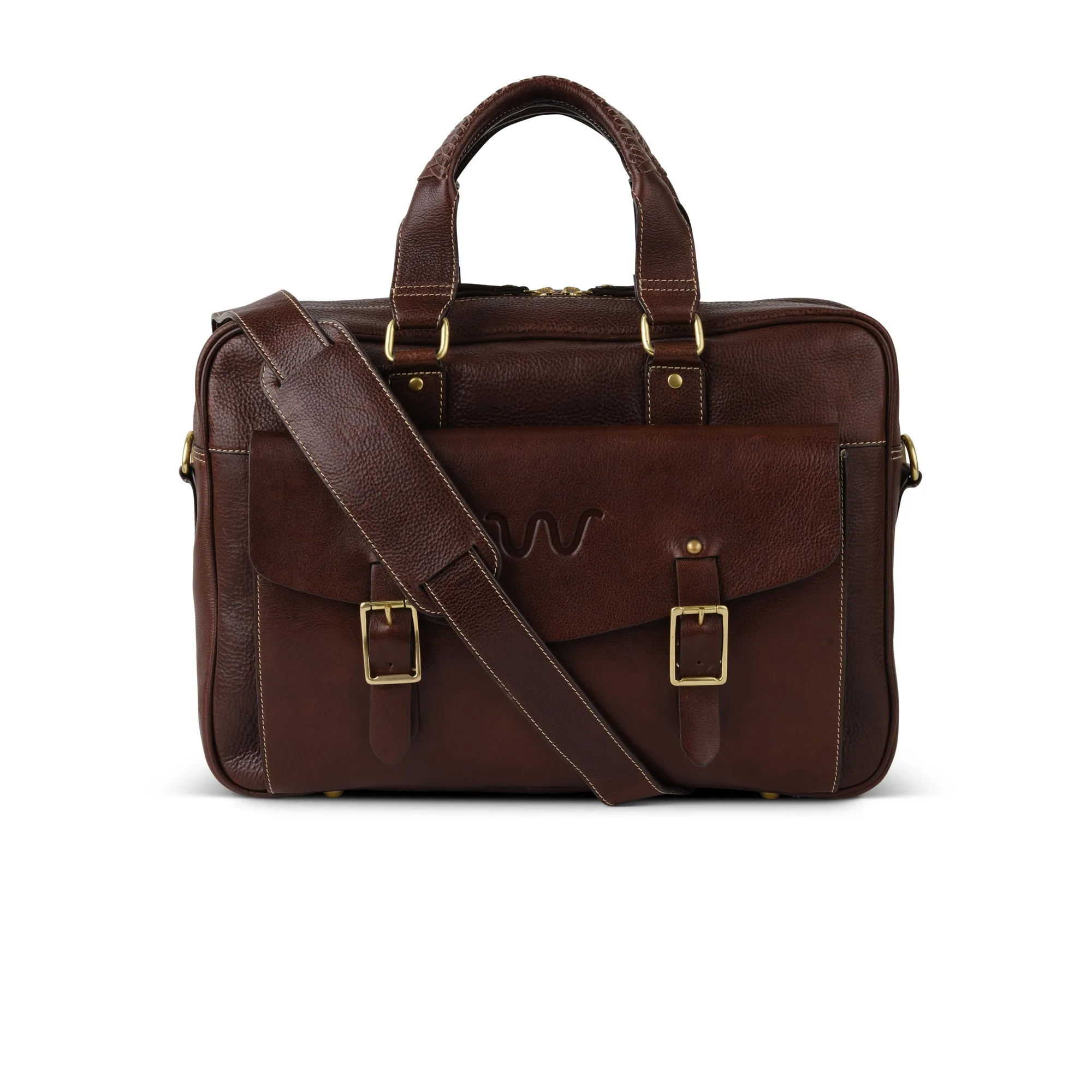
- Laureles Messenger Briefcase: Crafted from full-grain, vegetable-tanned Italian pebbled leather with solid brass hardware, and designed with a large zip gusset and exterior flap pockets. Full-grain leather takes conditioning well and brass hardware can often be tightened or replaced, so this is a piece worth maintaining rather than replacing.
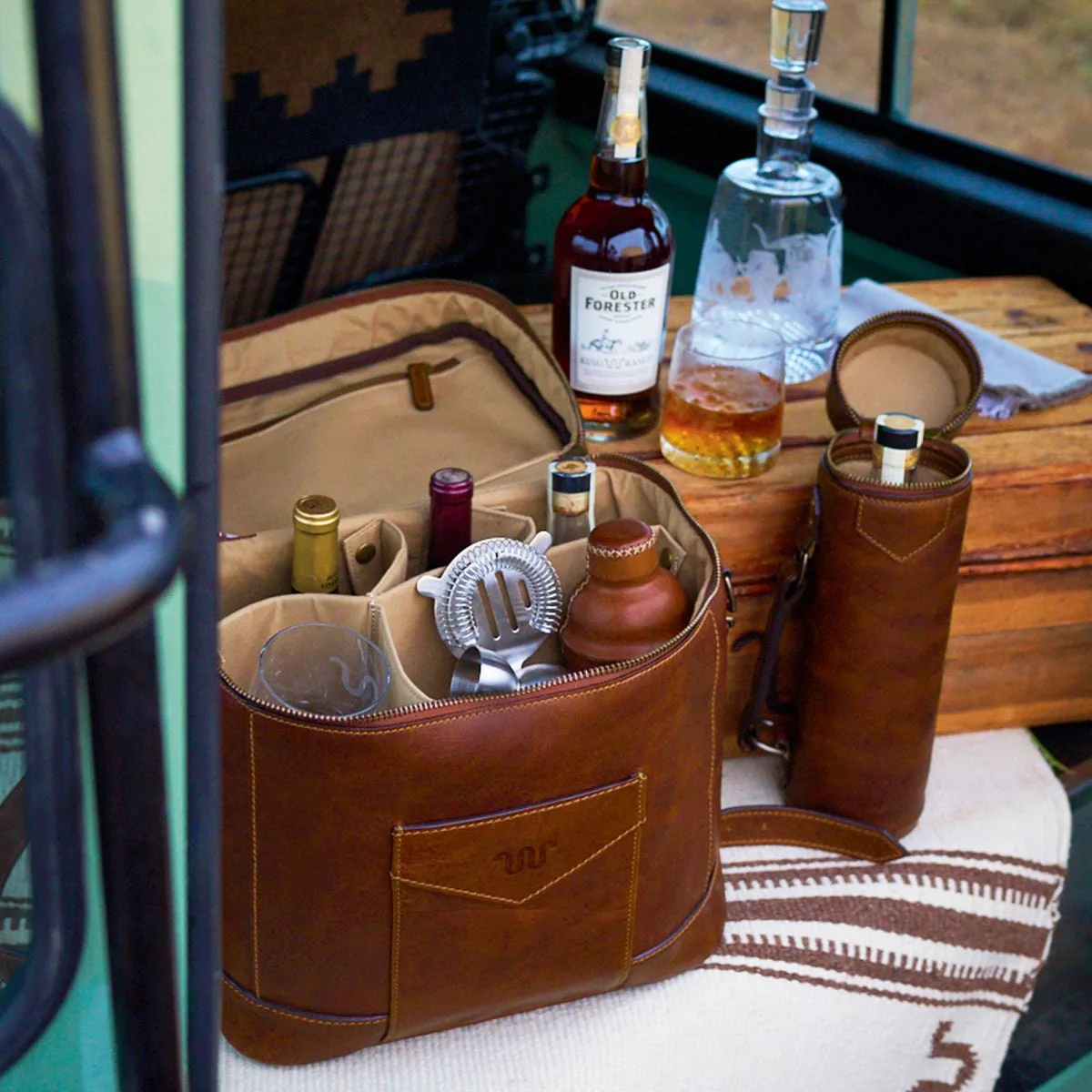
- Kineño Leather Cocktail Case: Infused with natural oils and waxes, this heirloom-quality leather is soft, durable, and develops a rich patina over time, with padded interior walls and a two-zipper clamshell opening. The padded walls protect contents, but the clamshell zipper is the part you will handle most, so keep it clean and never force it.
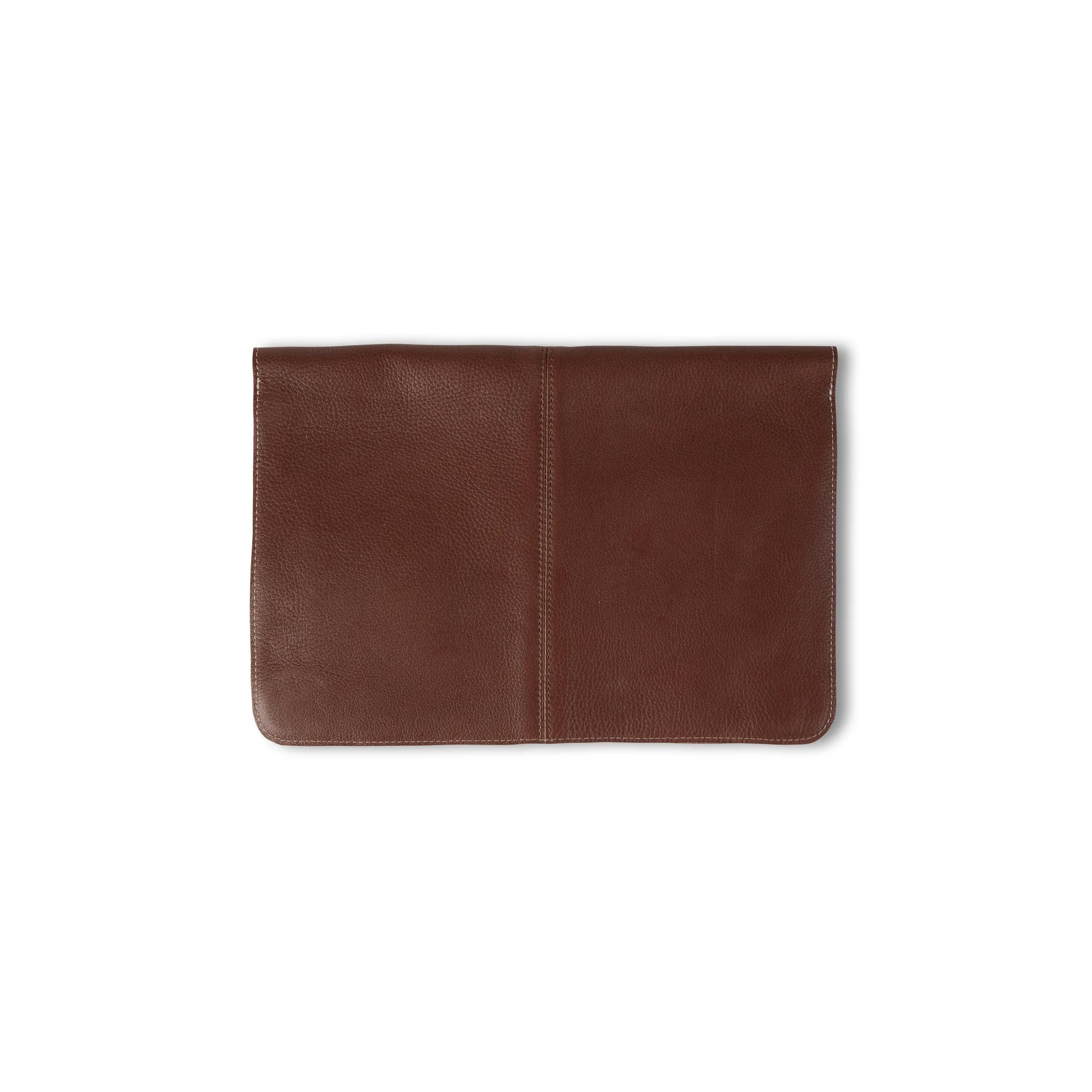
- Travel Envelope: Crafted from King Ranch Docil leather with Latigo trim and a slender silhouette. Latigo trim is a durable edge material, so wear tends to show first on the body leather rather than the trim, which makes conditioning the main maintenance task.
Most leather luggage repair is really early maintenance: clean it, condition it, and stop tugging on straps and zippers that are already telling you something. Handle the small stuff yourself, and hand the structural problems to a professional before they get bigger.