Quick Answer
Adjust your leather saddle harness by first loosening all straps, then tightening in a specific order: leg loops, waist belt, chest straps, and finally the saddle connections. This sequence ensures a secure fit without pressure points.
Why Adjustment Order Matters
The leather saddle harness is a complex piece with multiple connection points. Tightening straps in the wrong order can twist the saddle, create uncomfortable pressure, or leave the harness feeling loose during movement. Starting with the leg loops anchors the harness, then the waist belt stabilizes the core, and chest straps secure the upper body. The saddle connections come last so they align naturally with the adjusted base.
Common Fit Issues and Fixes
If the saddle shifts forward when you move, the leg loops may be too loose. If the waist belt digs in, check that the chest straps aren't pulling the belt upward. Leather will stretch slightly with use, so a snug initial fit is better than a loose one. Avoid over-tightening any single strap to prevent chafing.
Step-by-Step Adjustment Guide
- Loosen All Straps Completely: Start with all straps fully loosened. This gives you a clean base to work from and prevents any pre-tension from throwing off the fit. Common mistake: skipping this step leads to uneven adjustments later.
- Adjust the Leg Loops First: Step into the leg loops and pull them up so they sit high on your thighs, just below the groin. Tighten them until they are snug but not digging in. Check: you should be able to slide one finger between the leather and your skin.
- Secure the Waist Belt: Position the waist belt at your natural waistline. Tighten evenly from front to back, ensuring the belt sits flat and doesn't roll.
- Attach and Adjust Chest Straps: Connect the chest straps over your shoulders, crossing them if your harness design allows. Tighten until the harness feels secure across your chest without restricting breathing. Common mistake: over-tightening chest straps can pull the waist belt upward.
- Finalize Saddle Connections: Attach the saddle to the harness at all designated points. Adjust these connections last so the saddle aligns naturally with the already-fitted base. Check: the saddle should sit level and not shift when you move.
- Perform a Movement Test: Walk, bend, and squat gently to test the fit. Listen for creaking leather—it may indicate a twist. Adjust any strap that feels too tight or loose. Recheck all straps after 10 minutes of wear, as leather settles.
Product Details
-
The Equestrian: Leather Saddle Harness: Features quilted leather detailing around the belt and supple leather construction. The quilted detailing adds structure to the belt area, helping it stay in place during adjustment, while the supple leather conforms to your body for a custom fit.
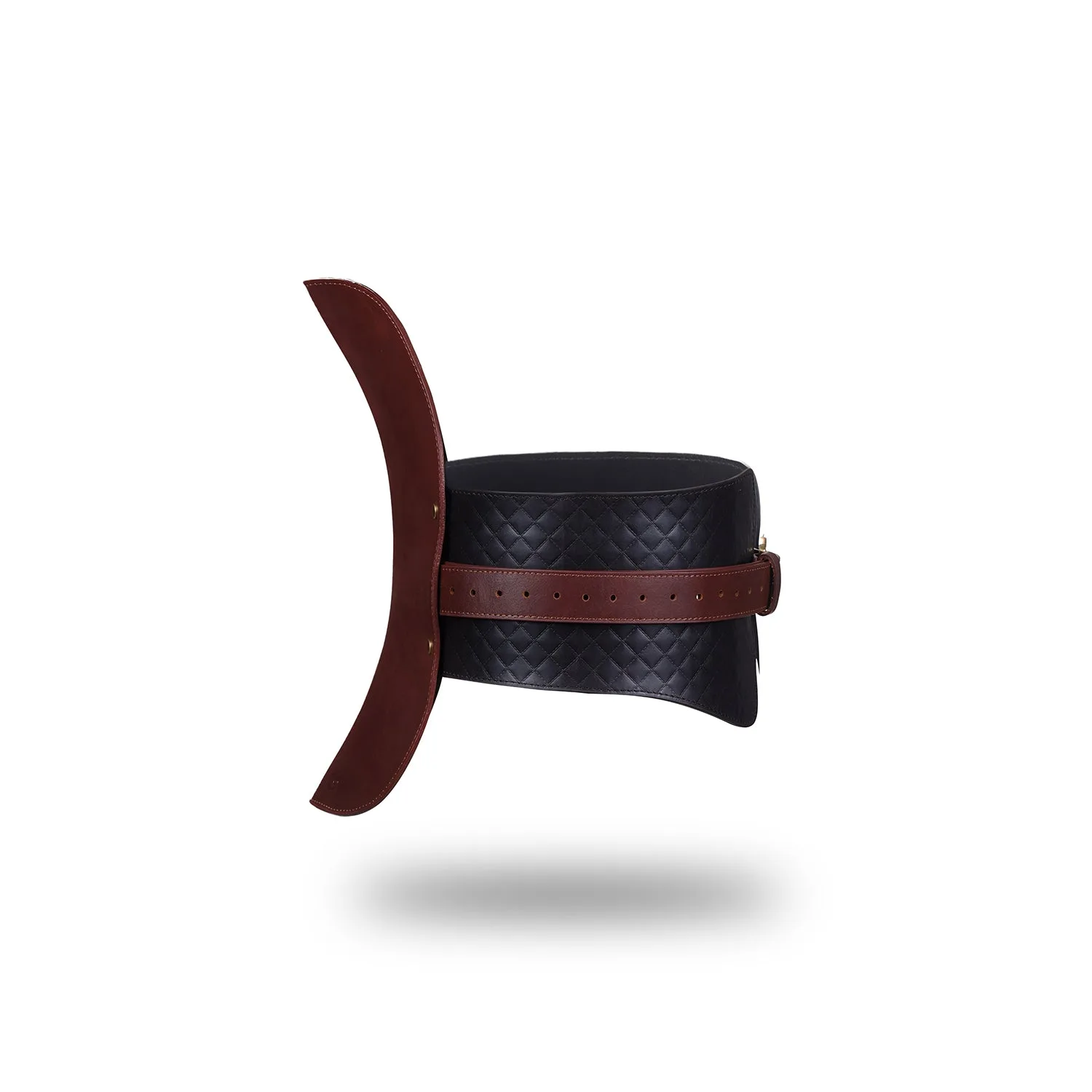
The Equestrian: Leather Saddle Harness